
Indonesian National Armed Forces Commander Issues a State of Alert Telegram
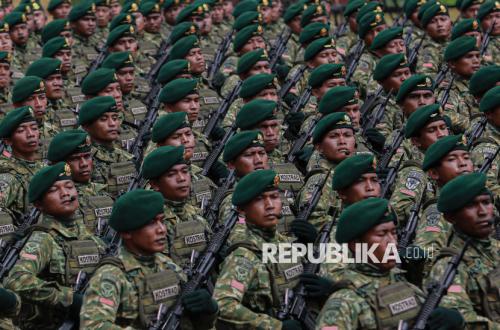
The Indonesian National Armed Forces (TNI) Commander in Chief General Agus Subiyanto issued Telegram Number TR/283/2026 containing one standby order for army ranks. The telegram was signed by Assistant Operations (Asops) of the TNI Commander, Lt. Gen. Bobby Rinal Makmun, in Jakarta on 1 March 2026.
In the document obtained by Republika, there are seven important instructions for the military. It was in response to the development of the global conflict situation in the Middle East region and the military leaders’ consideration of the domestic situation.
In anticipation of the conditions in the country due to the conflict in the Middle East, a number of so-called military organisations were ordered for their entire ranks to carry out a level-1 alert. It was valid from 1 March 2026 until its completion.
First instruction: The Commander-in-Chief of Operations (Pangkotamaops) of the TNI alerts personnel and auxiliaries in his ranks and carries out patrols in strategic vital objects (obvit) and economic centres. That includes at airports, seaports/rivers, train stations, and bus terminals, as well as PLN offices.
Second: The National Air Defence Command (Kohanudnas) carries out continuous early detection and aerial observation for 24 hours.
Third: The Strategic Intelligence Agency (Bais) of the TNI ordered the Defence Attache (Athan) of the Republic of Indonesia in the affected country to record, map and plan the evacuation of Indonesian citizens (WNI) when necessary, and coordinate with the Ministry of Foreign Affairs, the Embassy of the Republic of Indonesia (KBRI), and relevant authorities in accordance with the escalation in the Middle East region.
Fourth: Kodam Jaya/Jayakarta to carry out patrols in strategic places and embassies and anticipate the development of the situation in maintaining conductivity in DKI Jakarta.
Fifth: The military intelligence unit carried out early detection and early prevention of the presence of groups in strategic places and embassies and anticipates the development of the situation in maintaining conductivities in the Jakarta area.