
Indonesian-Made Smartphone Already Going Global, Many People Unaware
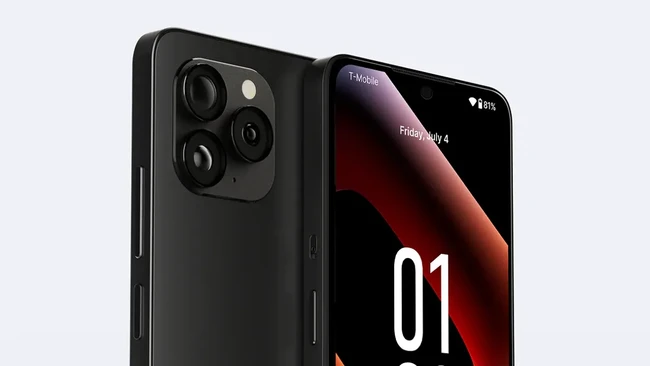
Indonesian smartphone manufacturing has reached global markets. Handsets bearing the ‘Unplugged’ (UP Phone) brand, which emphasises privacy and security features, are sold in major countries including the United States, Canada and the United Kingdom.
Many consumers are unaware that these phones are produced in Indonesian factories. Unplugged itself is a startup based in Limassol, Cyprus.
The company has developed a smartphone called the ‘UP Phone’ that prioritises user privacy and security. At first glance, the UP Phone features an iPhone-like design with a distinctive ‘boba’-style camera panel. The edges curve smoothly with thin bezels, though it lacks Apple’s Dynamic Island feature.
According to its official website, Unplugged claims the UP Phone offers superior security compared to the iPhone 16 Pro and Galaxy S25. The company states the UP Phone has no third-party DNS requests, whilst the iPhone 16 Pro and Galaxy S25 reportedly have 3,181 and 1,368 third-party DNS requests respectively.
The smartphone is powered by a MediaTek Dimensity 1200 chip. The display measures a substantial 6.67 inches with AMOLED technology. It comes with standard 8GB of RAM and 256GB of storage expandable up to 1TB.
Photography capabilities receive attention, with a 108MP main camera lens accompanied by 5MP macro and 8MP ultra-wide cameras. Selfies and video calls rely on a 32MP front-facing camera.
The UP Phone features a 4,300mAh battery with 33W wired charging and 15W wireless charging. Additional features include IP53 certification, Wi-Fi 6 connectivity, NFC, eSIM and nano-SIM support, 5G networks, USB Type-C 2.0 port and dual speakers.
Information about UP Phone production in Indonesia emerged from a Reuters report in August 2025, citing Unplugged CEO Joe Weil.
Following pressure, company agrees to manufacturing in United States
Reuters reported that Unplugged plans to shift UP Phone production to Nevada in the United States, moving away from its current reliance on Indonesian manufacturing.
Although production in the US will increase labour costs, Unplugged aims to assemble phones in Nevada whilst maintaining retail prices below US$1,000 (approximately Rp17 million). By comparison, phones manufactured in Indonesia sell for US$989 (approximately Rp16.8 million).
Beyond smartphone assembly in Nevada, CEO Joe Weil indicated the company’s next step involves sourcing device components.
“The first step is assembly, gradually moving to component procurement,” he stated, according to Reuters.
Unfortunately, he provided limited information about other details, including the number of devices to be assembled and manufacturing partners in Nevada. He also did not disclose the funding secured for this new initiative.
Smartphone assembly costs in the United States are substantial, driven by factors including supply chains still concentrated in Asia and high domestic labour costs.
Unplugged appears to have considered these challenges. The company plans to conduct assembly with smaller, stable volumes rather than releasing new models annually.