
Indonesian Idulfitri: From Islamic Rite to National Civilisational Tradition
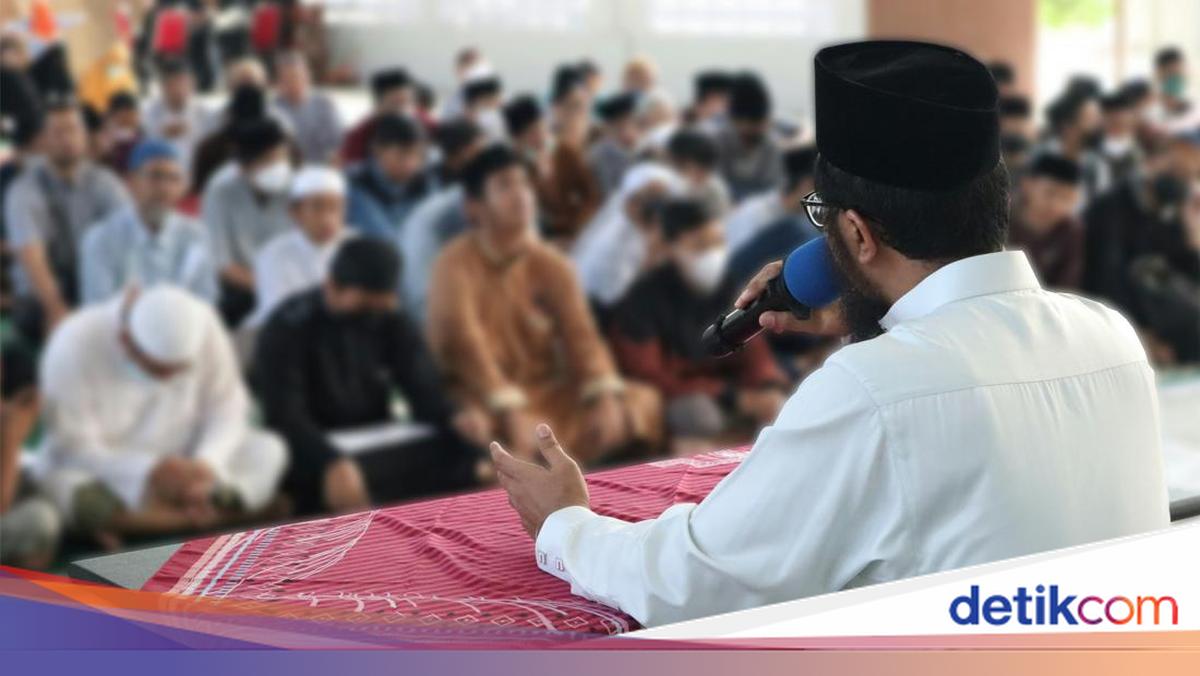
Idulfitri as an Islamic teaching is universal, yet it is expressed in a distinctive manner in Indonesia through social and national traditions, thereby making a significant contribution to global Islamic civilisation.
The Indonesian nation has elevated Idulfitri from a worship ritual to a mechanism for national reconciliation.
Universal History vs Indonesian Formulation
Theologically, Idulfitri stems from the teachings of the Prophet Muhammad as the conclusion to Ramadan. Several practices now considered “identical” to Idulfitri, such as halalbihalal, the expression “mohon maaf lahir dan batin”, national silaturahmi across statuses, and the institutionalisation of social reconciliation, did not originate in the Arabian Peninsula but developed strongly in our homeland of Indonesia.
The Role of the State in the Sukarno Era
In the early days of the Republic under President Sukarno’s leadership, the Indonesian nation faced ideological conflicts between nationalists, Muslims, and communists, resulting in serious social fragmentation in the post-independence era.
The urgent need felt by all for a sense of unity gave rise to the practice of halalbihalal, initiated by the Ministry of Religious Affairs of the Republic of Indonesia and national figures, and facilitated by the state.
The Strategic Meaning of Halalbihalal
It is not merely silaturahmi but political and social reconciliation to erase grudges after conflicts, uniting elites and the people in a single moral forum. In historical literature, halalbihalal developed around 1949 as a cultural solution to overcome political communication deadlocks.
Thus, the state, through the structure of the Ministry of Religious Affairs of the Republic of Indonesia, has institutionalised Idulfitri as a tool for national unity.
“Mohon Maaf Lahir dan Batin” as an Indonesian Cultural Innovation
The expression “mohon maaf lahir dan batin” is a distinctive Indonesian formulation that goes beyond the classical Arab concept of ’afw (forgiveness), as it encompasses the social dimension (lahir) as well as the psychological and spiritual dimension (batin). This collective morality represents a Nusantara philosophical formulation that unites Islamic ethics with national culture, such as empathy, sympathy, and the value of gotong royong.
Thus, the Indonesian nation has given birth to a very strong collective moral language in the world.
Sungkem and Salim: Integration of Islam and Nusantara Culture
The traditions of sungkem (prostrating to parents) and salim (kissing hands) represent the integration between Islamic teachings on birrul walidain (devotion to parents) and Nusantara culture that emphasises moral hierarchy and respect.
What is interesting is that in Arab Islam, respect for parents is normative, whereas in our Indonesian culture, it becomes a highly concrete and emotional symbolic rite.
This shows that Indonesia does not merely “adopt” Islam as our religion but processes it into a civilisation embodied in profound inner feelings.
Idulfitri as a National Reconciliation Mechanism
In Indonesia, Idulfitri has developed into an annual national reconciliation ritual in forums that unite political elites with society, making it an informal mechanism for resolving various conflicts.
Traditions such as the President’s Open House strengthen this function, with the people meeting leaders without social hierarchy barriers, thereby reinforcing our sense of nationalism.
From the perspective of Intelligence Philosophy, this is a cultural-based social stabilisation instrument of the nation, not based on political power.
Comparison with Other Nations’ Traditions
If compared to Nowruz in Iran, which is themed around natural renewal, Chinese New Year themed around prosperity and respect for ancestors, and the Vietnamese New Year Tết about family harmony, Indonesian Idulfitri also has its own uniqueness.
The structured moral reconciliation that is a national ritual has provided Indonesia’s extraordinary contribution to the Islamic world. The Idulfitri tradition has enlivened faith in Islam, becoming a living social system in our nation’s society.
Conclusion
Idulfitri, born from universal Islamic teachings in Indonesia, has been enlivened as a social tradition full of empathy and touching reconciliation, thus achieving its most mature form in Indonesia.
The role of the state through a cultural approach has transformed the ritual into a social institution and made forgiveness a national strength. The world’s teachings on Idulfitri have developed in Indonesia as a noble national civilisation centre.