
Indonesian Government Yet to Decide on Evacuation of 329 Nationals from Iran
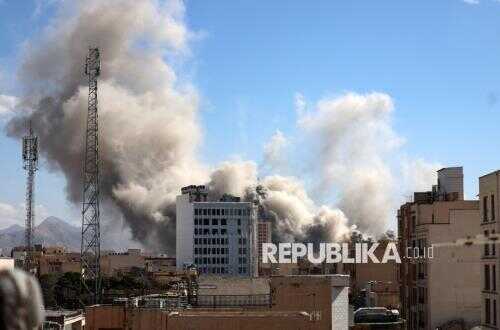
The Indonesian government has not yet made plans to evacuate its nationals from Iran. The Indonesian Embassy in Tehran has recorded 329 Indonesian nationals (WNI) still remaining in Iran. Indonesia’s Extraordinary and Plenipotentiary Ambassador to Iran, Roy Soemirat, reported to media that all WNI officially registered with the embassy and residing temporarily across several Iranian cities have been confirmed to be in good condition and safe following the Zionist Israeli-American attack on Iran.
“To date, there have been no reports of any WNI directly affected physically, nor any reports of security threats specifically targeting our citizens,” Roy said when contacted from Jakarta on Monday morning (2/3/2026). He explained that of the 329 WNI still remaining in Iran, the majority are academics and students. Most of them reside in Tehran and Qom, located south of the capital.
“Regarding evacuation, we are not currently undertaking it,” Roy stated. He clarified that any evacuation decision must be based on orders from the Indonesian government in Jakarta. The evacuation policy, according to Roy, falls under the full authority of the central government in Indonesia.
“Policy regarding evacuation remains the full authority of the Central Government in Jakarta, based on comprehensive risk assessment to ensure the success of field operations and the technical details of contingency plans, which are currently classified,” he said.
The Indonesian Embassy in Iran, Roy noted, adheres to the principle that any evacuation of Indonesian nationals must be conducted with accurate life-saving priority. “The embassy holds firm to the principle that every decision regarding assistance or evacuation must be carried out precisely, measurably, and prioritising safety. Not merely pursuing speed but at the risk to citizens,” Roy said. Previously, Roy also conveyed his authority in Tehran urging all Indonesian national networks in Iran to maintain communication to ensure the condition and safety of citizens.
Iran is currently withstanding an open war launched by the combined military forces of Zionist Israel and America. On Saturday (28/2/2026), the Zionist-American forces bombarded Iran with missiles and rockets that devastated several areas, including the capital Tehran. The Zionist-American aggression has so far recorded death tolls exceeding 201 civilians and injured more than 700 people. The missile and rocket attacks also targeted children’s schools and women’s facilities, resulting in casualties.
On Sunday (1/3/2026), the Iranian government reported that Supreme Leader Ayatollah Ali Khamenei was martyred after 30 missiles and rockets struck the home and office of Iran’s highest leader. Several military officials and generals also fell in the Zionist-American attack. Iran, in a position of being attacked and defending itself, attempted to counter the aggression by retaliating with attacks on Israeli-occupied territories and American military bases in Gulf Arab countries. Iran sent attack drones and guided missiles to American military bases in Saudi Arabia, Bahrain, Dubai, Qatar, Kuwait, and other Arab nations.
In these Gulf countries, numerous Indonesians work as labourers. However, the Indonesian government and Indonesian embassies in countries affected by Iran’s retaliatory attacks have not yet announced evacuation processes. To date, the attacks on Iran and Iran’s retaliatory strikes on Israeli-occupied territory and American military bases in the Gulf continue to occur. Since Sunday (1/3/2026), Iran has also closed traffic through the Strait of Hormuz, the most crucial sea point for global petroleum logistics mobility.