
Indonesian Government Prepares Response to US Trade Investigation, Focus on Production Capacity and Forced Labour
Indonesia’s government plans to hold discussions with business practitioners and industry associations to address a trade investigation being conducted by the United States Trade Representative (USTR) through the Section 301 mechanism.
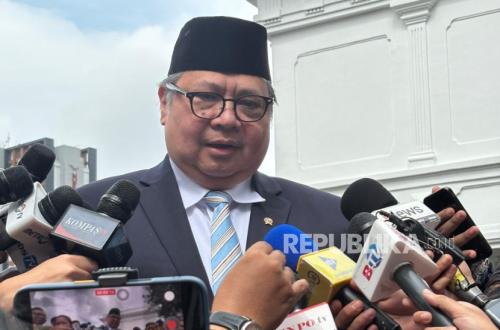
Coordinating Minister for Economic Affairs Airlangga Hartarto explained that this approach has been adopted to prepare Indonesia’s position during the consultation process that the US government will conduct. “Tomorrow we will invite the relevant ministries and agencies, the Minister of Trade, the Indonesian Chamber of Commerce and Industry (Kadin), and the Indonesian Employers Association (Apindo), as well as other industry associations,” Airlangga said during a media briefing at the Ministry of Economic Affairs, Jakarta, on Monday (16 March 2026).
According to Airlangga, there are two main focuses for discussion with industry in the meeting: production capacity and forced labour practices. The results of the discussions will serve as the basis for Indonesia’s response to the American investigation.
Section 301 is a mechanism within the US Trade Act used to assess whether a country’s trading practices are considered unfair, discriminatory, or detrimental to US trade interests. Indonesia, according to Airlangga, has actually already responded to the issue through the Agreement on Reciprocal Trade (ART).
However, developments within the United States, including a Supreme Court decision and a global tax policy that currently applies only for 150 days, have prompted the US government to prepare an additional instrument in the form of Section 301. After the investigation phase, the United States will open consultations with the relevant countries, including Indonesia, to find the most appropriate solution.
The Indonesian government is also coordinating with the US Ambassador regarding further steps that need to be prepared. The government is also monitoring the consequences of the investigation process, including the potential application of additional tariffs, import duties, and import quotas from the United States on certain products.
However, given the existence of the ART, the Indonesian government hopes that the current process can produce a good solution for both countries. In parallel, the Indonesian government will continue to protect the manufacturing sector that conducts exports and ensure that they operate in accordance with consumer demands.