
Indonesian Government Ousted LG Energy Solution from US$9.8 Billion Titan Battery Project, Says Investment Minister
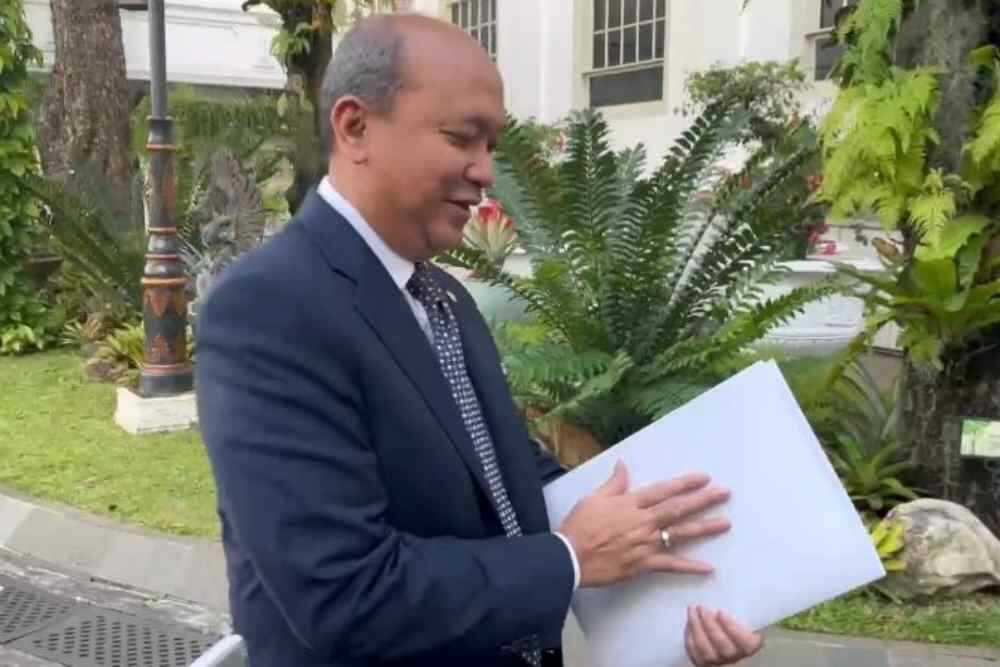
JAKARTA - Investment Minister and Head of the Investment Coordinating Board (BKPM) Rosan Roeslani has confirmed that the Indonesian Government removed LG Energy Solution from the Titan Project, a mega EV battery project involving a South Korean consortium and Indonesia Battery Corporation (IBC).
Rosan stressed that the decision was conveyed through an official letter from the Ministry of Energy and Mineral Resources (ESDM) issued on 31 January 2025. The reason, he said, was that negotiations between LG and the Indonesian consortium had dragged on for too long — nearly five years.
“That is why the letter was issued, because the negotiations had gone on for far too long, whereas we want everything to proceed well and quickly, as negotiations had already been ongoing for five years,” he told reporters at the Presidential Office on Wednesday (23 April 2025).
In the letter, Rosan conveyed the government’s official decision to the CEOs of LG Chem and LG Energy Solution. The letter simultaneously paved the way for Huayou, a Chinese company that had previously been part of the consortium, to take over LG’s role in the US$9.8 billion project.
“So the total investment remains unchanged at US$9.8 billion. Huayou has already invested in Indonesia previously, in a nearly identical field,” he said.
The South Korean consortium led by LG had reportedly decided to withdraw from the approximately 11 trillion won (Rp130.7 trillion) project to build an EV battery supply chain in Indonesia. A Yonhap source said the consortium had decided to pull out after consulting with the Indonesian government, citing shifts in the industry landscape, particularly in EVs, referring to the temporary slowdown in global EV demand.
“Considering the market conditions and investment environment, we have decided to exit the project. However, we will continue our existing business in Indonesia, such as the Hyundai LG Indonesia Green Power [HLI Green Power] battery plant, our joint venture with Hyundai Motor Group,” said an official from LG Energy Solution on Saturday (19 April 2025).
Why Huayou Was Chosen
Rosan explained that Huayou had expressed its interest since 2024 in becoming a more active member of the consortium. The company will now lead the consortium previously chaired by LG. In addition to Huayou, national companies such as Indonesia Battery Corporation (IBC) and PT Aneka Tambang (Antam) are also involved, playing important roles in the project’s joint venture structure.
“They are simply replacing LG’s position. And within the structure, there is not only Antam but also IBC. That is a subsidiary of Antam in the other JV,” he added.
Furthermore, Rosan emphasised that Huayou’s entry does not hinder investment flows in the battery and electric vehicle sector. On the contrary, the move is seen as an effort to accelerate the realisation of a project that directly impacts job creation, export growth, and the strengthening of Indonesia’s human resources.
“So I want to convey that other investments are proceeding. If you ask why investments continue to flow, it is because there is confidence,” Rosan concluded.