
Indonesian Embassy in Tokyo Supports Cooperation to Address Global Energy Transition Challenges
Jakarta (ANTARA) - Indonesia’s Ambassador to Japan and the Federated States of Micronesia, Nurmala Kartini Sjahrir, has emphasised the full commitment of the Indonesian Embassy in Tokyo in overseeing the implementation of strategic agreements between the Indonesian and Japanese governments.
“The Indonesian Embassy in Tokyo is ready to ensure that every aspect of these agreements is translated into concrete actions that add value to the national economy and strengthen bilateral relations between the two countries,” Nurmala stated in a press release received in Jakarta on Wednesday.
She explained that the cooperation goes beyond mere investment figures, representing a comprehensive strategic partnership between Indonesia and Japan in addressing global energy transition challenges.
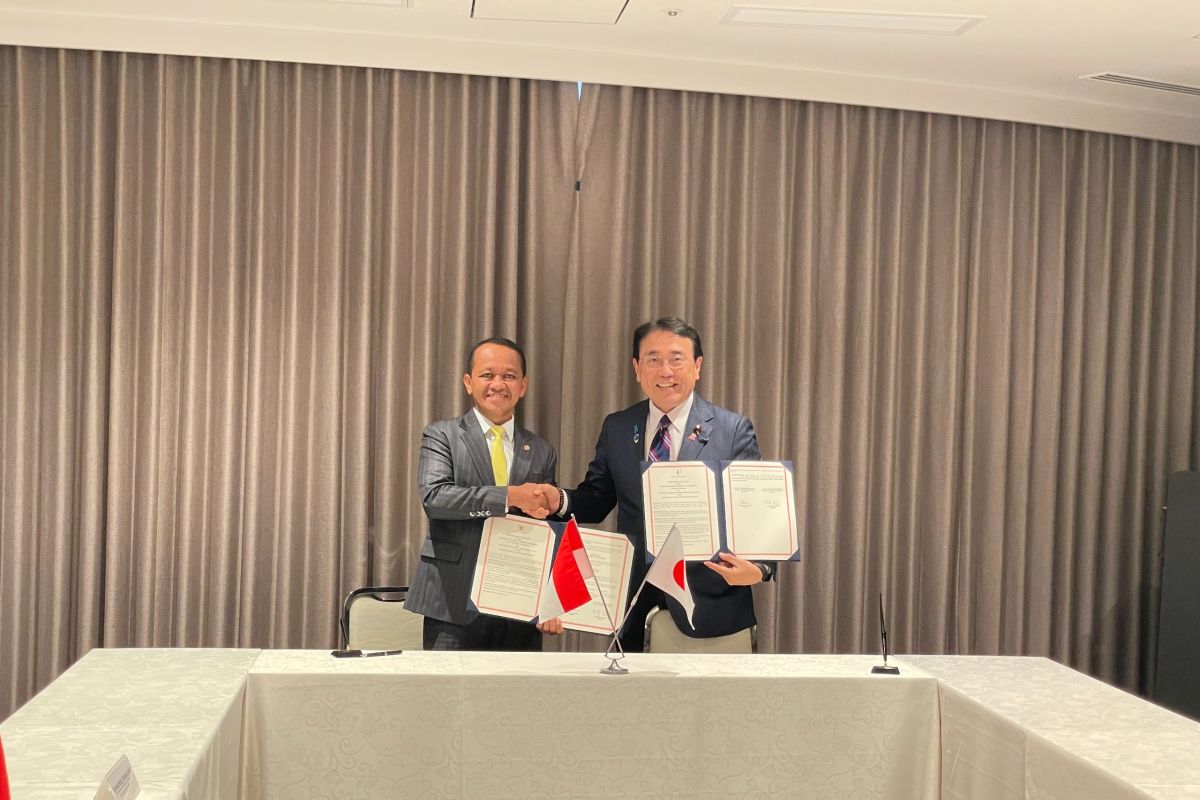
This initiative follows a bilateral meeting between Indonesia’s Minister of Energy and Mineral Resources (ESDM), Bahlil Lahadalia, and Japan’s Minister of Economy, Trade, and Industry (METI), Ryosei Akazawa, on the sidelines of the Indo-Pacific Energy Security Ministerial and Business Forum (IPEM) on Sunday (15/3).
Regarding critical minerals, the cooperation is aimed at strengthening the global supply chain to make it more secure and reliable. The collaboration is also expected to support the development of clean energy technologies through the utilisation of Indonesia’s strategic mineral resources.
“I very much welcome this memorandum, especially in the field of critical minerals. We are very open and happy to invite the Japanese government and Japanese business friends to jointly manage our critical minerals in Indonesia,” Bahlil said during the meeting.
On the same occasion, Bahlil also met with Inpex Corporation CEO Takayuki Ueda, marking an important momentum in accelerating the Masela Block project, which has an investment agreement worth USD 20 billion (approximately Rp339 trillion).
The Masela Block project is seen as having significant value in driving new economic growth for eastern Indonesia, as well as serving as a major gas supply source for the national industry in the future.
Ambassador Nurmala added that the agreement on the development of the Abadi Field in the Masela Block represents a historic milestone for national energy resilience, and the Indonesian Embassy in Tokyo will continue to perform its facilitation role to ensure that the Front-End Engineering and Design (FEED) phase proceeds on schedule in the third quarter of 2026, thereby achieving the production target in 2029-2030.
Meanwhile, Bahlil also appreciated the progress of the project’s construction, which has reached about 25 percent.
He emphasised his desire for the Masela Abadi Project to advance the FEED phase in the second quarter of 2026 or at the latest in the third quarter of this year, so that the Engineering Procurement Construction (EPC) tender can be conducted in parallel.