
Indonesian Economy Grows in Q1 2026 as Rupiah Faces Pressure from Global Volatility
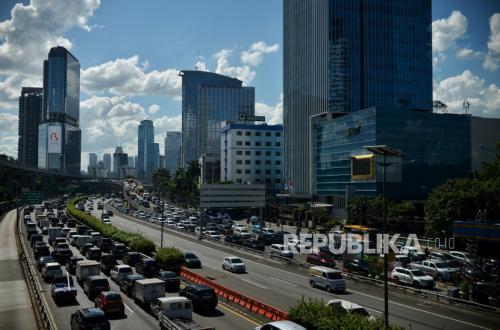
Jakarta — Bank Indonesia reported that the domestic economy showed strengthening in the first quarter of 2026, despite the rupiah facing pressure from global uncertainty triggered by Middle East conflicts.
Bank Indonesia Governor Perry Warjiyo stated that Indonesia’s economic growth expanded in early 2026, particularly supported by domestic demand. “Indonesian economic growth in the first quarter of 2026 increased, driven by domestic demand,” Warjiyo said during a press conference at the March 2026 Board of Governors Meeting on Tuesday, 17 March 2026.
He explained that household consumption rose, driven by demand related to National Religious Holidays, including income increases from holiday allowances (THR), government social spending, and various other incentives. Investment also remained robust, particularly supported by accelerated government expenditure, including the Red and White Village Cooperative programme (KDKMP) and investment through Danantara.
However, amid the strengthening of the domestic economy, Bank Indonesia noted pressure on the rupiah exchange rate. On 16 March 2026, the rupiah stood at Rp 16,985 per US dollar, or weakened by 1.29 per cent compared to end-February 2026 levels. “The worsening global conditions due to war in the Middle East have impacted exchange rate depreciation and capital outflows from emerging market countries, including Indonesia,” Warjiyo said.
Bank Indonesia also projected global economic growth in 2026 to slow to approximately 3.1 per cent from the previous 3.2 per cent, amid rising global uncertainty.
To maintain rupiah stability, Bank Indonesia continued to strengthen its policy through intervention in the financial markets, both in offshore non-deliverable forward (NDF) markets and spot transactions and domestic non-deliverable forward (DNDF) in the domestic market. “Bank Indonesia continues to increase the intensity of intervention in both offshore NDF markets and spot transactions and DNDF in the domestic market,” Warjiyo said.
Additionally, Bank Indonesia also optimised various monetary instruments to increase foreign capital inflows and strengthen balance of payments performance.
Going forward, Bank Indonesia is confident that rupiah exchange rate stability will be maintained, supported by policy commitment, attractive returns, and Indonesia’s still-positive economic growth prospects. “Bank Indonesia will continue to strengthen various policies to maintain rupiah exchange rate stability from the impact of worsening global conditions,” Warjiyo emphasised.
Bank Indonesia reaffirmed its commitment to strengthen synergy with the government and other stakeholders to maintain economic growth within the range of 4.9–5.7 per cent, while ensuring macroeconomic stability remains intact.