
Indonesian Cuisine Showcased at Five-Star Hotel in Beijing
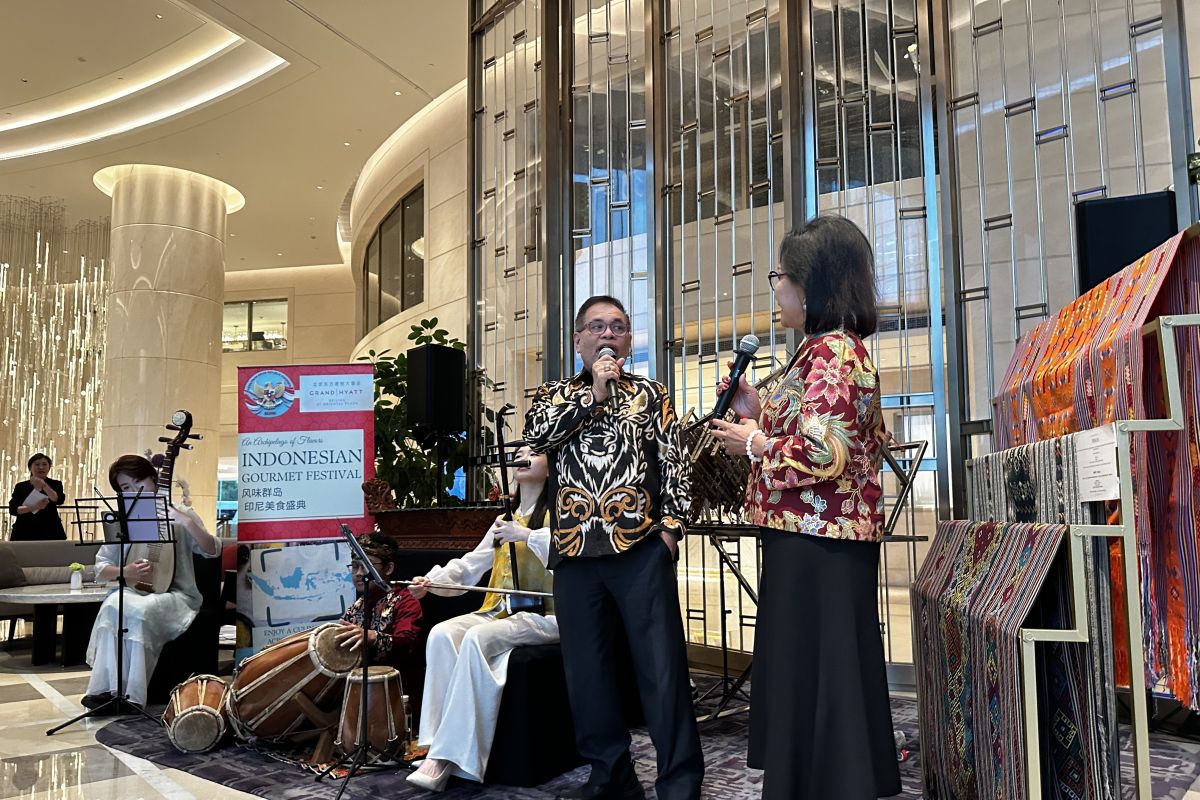
Beijing (ANTARA) - Dishes from various regions of Indonesia will be featured as a special menu at the Grand Hyatt Beijing hotel from June 3-28, 2026, in an Indonesian culinary festival titled “Kepulauan Cita Rasa”.
“Various Indonesian dishes such as bakpao, cakwe, and capcay reflect the history of interaction between Indonesia and China, and also serve as evidence of cultural exchange before modern diplomatic relations were established. I invite attendees to enjoy the richness of Indonesian cuisine and understand the stories contained in each dish,” said Indonesian Ambassador to China and Mongolia Djauhari Oratmangun at the Grand Hyatt Beijing hotel on Wednesday (June 3).
The opening of the event was attended by around 50 people, including the wife of the Indonesian Ambassador to China and Mongolia, Wiwik Oratmangun, diplomats from friendly countries, Indonesian citizens in the Beijing area, and members of the public. There was also a performance of traditional Indonesian and Chinese music by Risnandar, a lecturer from the Central Conservatory of Music Beijing.
“Trade connects our economies, and investment strengthens industrial relations. However, food continues to be a bridge that brings the people of both countries closer. Ultimately, sustainable partnerships are built on human relationships,” said Ambassador Djauhari.
Luca Puluse, the Italian head chef at the Grand Hyatt Beijing, who is married to an Indonesian woman, believes that Indonesian cuisine has a rich culinary heritage that is not yet widely known to foreigners.
“Unfortunately, many people only know Indonesia as Bali. I have traveled to various parts of Indonesia and I know that Indonesian food is very diverse from one island to another, even within the same island. Therefore, I want to introduce this diversity,” said Luca.
At this year’s festival, Luca, assisted by several Indonesian chefs brought in directly from Jakarta, will serve a variety of Indonesian dishes, including 12 appetizers, 2 soups, 16 main courses, 4 grilled dishes, 12 types of sambal, and various crackers.
“Last year, we served classic Indonesian dishes such as rendang, nasi goreng, and soto. But this year, we decided to serve as many dishes as possible from various islands such as Sumatra, Java, Sulawesi, Maluku, and Flores,” he added.
Several dishes such as nasi lapola, sop konro, bebek betutu, ayam woku, pepes ikan, kolak pisang, cenil, jamu, and es putar were also served at the opening event.
In terms of taste, Luca said he wanted to serve Indonesian dishes with authentic flavors.
“I asked the team to serve Indonesian dishes with original flavors because the main concept is to introduce as much Indonesian cuisine as possible. In addition, Chinese people are used to traveling and appreciate the authenticity of food flavors,” he said.
The sous chef, or deputy head chef, Kiki Aprianto, who was brought in directly from Jakarta, said that there were no major changes to the flavors to maintain the authenticity of the Indonesian dishes served.
“Actually, nothing has been reduced, we follow the standards we have and we do not change the local Indonesian flavors. But we only adjust the level of spiciness and sweetness according to the requests of the organizers,” he added.
In addition to food, a variety of Indonesian coffees were also served, such as Papua Wamena, Jambi Kerinci, Luwak, Liberia Java, and Arabica from West Java and Bali, at the opening event.
Edwin Prajna Adistana, an Indonesian coffee specialist in Beijing, deliberately served coffee from various regions of Indonesia because he wanted to highlight the story of Indonesia’s richness.
“Indonesian coffee has many stories. Chinese people usually only know Bali, Bromo, and Jakarta. In fact, Indonesian coffee comes from Sumatra, Java, Sulawesi, Papua, Nusa Tenggara. We can tell that the coffee from each region has a diverse and unique flavor,” he said.
According to him, this diversity of flavors makes Indonesian coffee more marketable than other popular coffees from outside China, such as coffee from Brazil, Ethiopia, and Vietnam.
“Indonesian coffee is not yet well known to Chinese people. People know about luwak coffee, which is expensive, but there are many other Indonesian coffees that have interesting flavors,” he added.
These various Indonesian dishes are available in the restaurant from 11:00 am to 9:00 pm local time.