
Indonesian Business Leaders Voice Concerns Over Damaging Effects of US-Israel-Iran Conflict
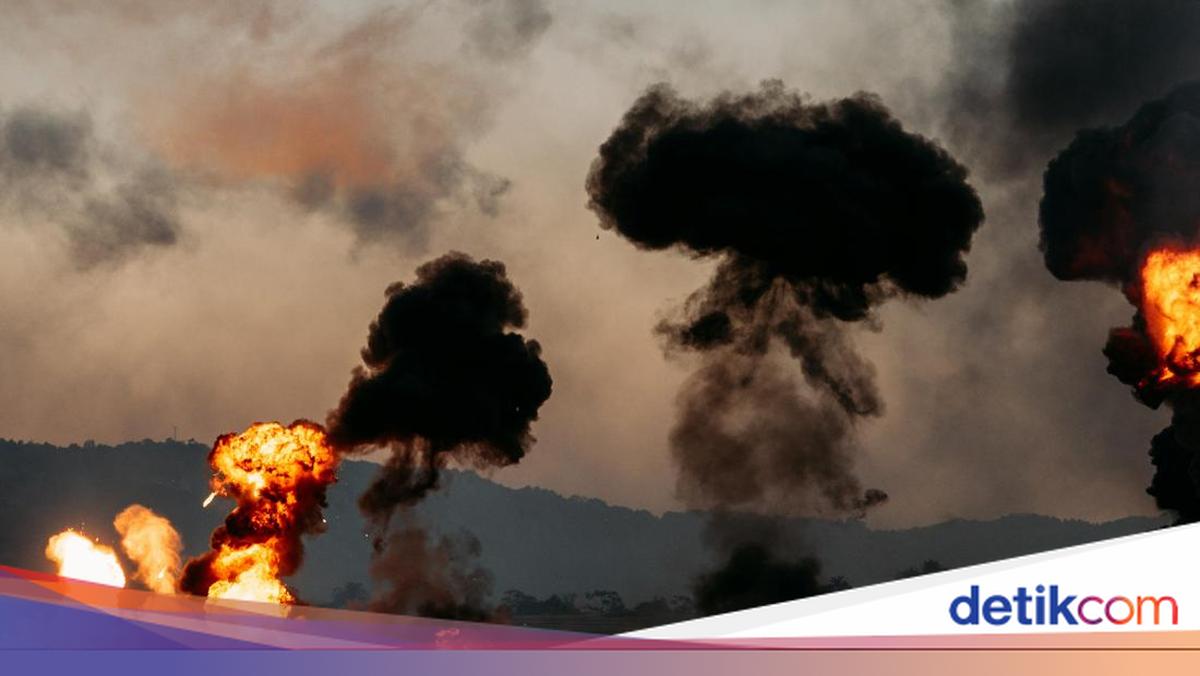
The General Chairman of the Indonesian Employers’ Association (APINDO), Shinta Widjaja Kamdani, has openly discussed the concerns felt by business practitioners regarding the damaging impacts of the conflict between the United States and Israel against Iran.
The conflict has affected rising import costs for energy and foodstuffs, as well as the tourism sector. According to Shinta, the primary risks resulting from the conflict in the Middle East region stem not only from market sentiment but also from the potential disruption of global energy and trade routes, particularly in the Strait of Hormuz region.
As is known, the Strait of Hormuz is a vital global energy trade point, where approximately 20% of the world’s oil passes through. “The current concerns of business practitioners are the increase in risk premium for oil and gas prices, as well as the rise in international logistics costs. Even without physical closure of the route, uncertainty alone can drive a surge in energy prices and global logistics costs,” Shinta told detikcom on Monday, 9 March 2026.
Shinta stated that as an oil-importing nation, these pressures have the potential to increase production costs and narrow fiscal space if global energy prices rise above the assumptions in the State Budget (APBN). APINDO is also monitoring the cascading risk to food inflation. Rising energy prices will impact the costs of distribution, logistics, and transportation of food commodities.
“Under certain conditions, these pressures can accelerate increases in basic commodity prices, particularly if accompanied by disruptions to global supply or currency weakening. Therefore, the stability of food supply and distribution becomes a crucial aspect that needs to be maintained if the impact of the conflict widens and persists,” she said.
Deficit and Debt
On the fiscal side, if energy prices remain high, the burden of energy subsidies and compensation has the potential to increase. According to Shinta, it is important for the government to manage this risk carefully so as not to create excessive pressure on the deficit and state debt financing. Disciplined debt management, maintaining the deficit ratio within a credible corridor, and ensuring state expenditure remains well-targeted are important factors for maintaining market confidence.
On the external side, global risk-off dynamics can increase currency volatility. A weakening rupiah will magnify the costs of importing energy and food, so coordination of monetary and fiscal policy needs to be strengthened to maintain macroeconomic stability. “The impact on the business sector itself will vary. Industries with high dependence on energy and international logistics will experience direct pressure,” Shinta explained.
Risk Mitigation Steps
Labour-intensive sectors are also among the most vulnerable. This is because of thin margins and high sensitivity to distribution costs, imported raw materials, and disrupted export demand. Although Indonesia’s direct trade relations with Iran and Israel are relatively limited, Shinta noted that indirect effects through global energy prices, disruptions to international trade, food inflation, exchange rates, and financial market sentiment become far more relevant factors for the national business community.
In the short term, business practitioners are currently focused on realistic and adaptive risk mitigation measures. The first step is through adjustments to production and distribution cost structures. The second is improving operational efficiency. The third step involves implementing more disciplined risk management, including foreign exchange exposure management. The fourth is diversification of supply sources, along with the use of hedging instruments or natural hedging that are available.
“Overall, the business community is responding to this situation with a wait-and-see but prepared approach should global pressures continue,” Shinta said.
Maintaining Energy and Food Price Stability
APINDO is also urging the government to maintain measurable stability in energy and food prices, strengthen reserves and strategic logistics distribution, ensure fiscal and monetary policy discipline along with prudent debt management, and provide targeted support to economic sectors potentially affected.
The increasingly heated geopolitical situation in the Middle East is also considered to have an impact on Indonesia’s tourism sector. The organisation also does not dismiss that the global situation could affect the transportation sector, such as flight cancellations. Nevertheless, Veronica views Indonesia’s domestic tourism sector as still robust.
“From the tourism sector itself, whatever happens, volatility in energy prices, exchange rates and so forth will certainly have an impact. We all understand that,” said Veronica H Sisilia, Commercial Director of InJourney, at a press conference at the Sarinah Building, Central Jakarta, on Monday, 9 March 2026.
One of its mainstays is the domestic tourism attraction. Looking at December 2025, international tourist arrivals increased by 14.4%. According to her, this shows that domestic tourism remains strong. “There are certainly flight cancellations and other things. That will certainly have an impact, it’s inevitable. But we believe the domestic tourism side of the tourism industry is quite strong in whatever InJourney prepares,” Veronica said.