
Indonesian Business Leaders Candid About Sectors Severely Hit by Iran-US-Israel Conflict
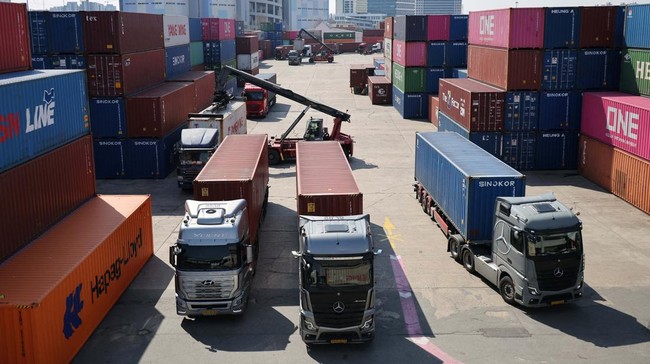
Jakarta — Indonesia’s business community is increasingly scrutinising the potential spillover effects of the geopolitical conflict in the Middle East between Iran, the United States, and Israel on the nation’s trade and industrial sectors. The greatest risk is expected to emerge if disruptions to global logistics persist over an extended period.
Sarman Simanjorang, Vice-Chair of the Chamber of Commerce and Industry Indonesia, stated that export-dependent sectors are among the most vulnerable to global distribution disruptions.
“If international logistics are disrupted, then export-based sectors will certainly feel the impact,” Sarman told CNBC Indonesia on Tuesday, 17 March 2026.
He highlighted several of Indonesia’s flagship commodities that depend on uninterrupted international trade routes. “For instance, commodities such as palm oil, coal, garments, footwear, and electronics have traditionally been our main export products,” he said.
Global distribution disruptions could hamper the smooth shipment of goods to international markets and increase logistics costs. “If logistics routes are disrupted, goods shipments will certainly be delayed and distribution costs could rise,” Sarman explained.
Beyond the export sector, domestic industries reliant on imported raw materials also face potential pressure. “Industries that still depend on imported raw materials could also be affected because their supply could be disrupted,” he noted.
In such circumstances, he expressed hope that the government would prepare anticipatory measures to maintain the stability of national industry and trade. “We certainly hope the government can anticipate early on if disruptions occur to energy supply, raw materials, or logistics,” Sarman said.
Furthermore, Sarman expressed hope that the global conflict would not be prolonged so that global economic stability remains intact. “We all hope world leaders can quickly find a path to peace so that the global economy remains stable and the welfare of the people can be maintained,” Sarman concluded.