
Indonesian Automotive Industry Thrives Amid Global Challenges
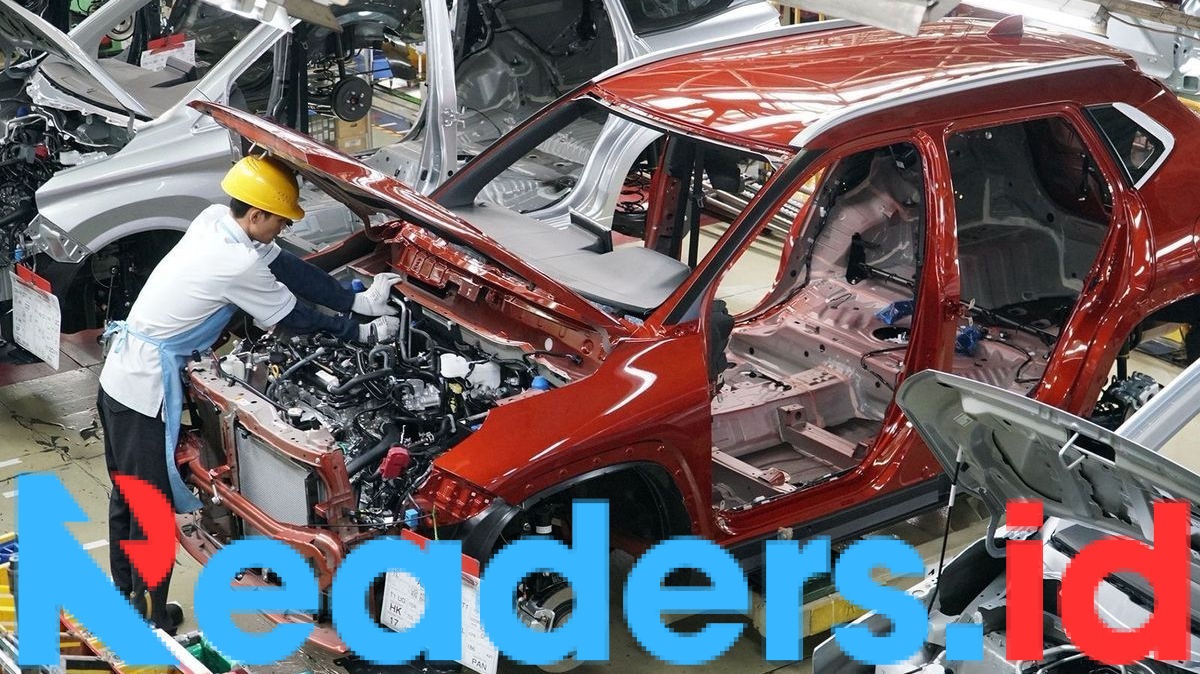
The Indonesia International Motor Show (IIMS) in early February 2026 once again demonstrates that Indonesia’s automotive sector remains dynamic. Industry Minister Agus Gumiwang Kartasasmita emphasised the importance of this industry in creating added value, absorbing labour, and strengthening domestic investment. In 2025, the automotive industry recorded direct employment of around 99,700 workers with total investments reaching Rp 194.22 trillion. Agus stated, “This contribution has proven effective in strengthening the domestic manufacturing structure,” as reported by Kompas.id on Thursday (5/2/2026). The automotive sector also plays a significant role in the national economy. This industry contributed 1.28% to gross domestic product (GDP) in the third quarter of 2025, and an average of 7.6% to non-oil and gas manufacturing GDP over the past five years, cited from the Indonesian Automotive Industry Association (GAIKINDO) website. Behind its positive contributions, Indonesia’s automotive industry faces various challenges, both global and national. Globally, one of the main issues is energy dominance. China controls about 70% of the world’s rare earth production and 90% of its refining. Meanwhile, global lithium demand is projected to increase 3.5 times by 2030 and 6.5 times by 2034. Another pressure comes from the semiconductor supply chain. Chips are essential components in modern vehicles, but geopolitical tensions make their supply vulnerable. Purchasing Power Restrains New Car Market In addition to global pressures, Indonesia’s automotive industry faces issues in the domestic market, where the main challenge is affordability, no longer just buying interest. A study by the Institute for Economic and Social Research at the Faculty of Economics and Business, University of Indonesia (LPEM FEB UI), released in early 2026, shows a significant decline in new car sales, from a peak of around 1.22 million units in 2013 to about 866,000 units in 2024. The used car market share reached 67.5% in 2024, surpassing the new car share of only 32.5%. This data indicates a shift in the automotive market. Consumers tend to delay purchases or switch to used cars due to the increasingly unaffordable prices of new cars. Therefore, the challenge for the automotive sector is not only to increase sales but also to expand the new car market hindered by affordability issues. Impact of Weakening New Car Market According to a Kompas.com report on Thursday (4/9/2025), the decline in car sales has led to efficiency measures and layoffs (PHK) in the automotive sector, particularly in the components industry. The weakening new car market directly impacts the components industry and other supporting layers. Every correction in the vehicle market affects supplier companies behind the main manufacturers. When the car market slows, the sustainability of the industrial network, workforce, and production capacity built over years is at stake. Local Supply Chain as the Key The strength of the local supply chain is key to bolstering Indonesia’s automotive components industry. The automotive sector must be viewed as a long production network, not just the finished vehicle industry. The Indonesian Automotive Parts and Components Industry Association (GIAMM) stated in a Kompas.com report on Wednesday (4/2/2026) that one vehicle is supported by around 25,000 individual components and thousands of companies in the supply chain, from raw material suppliers to the machinery and tools industry. The resilience of the automotive industry is determined by the depth of domestic production bases. The stronger the local suppliers, the lower the dependence on imports, and the greater the industry’s chances of survival. Technology Transition Cannot Be Delayed The automotive industry cannot delay the transition to electrification, even though the new car market remains constrained. Data from the Ministry of Industry shows an increase in the share of hybrid electric vehicles (HEV) and battery electric vehicles (BEV). However, BEV growth is still largely supported by imports during the incentive phase. The LPEM FEB UI study shows that the portion of completely built up (CBU) in BEV sales has risen significantly. In 2026, the main issue is how the automotive sector undergoes a technology transition to reduce emissions without weakening domestic manufacturing, as well as efficient utilisation of resources to support electrification. HEV becomes a more realistic option because it is built on the existing internal combustion engine (ICE) industry foundation, so the transition does not immediately break the old industrial chain. Industry Foundation Already Formed Indonesia’s automotive industry has a manufacturing track record that has grown through a long process. Indonesia continues to strengthen its position as an automotive production base in the region. PT Motor Manufacturing Indonesia (TMMIN) serves as an example illustrating this process, starting from vehicle assembly, body plants, engine plants, component localisation, to export development. Investments continued despite Indonesia facing the 1997 monetary crisis and the 1998 political crisis. TMMIN’s export achievements, with a cumulative 3 million complete vehicles to 100 countries, demonstrate the competitiveness of Indonesia’s automotive industry in the global market, as cited from Kompas.id on Wednesday (10/10/2025). The government wants to encourage Indonesia not only as an export base but also as an automotive innovation centre for the Global South region. The pressures faced in 2026 show that the resilience of Indonesia’s automotive industry stems from its ability to adapt during difficult situations. In 2026, Indonesia’s automotive industry needs to rely on three things: keeping the domestic market moving, deepening the local supply chain, and pursuing a realistic technology transition. Indonesia’s automotive industry still has the capital to survive, but it needs to maintain sales, k