
Indonesia–US Trade Negotiations Completed, US$38.4 Billion in Investment Commitments Secured
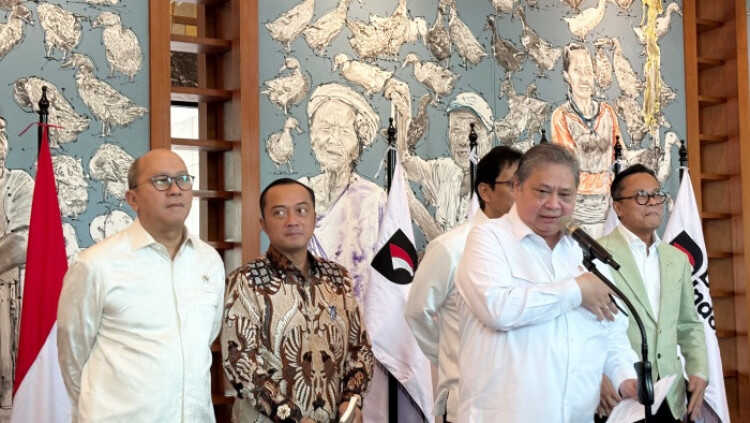
The government has confirmed that negotiations on the Agreement on Reciprocal Trade (ART) between Indonesia and the United States have been completed. Coordinating Minister for Economic Affairs Airlangga Hartarto said the agreement marks an important step towards expanding market access and strengthening business certainty.
The ART was announced at the US-Indonesia Business Summit 2026, held by the U.S. Chamber of Commerce, the US-ASEAN Business Council, and the U.S.-Indonesia Society in Washington D.C. on Wednesday (18/2/2026). President Prabowo Subianto attended the forum as part of a working visit to the United States.
Airlangga explained that the agreement was reached through intensive and constructive negotiations. The government believes the ART will simplify trade barriers, strengthen legal certainty, and open broader and more sustainable investment opportunities.
“The completion of the ART demonstrates Indonesia’s commitment to creating an increasingly open and investment-friendly business environment,” he said in a statement on Thursday (19/2/2026).
At the forum, attended by major US business figures, a number of memoranda of understanding were signed with a potential value of approximately US$38.4 billion. The breakdown includes roughly US$2.5 billion in the agricultural sector and US$35.9 billion in the industrial sector, including cooperation in semiconductors and strategic industrial materials.
According to Airlangga, the United States remains a strategic partner for Indonesia in trade and investment. Going forward, collaboration will be directed towards strengthening digital innovation, artificial intelligence, critical minerals, supply chain resilience, and energy transition.
President Prabowo used the occasion to emphasise the importance of stability, certainty, and policy consistency to maintain investor confidence. The government is now preparing for the formal signing stage and technical implementation so that investment commitments can be realised promptly and deliver tangible impact for the national economy.
Previously, US Trade Representative (USTR) Jamieson Greer confirmed that a trade deal with Indonesia could be finalised within the coming weeks. When asked about new trade agreements expected to be reached soon in an interview with Fox Business on Tuesday, Greer said they see Indonesia as “the next one”.
He also expressed hope that Indonesia, with its population exceeding 250 million, could become a larger market for US products. “We are in dialogue with the Indonesian side almost every day, and that is what makes us pleased,” Greer said.
US President Donald Trump has announced a series of bilateral trade deals, including with India and Bangladesh, in recent days. These developments come ahead of a US Supreme Court ruling on the legality of “reciprocal” tariffs imposed by the Trump administration on nearly all US trading partners under emergency legislation from the 1970s.
The ruling could be announced as early as 20 February. Greer said the Trump administration is “confident” about the Supreme Court’s eventual decision. However, should the Supreme Court rule the tariffs unconstitutional, Trump is certain to seek alternative means to impose high tariff policies.
“It may take longer, but we are focused on ensuring continuity regarding the types and levels of tariffs that need to be imposed,” the official said.
In addition to discussing Indonesia, the US trade official also said that trade relations with Beijing are currently “stable” ahead of President Trump’s visit to China in April. He confirmed that the visit, during which President Trump will meet Chinese President Xi Jinping, “has been scheduled”.
According to Greer, although the US must continue trading with China, trade must be “managed in a way that benefits both the economy and national security”. US and Chinese officials are also communicating regularly and will hold further dialogue before the Trump-Xi meeting.
“We are working to ensure that trade flows in sectors that matter to both countries,” he said.