
Indonesia-US Trade Agreement Triggers Concerns in Small Textile Industry
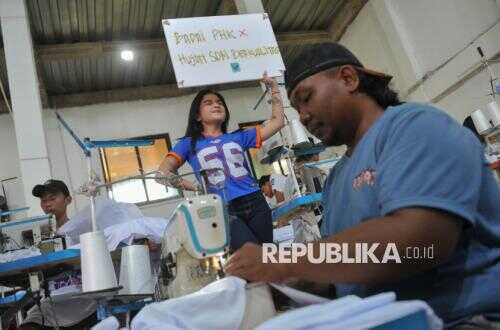
REPUBLIKA.CO.ID, JAKARTA – The Association of Creative Garment Entrepreneurs (IPKB) has expressed concern over the trade agreement between the Indonesian government and the United States under the Agreement on Reciprocal Trade (ART) scheme in the textile and textile products (TPT) sector. The organisation, which represents small and medium-sized garment producers, believes that the planned opening of imports of worn clothing has the potential to put pressure on the small and medium-sized enterprises (SMEs) market.
IPKB Chairman Nandi Herdiaman explained that the agreement includes two memoranda of understanding regarding the purchase of cotton and worn clothing as part of the requirements for obtaining export quotas to the United States with a zero per cent import tariff. He said that SMEs support the import of cotton as a raw material, but oppose the import of used clothing.
“We strongly support the import of cotton because it is needed for industrial raw materials, but we strongly object to the import of used clothing because it will disrupt the market for our members,” said Nandi in Jakarta, Tuesday (24/2/2026).
He said that the government’s crackdown on the sale of used clothing, which was carried out some time ago, had a positive impact on the demand for local garment products. Demand began to increase, although it has not fully recovered because there are still large importers who have not been targeted.
“We are actually asking that the existing practice of importing used clothing be completely eradicated, not that imports be opened up,” he said.
Nandi believes that the government needs to consider the sustainability of SMEs, which employ millions of workers. According to him, trade policies should not only accommodate the interests of large exporting companies, but also protect the resilience of small businesses in the domestic market.
He also doubts the effectiveness of supervision if imports are carried out in the form of scraps. Concerns have arisen because the Bonded Zone is often highlighted as a point of leakage for illegal imported goods that then circulate in the market.
“Because even though they say that what is being imported is scraps, what guarantee is there that what is being imported is not used clothing? Especially through the Bonded Zone, which has become common knowledge as a place for illegal imported goods to leak,” he said.
A similar view was expressed by the Chairman of the Indonesian Textile Consumers Foundation (YKTI), Rudiansyah. He said that his organisation supports the import of textile scraps for recycling needs, but warns of the risks if the policy opens access to used clothing.
“As a party that protects consumers, we do not want the market to be filled with used clothes with various risks and consequences,” said Rudiansyah.
According to him, the practice of importing used clothing has been going on for more than 15 years and has not been fully controlled, even though there is already a ban. Therefore, the concerns of industry players and consumers are considered reasonable, especially because the explanation regarding the type of imported goods still raises doubts.
Rudiansyah also highlighted the use of the term “worn clothing” in the planned import, which, according to customs classification, is different from textile scraps. Referring to the definition of the World Customs Organization (WCO) adopted in the Indonesian Customs Tariff Book (BTKI), worn clothing falls under HS code 6309, while textile scraps or rags are under HS code 6310.
“If what is being imported is worn clothing, then it is clear that the goods are used clothing,” he said.
Industry and consumer groups hope that the government will clarify the policy and strengthen supervision so as not to create new pressure on the domestic market. Certainty of regulation is considered important to maintain the sustainability of SMEs while also protecting consumers.