
Indonesia-US Trade Agreement Deemed Asymmetric and Risky to Economic Sovereignty
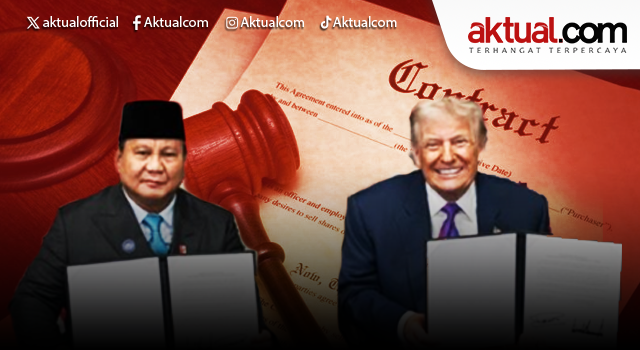
Jakarta – An academic study from the Faculty of Economics and Business at Gadjah Mada University (FEB UGM) highlights the potential major impacts of the Agreement on Reciprocal Trade (ART) between Indonesia and the United States. The agreement, signed in February 2026, is assessed to carry several risks, particularly concerning economic sovereignty and national policy. This was revealed during a discussion themed “ART and State Sovereignty” held in Menteng, Central Jakarta, on Wednesday, 6 May 2026. The discussant was Economist from the Faculty of Economics and Business at Gadjah Mada University (FEB UGM), Rimawan Pradiptyo, Ph.D. In a presentation titled Regulatory Impact Assessment of the Indonesia–USA ART, Rimawan, representing the research team, concluded that the agreement’s structure is asymmetric. “Indonesia bears more obligations, while the economic benefits predominantly flow to the United States,” Rimawan stated at the opening of the discussion. The FEB UGM study mentions that the ART pushes Indonesia to make various policy adjustments, from tariffs and product standards to investment regulations. On the other hand, no equivalent obligations were found for the United States to fulfil. Furthermore, the ART is assessed to potentially force Indonesia to adopt several US policies and standards, including in the trade, technology, and supply chain sectors. “This situation is feared to narrow domestic policy space,” he said. Not only that, there is also a clause requiring Indonesia to facilitate the purchase of American products by domestic companies. The study assesses this provision as potentially creating inefficiencies in the national economy. “We have studied it; we decided to conduct an impact analysis. But it was too late; we learned about it after the announcement. Similar to when we joined the BOP,” Rimawan said. “But the cost of rejecting the ART is cheaper than accepting it,” he added. From a regulatory perspective, implementing the ART is said to require major changes. At least 117 regulations in Indonesia, from laws to technical rules, are estimated to need adjustment or revision. Another highlighted impact is the potential pressure on domestic businesses, especially micro, small, and medium enterprises (MSMEs). The influx of large quantities of US imported products is assessed to increase unbalanced competition. In the context of international relations, the ART also has the potential to affect Indonesia’s position on the global stage. The study mentions an obligation for Indonesia to follow US trade policies towards third countries, which could trigger retaliation risks from other trading partners. Nevertheless, the study also assesses that the threat of high tariffs from the United States—which often serves as a reason for accelerating the agreement—is not entirely credible, especially following a US Supreme Court decision limiting tariff-setting authority. Overall, the research team assesses that the ART has the potential to cause broad impacts, not only on the economic sector but also on Indonesia’s legal and geopolitical aspects. The study recommends that the government and the House of Representatives conduct a thorough review before making decisions related to the implementation of the agreement on 19 May 2026, considering its strategic implications for national interests.