
Indonesia-US trade agreement: a test of constitutionality and economic sovereignty
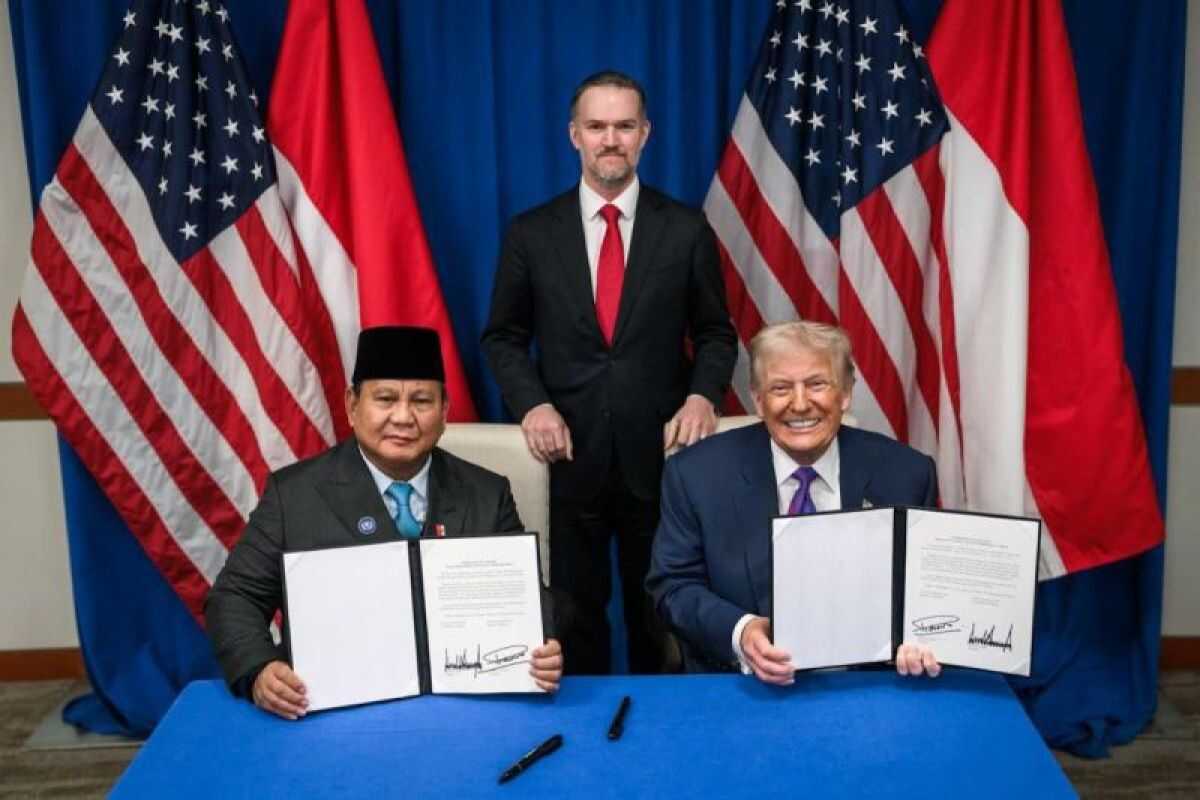
An international agreement is considered an action of equal constitutional weight to war and peace, an action that can fundamentally change a country’s position.
Jakarta (ANTARA) - The signing of the Agreement on Reciprocal Trade (ART) between the President of the Republic of Indonesia and the President of the United States in Washington DC in February 2026 is not just an ordinary diplomatic event.
The agreement contains serious consequences for both countries. Indonesia eliminates 99 percent of the barriers to products originating from the United States, while Indonesian products still bear a 19 percent tariff in the US market.
Furthermore, Indonesia is asked to accept standards and certifications from US agencies such as the Food and Drug Administration, Food Safety and Inspection Service, and National Oceanic and Atmospheric Administration, eliminate sanitary and phytosanitary (SPS) barriers, waive the obligation for Domestic Content Level (TKDN), and accept vehicle and emission standards from the US.
The question now is whether the President’s action in signing the ART has met the requirements of Article 11 of the 1945 Constitution? Or is this an exercise of executive diplomacy that goes beyond constitutional limits?
In a state of law, international agreements are not just a matter of foreign policy, but legal actions that can limit sovereignty and have a direct impact on the rights of citizens.
The construction of presidential authority