
Indonesia-US Semiconductor Ecosystem Partnership Offers Additional Investment Potential of Rp 500 Trillion
WASHINGTON DC – The Indonesian government has formally established a strategic partnership with the United States for the development of Indonesia’s national semiconductor ecosystem. The signing of the initial Memorandum of Understanding (MoU), valued at US$4.89 billion or approximately Rp 82.15 trillion (at an exchange rate of Rp 16,800 per US dollar), was witnessed directly by President Prabowo Subianto in Washington DC on Wednesday, 18 February 2026.
This agreement is projected to have additional long-term investment potential of up to US$26.7 billion or equivalent to Rp 500 trillion, thereby bringing the total potential investment value to US$31.59 billion. This step represents a concrete strategy for Indonesia to strengthen its position in the global technology supply chain whilst accelerating the transformation of high-value-added industries.
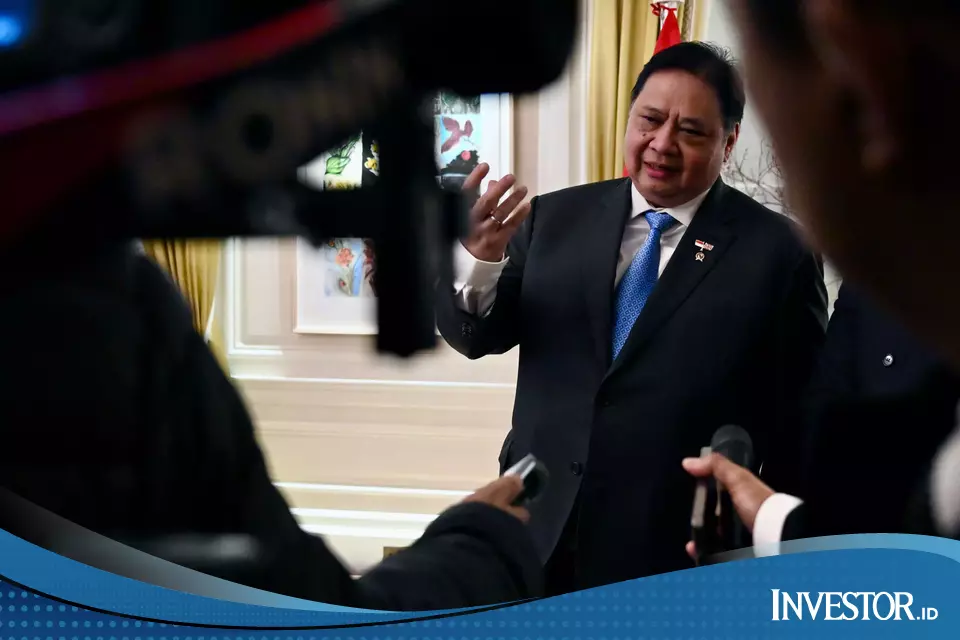
The Coordinating Minister for Economic Affairs, Airlangga Hartarto, who accompanied the President, emphasised that this partnership represents part of Indonesia’s strategic repositioning.
“The development of the semiconductor ecosystem is part of Indonesia’s national strategy to deepen industrial structures and increase Indonesia’s competitiveness in the global value chain. Indonesia is no longer positioned merely as a technology market, but as a production base and development hub for strategic technology,” explained Coordinating Minister Airlangga in his statement on Tuesday, 24 February 2026.
This partnership involves a National Strategic Project (PSN) being undertaken by PT Galang Bumi Industri (GBI) as the domestic business operator. Meanwhile, the US side has partnered with Essence Global Group, LLC and Tynergy Technology Corp as strategic development partners.
The scope of collaboration includes the construction of manufacturing infrastructure, green industry projects, workforce development, and joint research and development (R&D) on cutting-edge technology such as wafer ingot manufacturing and solar cells through innovative plasmonic processes.
This massive investment is estimated to create approximately 5,000 skilled jobs in the fields of engineering, advanced materials technology, and next-generation energy systems. The government is targeting substantial technology transfer to enhance national human resources capacity.
“This MoU is not merely a financial investment. It is part of Indonesia’s strategic repositioning within global industrial architecture. We want to ensure Indonesia becomes part of the world semiconductor value chain, strengthen industrial autonomy, and increase our bargaining power in the global supply chain,” added Coordinating Minister Airlangga.
Through this partnership, Indonesia is seeking to secure access to frontier technology and accelerate the strengthening of the national innovation ecosystem in order to realise a high-technology and sustainable economy.