
Indonesia–US ART Agreement: The Economy’s Competitiveness Must Be Strengthened
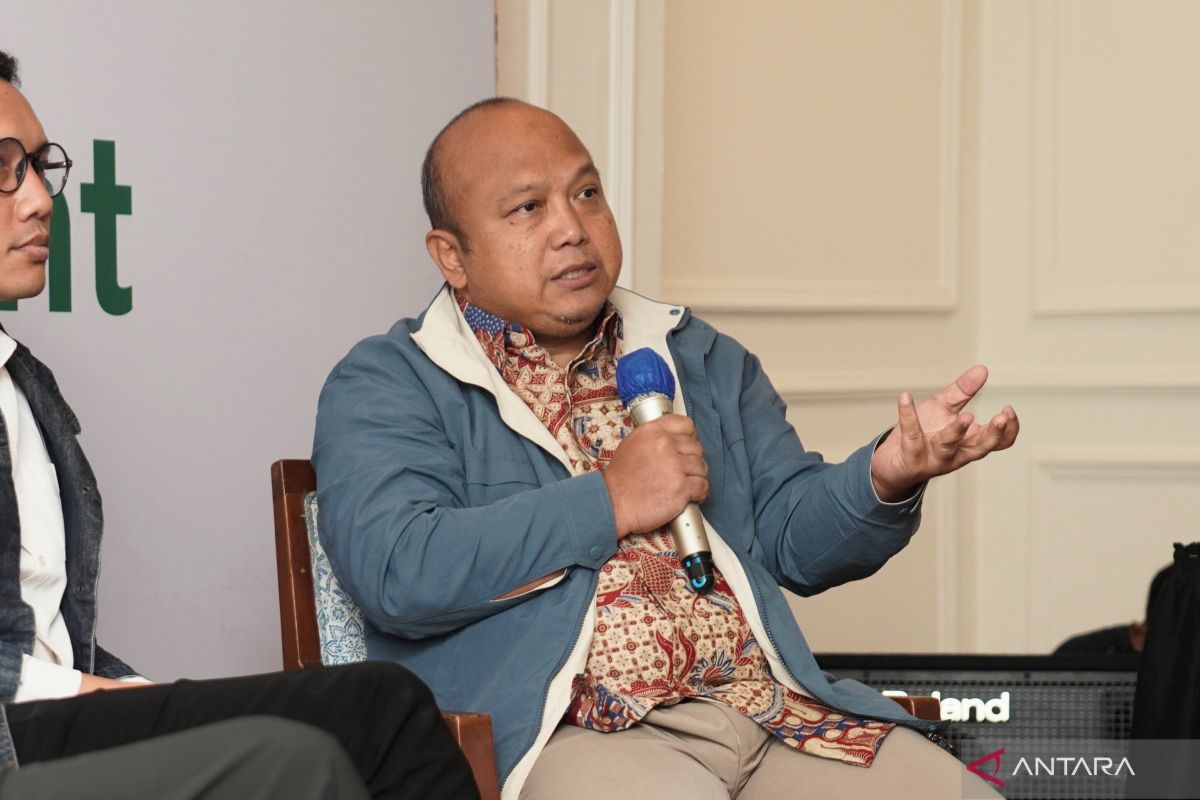
Market access is indeed open, but we still must compete with other countries that have strong industrial capacity. Jakarta — Senior economist Tauhid Ahmad of the Institute for Development of Economics and Finance (Indef) has reminded that the 0 percent tariff facility under the Agreement on Reciprocal Trade (ART) between Indonesia and the United States is not a privilege granted only to Indonesia, but also to several other countries. He notes that the benefits of such a low tariff depend heavily on the competitiveness of the national industry. ‘Many countries also receive the same facilities, such as Malaysia and Vietnam. This means that market access is indeed open, but we must still compete with other countries with strong industrial capacity,’ Tauhid said in a briefing in Jakarta on Sunday. As is known, the ART agreement between Indonesia and the United States provides a 0 percent tariff for 1,819 tariff lines of Indonesian products. The policy is seen as opening up broader export opportunities to the American market. According to Tauhid, Indonesia’s success in exploiting these opportunities will be determined by the readiness of the industrial sector to raise productivity, product quality, and cost efficiency. In the electronics sector, for instance, competition with other countries in Southeast Asia presents a real challenge. ‘Products such as crude palm oil (CPO) we do produce, but the market also has alternatives from other countries that receive similar tariff facilities,’ he added. Observers agree that the 0 percent tariff under the ART is a significant opportunity for Indonesia’s trade, but not an automatic guarantee of higher exports. Tauhid reminded that Indonesia must continue to strengthen competitiveness so that the opportunity can be fully exploited. ‘We must not be fooled by the figure of 1,819 tariff lines. Even if export tariffs are 0 percent, exports may not rise immediately if capacity and industrial competitiveness are not ready,’ he asserted. Tauhid’s study, based on an economic analysis model developed by IPB, estimates that in a scenario with a 19 percent tariff with 0 percent exemptions for certain products, Indonesia’s exports could fall by about 1.58 percent, while imports are projected to rise by 1.51 percent. In that scenario, Indonesia’s Gross Domestic Product (GDP) is projected to be revised down by around 0.41 percent, while the United States is projected to grow by 6.54 percent. On the trade balance, Indonesia would also need to anticipate potential deficit pressures of around US$5.7 billion. The figure does not include commitments to purchase American commodities worth US$38.4 billion as stipulated in the ART agreement. Garda Maharsi, Director of Prognosa Research & Consulting, explains that the initial mapping of the national industry’s structure shows different opportunities across sectors. Several sectors are deemed to have substantial potential to capitalise on the ART momentum, including the nickel, energy, and petrochemicals industries. In addition, palm oil (CPO) commodities also have the potential to broaden export markets if supported by appropriate policies. ‘Some sectors do have strong opportunities to grow. However, to realise that potential, an adequate industrial ecosystem of support is required,’ Garda said. Leading sectors need to be supported by various strategic policies, including easier access to financing, efficient logistics support, and strengthened industrial supply chains. On the other hand, sectors such as textiles, metal products, and minerals are still considered to require capacity-building to compete optimally in global markets. Sofyan Herbowo, Director of Public Affairs Praxis and Deputy Chairman of the Public Affairs Forum Indonesia, assessed that the readiness of industrial capacity will be as important a factor as the tariff policy itself. He said that several of Indonesia’s flagship commodities, such as CPO, still hold a strong position in the global market. ‘Indonesia remains one of the world’s largest producers of CPO, and thus has influence in price formation in the global market,’ said Sofyan. However, for the industry sector with long supply chains such as textiles, it takes time and carefully planned adjustment strategies before export opportunities can be optimised.