
Indonesia to implement mandatory B50 biodiesel, carbon emissions to fall
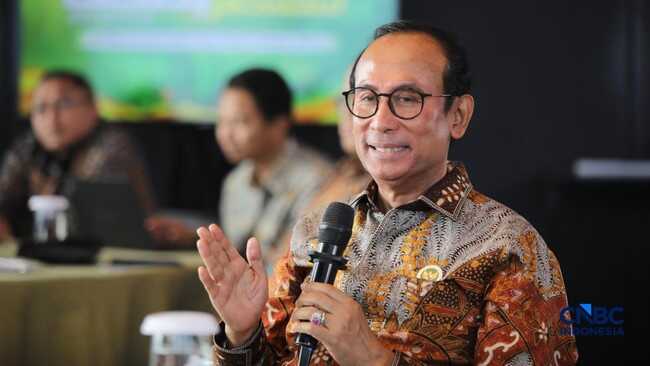
Indonesia’s National Energy Council (DEN) member Satya Widya Yudha spoke frankly about the development of biofuels. He considers it aligned with Government Regulation (PP) No. 40 of 2025 as the foundation for accelerating the energy transition toward net-zero emissions by reducing fossil energy use. This means that, even assuming Indonesia’s economy grows towards 8%, by 2030 the amount of vegetable oils would be around 18-22 million tonnes of oil equivalent, which would have a significant impact. ‘Thus, we must view this as a major scenario within the framework of the net-zero emissions target for 2060. The major contributors are naturally the industry and transportation. We should unpack the policy of adding the so-called B, as its history is long—from B5, B10, up to today’s B40, and planned to reach B50. This must be considered from upstream, midstream, and downstream aspects,’ Satya said at the Energy Forum CNBC Indonesia, quoted Friday (6 March 2026). He said many steps are being taken so that the programs already set out in the National Energy Policy (KEN) can be reached collectively. Meanwhile, Deputy Speaker of the MPR Eddy Soeparno reminded that in moving toward biofuels, energy security must remain the priority. Eddy emphasised that energy security must be paramount in the energy transition, renewable energy development, and the energy mix. ‘Our fuel reserves are only 20 days and we are vulnerable in terms of energy security. Some of our fuel reserves are managed by Pertamina. So what the state owns is what Pertamina owns, and what Pertamina owns is what the state owns,’ Eddy said. On the other hand, Eddy acknowledged that Indonesia has a large task in security, especially in the event of a prolonged war. Therefore, it is important for Indonesia to raise B40 to B50. He even said they have met with the Ministry of Energy and Mineral Resources (ESDM) to ensure phased implementation. ‘While assessing readiness on the ground, we will not implement the policy nationwide all at once, but gradually in certain areas where infrastructure is already in place, for example on the island of Java and portions of Sumatra. Then we will increase volumes while monitoring potential negative effects such as engine issues,’ Eddy concluded. On the other hand, Kukuh Kumara, Secretary-General of the Indonesian Automotive Industry Association (Gaikindo), also reminded not to rush biodiesel blending increases. The jump from B35 to a much higher level must be done gradually so that several technical issues can be identified first. ‘Especially for commercial vehicles that use diesel. These operate outside cities, sometimes in forests. It would be unfortunate if they encounter problems,’ he said.