
Indonesia to Implement Biodiesel B50, Palm Oil Production Must Increase
Indonesia to Implement Biodiesel B50, Palm Oil Production Must Increase
Jakarta, CNBC Indonesia - The government will soon implement a diesel fuel program with a biodiesel blend based on palm oil of 50% or B50. One strategy to ensure the programme’s success is to increase domestic production of crude palm oil (CPO).
This is not without reason, given that CPO production in Indonesia has tended to stagnate over the past five years, at around 48 million to 51 million tonnes. On the other hand, domestic CPO consumption has continued to rise, especially since the biodiesel mandatory programme.
As an illustration, in 2023, consumption of CPO for biodiesel already exceeded consumption for food. Furthermore, when B40 was implemented, CPO consumption to support the programme reached more than 12 million tonnes. If B50 is applied, demand for CPO for biodiesel would rise to around 16 million tonnes. The consequence would be that Indonesia would have to sacrifice CPO exports to meet the domestic priority programme needs.
Therefore, to run the B50 programme, national CPO production must be increased. If not, CPO exports will be sacrificed again or continue the downward trend.
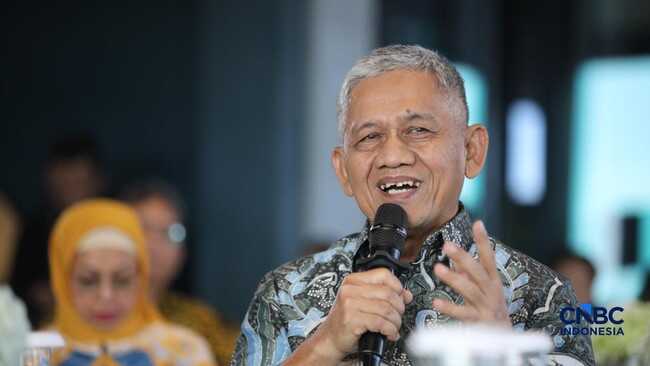
“Energy security must be safeguarded, and downstream energy must be safeguarded as well. One way or another, exports will have to be sacrificed. If exports fall, export duties revenue also falls. Export duties, after all, have until now been used to subsidise biodiesel,” said Mukti Sardjono, Executive Director of the Indonesian Palm Oil Association (GAPKI), at the Energy Forum B50 Edition, reported Friday (6/3/2026).
So far, obstacles to increasing production relate to land availability constrained by moratorium or prohibition on adding new palm oil land. GAPKI also notes that the government has actively pursued productivity improvements through the Smallholder Palm Oil Rejuvenation Programme (PSR) since 2015-2016, targeting 180,000 hectares per year.
Mukti also recommended that the government provide a dedicated area for palm oil production related to the B50 programme. The land could be managed by state-owned enterprises (BUMN). This would ensure the programme does not interfere with CPO needs for food or exports.
“So it will not affect food needs or exports. So lift the moratorium first, but open it specifically for SOEs,” he said.
Meanwhile, a member of the National Energy Council (DEN), Satya Widya Yudha, said that they recognise that implementing B50 faces challenges, one of which is the availability of CPO as a feedstock.
DEN assesses that adding new palm oil land is no longer feasible given the moratorium policy. Therefore, DEN focuses on increasing productivity of existing palm oil plantations.
There is a fact that around 40% of Indonesia’s palm oil land is managed by smallholders. However, smallholder plantation productivity lags far behind that of large companies. Consequently, a way must be found for smallholder palm oil farms to be more productive.
“If these (smallholder palm oil farms) can be managed well, the land owned by the people, which is quite large, will contribute significantly to meeting demand by increasing productivity,” he said.
DEN member Fadhil Hasan added that, in addition to focusing on boosting CPO production as biodiesel feedstock, the B50 programme will only succeed if there is an improvement in the quality of the biofuel. Therefore, coordination between the Indonesian Biofuel Producers Association (Aprobi) as the biodiesel supplier and the motor vehicle industry association (Gaikindo) representing vehicle manufacturers is required.
Moreover, increasing CPO production must be accompanied by energy infrastructure such as refineries to process the blending of diesel with biodiesel. Pertamina’s RDMP project in East Kalimantan is expected to be a backbone for the success of the B50 programme.
“With the operation of the RDMP in Kalimantan, East Kalimantan is, calculation-wise, already more than sufficient,” he explained.
Furthermore, Deputy Speaker of the People’s Consultative Assembly (MPR) of the Republic of Indonesia, Eddy Soeparno, said that to support the B50 programme without sacrificing exports, Indonesia needs to increase palm oil production. However, Indonesia must be careful because if production is increased through expansion, there will be a need to open new land.
Opening new land would raise several issues, including land use conflicts, deforestation potential, and reduced forest area function. Eddy noted that Indonesia currently has 124 million hectares of forest, but only about 86 million hectares are truly natural forest.
“But the implication is that we would sacrifice exports; should we then increase domestic production, thereby sacrificing land? If we cannot intensify, then are our refinery capacities ready or not? These are considerations,” he concluded.
(dpu/dpu)