
Indonesia to Have Palm Waste Fuel Plant, Suitable for Ships and Power Plants!
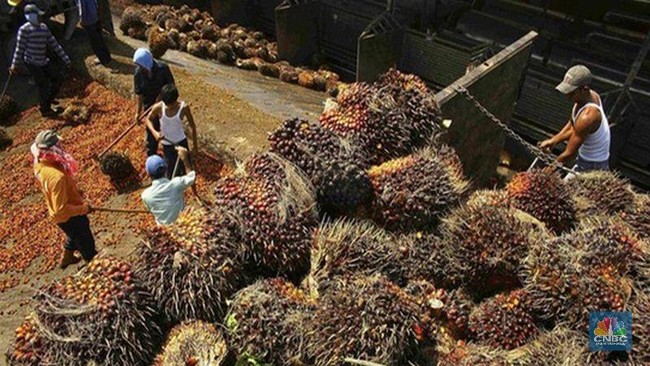
Indonesia will soon have a biometanol plant based on palm waste with an initial capacity of 50 tonnes per year.
This project will be developed by Pertamina New & Renewable Energy (Pertamina NRE) as part of efforts to promote green energy and decarbonisation.
Pertamina NRE’s President Director, John Anis, targets the initial production of biometanol from Palm Oil Mill Effluent (POME) to begin by the end of 2026 or early 2027.
“Hopefully by the end of this year or early next year, biometanol from biogas or POME in the Sei Mangkei Special Economic Zone can be produced. That’s around 50 tonnes per year or so,” John said during the Energy Corner CNBC Indonesia event, quoted on Friday (24/4/2026).
Furthermore, John stated that in the long term, production capacity is targeted to increase from 10,000 tonnes per year, then rise to 30,000 tonnes, up to 35 million tonnes per year (TPY) by 2035.
The project is being developed through a collaboration with Singapore-based cleantech company cRecTech Pte. Ltd., whose technology can convert biogas from palm waste into biometanol.
Both parties signed a memorandum of understanding (MoU) on 2 April 2026. Currently, the project is at the proof-of-concept stage and will be developed in the Sei Mangkei Special Economic Zone (KEK) in North Sumatra.
John considers the development of biometanol important due to the large global demand for methanol, while demands for low-carbon energy continue to rise.
“So biometanol or methanol actually has a very broad market. It is indeed dominated by conventional methanol so far. However, with the demands for green energy and so on, decarbonisation, the need for biometanol is increasing,” he said.
As is known, biometanol is used as an alternative fuel in the maritime sector to replace diesel or heavy fuel oil (HFO). This fuel is considered capable of reducing carbon emissions, making it more environmentally friendly.
In addition, biometanol can also be used as fuel for power plants. This fuel can provide a cleaner electricity supply.