
Indonesia to Aggressively Use Buton Asphalt Instead of Imports, Potentially Saving This Much
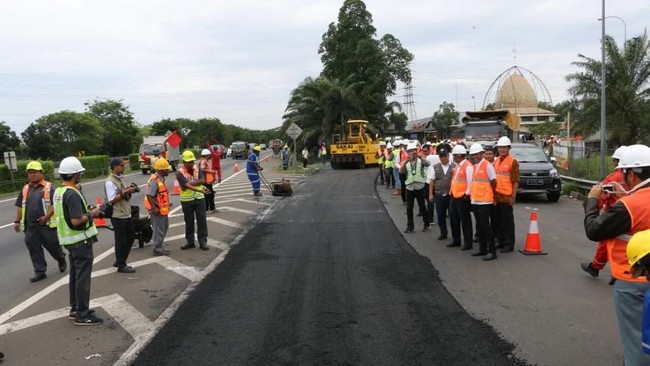
Jakarta, CNBC Indonesia - The Minister of Public Works, Dody Hanggodo, has emphasised the government’s steps to bolster self-reliance in road construction materials by promoting the use of Buton asphalt (Asbuton) as a substitute for imports. This policy direction forms part of a broader national efficiency strategy in the infrastructure sector, particularly in controlling costs and ensuring supply resilience for materials.
“The Ministry of Public Works has taken concrete measures, one of which is strengthening self-reliance in road construction materials as part of efforts to control performance and national efficiency. On this auspicious occasion, I want to reaffirm our collective commitment at the Ministry of Public Works to promote national asphalt self-sufficiency through the utilisation of Buton asphalt, or what we know as Asbuton,” Dody stated during the Ministry of Public Works’ halal bi halal event on Thursday (2/4/2026).
Amid rising demand, the government has identified a disparity between national consumption and heavy dependence on foreign supplies, where current national asphalt needs stand at approximately 1 million tonnes per year and are projected to increase to 1.5 million tonnes annually in the coming years.
“However, nearly 80% still relies on petroleum-based or imported asphalt. On the other hand, we have vast reserves of a mineral called Buton asphalt on Buton Island, but its utilisation remains very limited at present—around perhaps 4% of total national needs,” he explained.
The government is now directing policies to significantly increase Asbuton usage in national road projects as a gradual import substitution. The Ministry of Public Works will promote the use of this local commodity in national road construction to reach at least 30%.
In addition to reducing import dependence, this policy is seen to bring broad economic impacts, from foreign exchange savings to strengthening domestic industry.
“The potential savings in state foreign exchange could reach around Rp4 trillion, along with additional tax revenue of nearly Rp2 trillion. This policy will drive the growth of the domestic Buton asphalt industry, create new supply chains within the country, and strengthen the national industrial structure,” he elaborated.
He also highlighted that the Asbuton commodity has historically been more utilised by other countries, making it high time for Indonesia to optimise these resources for domestic benefit.
“If Buton asphalt can be used by other countries, why can’t we use it ourselves? So, ladies and gentlemen, Buton asphalt has mostly been exported so far. And if other countries can use it, God willing, we can too,” he continued.
From a governance perspective, increased Asbuton use is expected to drive improvements in quality standards while enhancing the competitiveness of the domestic processing industry.
“The use of Buton asphalt will improve procurement quality and standards, both for road authorities, producers, associations, and construction service providers,” he said.
Furthermore, developing this industry is estimated to have multiplier effects on the national economy, including job creation.
“The development of the Buton asphalt industry is projected to create economic value added of up to approximately Rp23 trillion, while opening thousands of new job opportunities for the community,” he added.
Nevertheless, the government acknowledges that this step is not without challenges, particularly in terms of technological readiness and uneven industry adoption.
“This policy is not just about replacing materials, but about our ability to increasingly stand on our own feet. We must admit, we are not choosing the easy path because the technology is not yet widespread, but we are choosing to be more independent,” Dody remarked.
In conclusion, he stressed that optimising Asbuton is part of the broader national development agenda moving forward.
“Optimising the use of Buton asphalt in road development is a strategic step to promote economic self-reliance, drive national industrialisation, enhance fiscal efficiency, and ensure long-term material supply resilience, while supporting the 2025-2029 National Medium-Term Development Plan towards national asphalt self-sufficiency,” he concluded.