
Indonesia, the Board of Peace and the Free and Active Foreign Policy Dilemma
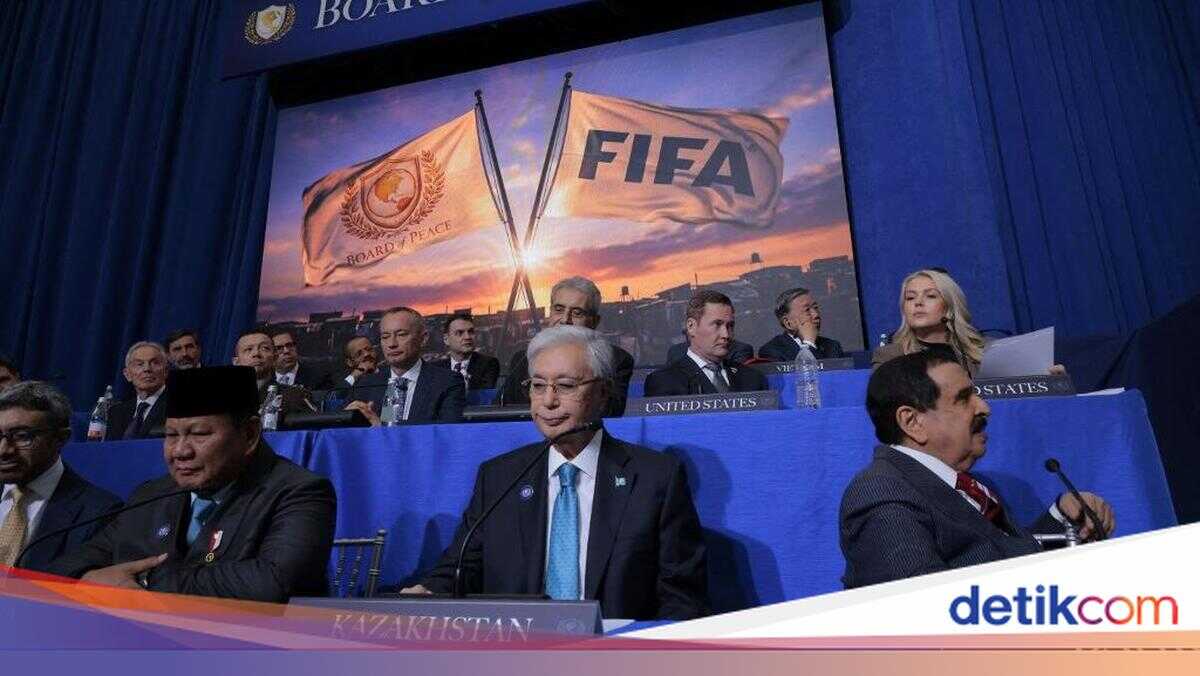
Indonesia’s membership in the Board of Peace (BoP), the peace organisation formed by United States President Donald Trump, in January 2026 marked a new development in Indonesia’s international relations. Foreign Minister Sugiono stated that Indonesia’s involvement in the BoP is a commitment to world peace and conflict resolution. However, with Israel’s entry into the BoP and the aggression carried out by the US-Israel duo against Iran, Indonesia’s membership has become a dilemma for its own foreign policy principles.
This dilemma is reflected in a statement from the Indonesian Foreign Ministry (Kemlu). In the statement, Indonesia expressed ‘regret’ at the failure of US-Iran negotiations that culminated in military escalation and stated readiness to facilitate mediation between the two sides.
From this statement it is clear that Indonesia appears to be hostage to its BoP membership, which seems soft on the aggressor, unrealistic, and failing to understand the context of the conflict.
The Irony of the Board of Peace
The BoP was established on 22 January 2026 by 18 founding member states, with Donald Trump as lifelong chairman. This means it wields substantial influence over BoP decision-making. Yet the US and Israel, as chairman and member, have prolonged the conflicts in the Middle East.
The two countries carried out military aggression against Iran without clear justification, killing Supreme Leader Ayatollah Ali Khamenei and more than 600 civilians. Iran has retaliated by striking US military bases in Bahrain, Iraq, Qatar, Saudi Arabia, and the United Arab Emirates, as well as public facilities in those countries using drones and ballistic missiles.
Clearly, those actions by the US-Israel raise questions. If the BoP’s aim is to advance global peace, why do the two leading members of the organisation seem to rekindle the conflict? Essentially, both the US and Israel have not been genuinely committed to peace, especially in the Middle East. Both countries have a history of conflict with Iran. Since 1979, the US and Israel have clashed with Iran, ranging from mutual threats to direct attacks. Nevertheless, Iran has been the harmed party, with many senior officials killed in US and Israeli attacks.
Earlier, in 2020, Iran’s Islamic Revolutionary Guard Corps commander Qasem Soleimani was killed while en route to Baghdad, Iraq, as a result of a US drone strike. In a 12-day war during May-June 2025, Israel also killed a number of Iranian military officials.
Indonesia’s Free and Active Dilemma
Aggression against a sovereign state constitutes a serious violation of Articles 1 and 2 of the UN Charter. Practically, Indonesia’s membership in the BoP should also be a matter of public scrutiny. If Indonesia truly upholds a free and active foreign policy and aspires to world peace, why did it choose to join the BoP and why are there no signs of reevaluating that membership?
Moreover, the BoP is a highly biased organisation towards US unilateral interests, evidenced by leadership monopolised by Donald Trump. This should be a warning to Indonesia, which since independence has upheld a free and active foreign policy articulated by Mohammad Hatta. This principle emphasises that Indonesia is free to partner with any country for national interests, while actively contributing to a world order based on enduring peace and social justice—as mandated by the 1945 Constitution.
Thus, with this principle, Indonesia should be able to issue a firm stance against the aggression by the US-Israel against Iran, which clearly violates the principle of world peace. However, the lenient stance on aggression in the Foreign Ministry’s statement suggests Indonesia is under pressure from its BoP membership, which is expected to ‘accept’ any action by the US as its founder—even if it conflicts with Indonesia’s principles. Clearly, BoP membership in this context does not offer significant advantages for Indonesia, while constraining Indonesia’s autonomy on the international stage.
This is further reinforced by Indonesia’s stated intention to become a ‘mediator’ in the US-Iran conflict. If Indonesia positions itself as a mediator, it implies neutrality between the two sides. Rather than aligning with peace enforcement, Indonesia’s neutral stance effectively overlooks US-Israel aggression, whose aggregate power dominates Iran and preceded the conflict by attacking Iran.
Iran is clearly disadvantaged politically and militarily, with the death of its Supreme Leader and a disparity in military strength with the US and Israel, in addition to Iran’s lack of intent to start a conflict.
Total Evaluation
Therefore, if free and active foreign policy remains the cornerstone of Indonesia’s foreign policy and if Indonesia still aims to uphold world peace, the US-Israel aggression against Iran should serve as a moment for a total reevaluation of Indonesia’s foreign policy. Indonesia’s membership in the BoP should be reconsidered so that Indonesia is not continually boxed into the dilemma of the powers’ aggressive interests.
Indonesia must be able to set an example to the world as a country that can uphold the principle of maintaining order and peace.