
Indonesia, the Board of Peace, and a new interpretation of its independent and proactive foreign policy
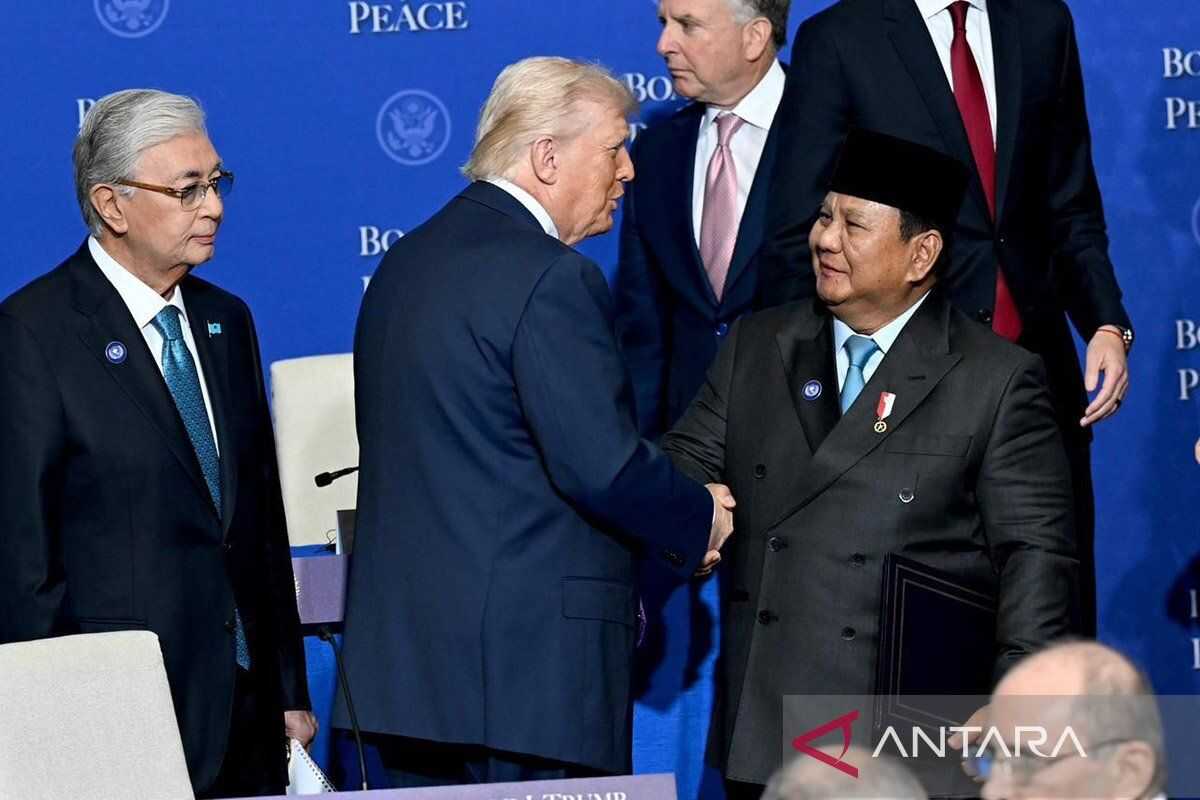
Surabaya — In this situation, bebas aktif is no longer merely about maintaining neutrality; rather, it is about developing a multi-alignment strategy that enables Indonesia to engage with multiple centres of global power simultaneously.
Indonesia’s decision to join the international forum ‘Board of Peace’ (BoP) has elicited a range of responses in the public sphere.
Some view the move as a reasonable diplomatic strategy amid the changing global constellation. At the same time, many question it, even linking it to Indonesia’s moral stance on the Palestinian issue and the current geopolitics of the Middle East, and urging Indonesia to withdraw from the BoP.
This debate shows that Indonesia’s foreign policy is no longer understood solely as inter-state diplomacy, but also as a sphere of domestic political interpretation. In this context, the more fundamental question is not whether joining the BoP was the right move, but why the step was taken.
To answer it, we need to view this policy within the context of shifts in the international political structure and Indonesia’s strategic interests, which necessitate joining the BoP.
The world is currently moving toward a multipolar configuration. The singular dominance that once prevailed after the end of the Cold War is gradually eroding as new powers rise in the global economy and politics.
The rivalry between the United States and China is reshaping the map of international power. In such a situation, middle powers like Indonesia face a challenging task: preserving strategic autonomy without becoming entangled in the rivalries of major power blocs.
In the tradition of international relations scholarship, such dynamics are often explained through realism. Realism holds that states act primarily on national interests and power calculations within an anarchic international system. Nevertheless, theoretical developments show that foreign policy is not determined solely by pressures from global structures, but also by how political leaders interpret these changes.
An approach known as neoclassical realism regards foreign policy as the result of the interaction between pressure from the international system and domestic considerations of national elites.
Viewed through this lens, Indonesia’s move to broaden its engagement across various international forums becomes easier to understand. In recent years, Indonesia has not only been active in traditional forums such as ASEAN and the G20 but has also expanded its diplomatic network by joining various new global platforms, one of which is its involvement in BRICS, an organisation comprising Brazil, Russia, India, China, and South Africa.
The decision even drew the attention of United States President Donald Trump, who highlighted its geopolitical implications.