
Indonesia Terminated LG Battery Investment Deal, Not the Other Way Around, Says Investment Minister
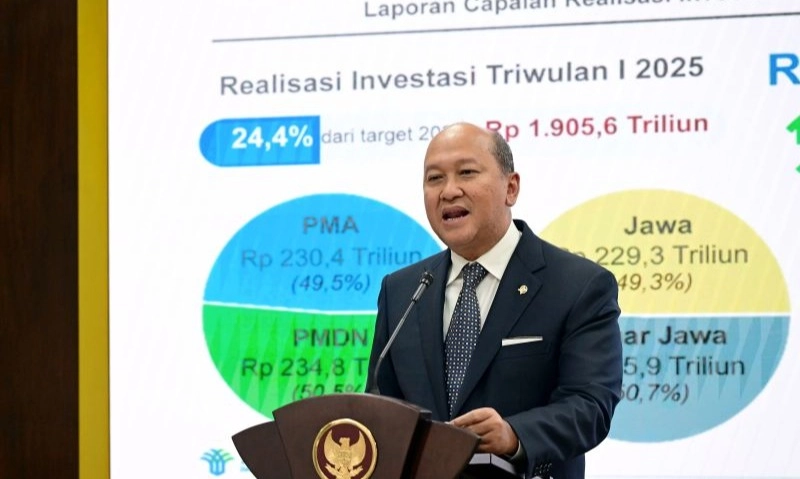
JAKARTA — South Korean company LG Energy Solution has reportedly withdrawn hundreds of trillions of rupiah in investment from electric vehicle battery supply chain projects in Indonesia. However, Investment and Downstream Industries Minister/Head of the Investment Coordinating Board (BKPM) Rosan Roeslani has revealed a different account of events.
Rosan stated that LG’s departure from the EV battery investment was in fact a decision made by the Indonesian Government. An official letter terminating the cooperation was signed by Energy and Mineral Resources Minister Bahlil Lahadalia on 31 January 2025 and delivered to the CEOs of LG Chem and LG Energy Solution.
The reason, according to the government, was that LG had taken far too long in project negotiations rather than realising its investment commitments.
“All this time it has been said that they (LG) were the ones who pulled out, but in fact it was more accurately us who terminated the arrangement. Negotiations had been going on for five years — it’s not feasible for a project to drag on that long. So the letter was issued by Pak Bahlil and sent to LG Chem and LG Energy Solution,” Rosan explained at the Presidential Palace Complex in Jakarta on Wednesday (23 April).
The LG joint venture project in Indonesia had an investment value of up to US$9.8 billion. The investment spanned mining, nickel matte processing, nickel sulphate, precursors, cathodes, anodes, battery cells, cell packs, and battery recycling. The project comprised four joint ventures involving several other companies, including Aneka Tambang and Hyundai.
LG’s position, Rosan continued, has since been taken over by Huayou, a Chinese company. According to Rosan, Huayou had expressed its interest since 2024 and was already prepared in terms of both funding and technology.
“They (Huayou) are simply replacing LG’s position. They are ready in terms of technology and funding,” he explained.
Rosan noted that Huayou is not a newcomer to the industry. The company had already been part of the LG consortium since 2024 and understood the intricacies of the EV battery industry. Huayou had even already invested in Weda Bay, North Maluku, and possessed the resources to enter the industry.
“So actually, Huayou was already part of the LG consortium. Now they are simply becoming the leading party in the consortium, that’s all,” he said.
Previously, Energy and Mineral Resources Minister Bahlil Lahadalia stated that the development of the integrated EV battery supply chain under the “Indonesia Grand Package” scheme remains unchanged. Infrastructure and production plans continue to align with the original roadmap. The only change has occurred at the investor level, where LG is no longer continuing its involvement in the new JV 1, 2, and 3.