
Indonesia Targets Rp13,032 Trillion in Investment Over Prabowo's Term Despite Land Costs and Regulatory Hurdles
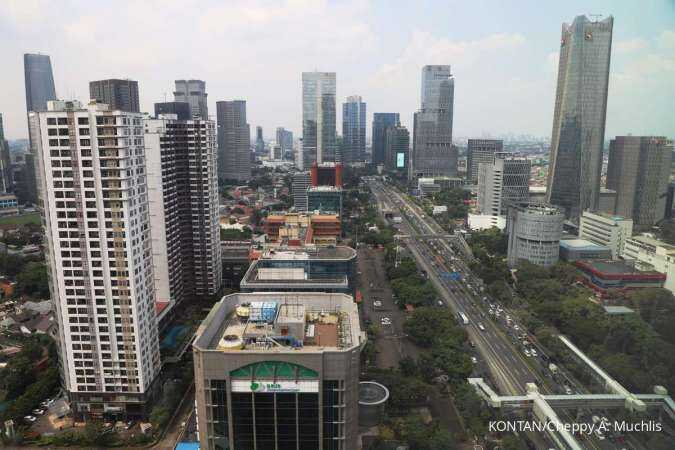
Investment is one of the key drivers of Indonesia’s economic growth alongside consumption. To that end, the government through the Ministry of Investment and Downstreaming/Investment Coordinating Board (BKPM) is targeting annual investment growth of 15%-16% throughout President Prabowo Subianto’s term in office.
This year alone, the government has set an investment target of Rp1,905 trillion, although realisation reached only 24.4% of the target in the first quarter of 2025.
Deputy for Investment Implementation Control at the Ministry of Investment and Downstreaming/BKPM, Edy Junaedi, said there are many stumbling blocks in executing domestic investment that investors frequently complain about.
Land acquisition, for instance, remains a persistent issue. He noted that land prices in Indonesia are still higher than in neighbouring countries. Additionally, licensing regulations continue to require improvement.
“What we keep improving is licensing regulation. Although we already have the OSS (Online Single Submission) system, there are areas that need further refinement, from spatial utilisation permits, environmental permits, to building construction permits,” he said at a forum on Monday (19 May).
Beyond that, he observed that during investment execution, disruptions from community organisations around project sites also hamper activities. According to Edy, if investment execution proceeds smoothly, the positive impact extends to job absorption and improvements in the economic quality and human resources of surrounding areas.
Nevertheless, Edy said BKPM continues to address these issues as part of its mandate to oversee investment from initial interest through to realisation. Over the five-year period of Prabowo Subianto’s administration, the Ministry of Investment and Downstreaming/BKPM has been given a target to bring Rp13,032 trillion in investment into the country.
“At BKPM, we work based on plans. IPRO (Investment Project Ready to Offer) projects are ready to be offered to potential investors. We also have nine overseas offices actively offering investment opportunities. If there is serious interest, then realisation follows,” Edy explained.
So far, BKPM is examining investment potential across 28 sub-sectors. Currently, eight sectors contribute the most, with the downstreaming sector accounting for nearly 30% or approximately Rp136 trillion, whilst the remaining 42% comes from the manufacturing sector.
Edy noted that downstreaming trends in minerals and metals consistently contribute the largest share to total domestic investment. However, the ministry also sees significant potential in marine and fisheries industry downstreaming.
Furthermore, the Minister of Investment has established requirements for partnerships with local businesses and MSMEs in investment project areas, so that local enterprises can also benefit from the presence of these companies.
“Investment is the key to economic growth and improving the human quality index in the regions. Investment is one of the levers of economic growth,” he said.
Economists also assess that with the number of prospective investors entering the country, there is potential for this year’s investment to exceed the target. Most recently, around 30 prospective Dutch investors have expressed interest in investing in Indonesia’s agricultural sector.
Economist Wijayanto Samirin from Paramadina University said that if the government can convert these investors’ interest into action, it must remain cautious and focus on investment quality, ensuring investors adhere to ESG (Environmental, Social, and Governance) principles.
“This is a good opportunity because they are technologically advanced and could serve as a gateway for exports to the European Union. However, convincing Dutch investors is not easy — they require strong legal certainty and robust environmental standards,” Wijayanto told Kontan on Monday (19 May).
On the other hand, he said the prevalence of community organisations disrupting the domestic business climate is very damaging to Indonesia, including national entrepreneurs. “There needs to be massive law enforcement. Law enforcement officials must be firm and impartial. A shock therapy approach is needed. BKPM also needs to simplify regulations, as these often become entry points for large-scale thuggery. They need to work in concert with authorities to obtain full support,” Wijayanto said.
Meanwhile, Yanuar Rizky, economist at Brigh Institute, noted that food and horticultural agriculture in Indonesia, in terms of concept and land mapping, is a legacy of the VOC in Indonesia. It is therefore natural that Dutch companies are interested in returning to the agricultural technology, food seedling and plantation business in Indonesia.
However, Yanuar said challenges remain, pointing to the previous case of Rabo Bank, an agricultural bank that closed its operations in Indonesia in 2019 due to the lack of development in the country’s agricultural sector. Whether the new Prabowo government can demonstrate genuine commitment to agricultural development will be tested by whether Dutch investment flows actually materialise beyond mere expressions of interest.
On the other hand, Yanuar assessed that boosting incoming investment remains difficult due to numerous domestic issues exacerbated by the government itself, particularly concerning layoffs, purchasing power and government fiscal cash flow.
“Thuggery and community organisations are also the tip of the iceberg resulting from the neglect of agrarian employment development in villages. When industrial development fails to absorb the workforce, that is what causes thuggery and community organisations to flourish,” he said.
According to Yanuar, the solution must come from the head of state down to all elements of government, rebuilding a work culture aligned with demographic profiles — namely developing the village economy through agrarian reform to ensure environmental carrying capacity for industry.