
Indonesia Targets 100% Waste Management by 2029: Challenges and Solutions
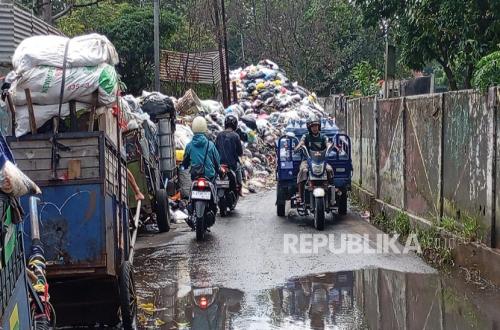
REPUBLIKA.CO.ID, JAKARTA — The government’s target to achieve 100% managed waste by 2029 faces major challenges at the implementation level. Limitations in funding and weak governance are seen as the main obstacles to accelerating national waste management.
Waste4Change assesses that the current approach is insufficient to meet the target in less than five years. CEO of Waste4Change, Mohammad Bijaksana Junerosano, stated that the primary challenge is not in planning, but in on-the-ground execution.
“The government already has an impressive RPJMN, targeting 100% managed waste by 2029, so there is an ambitious goal with a short timeframe of less than five years. In our view, the solution is to empower the 514 cities and regencies to access bankable funding,” said the man familiarly known as Sano, on Monday (20/4/2026).
According to Sano, the waste sector has often lost priority in APBD allocations compared to education and health. This situation has resulted in limited investment in waste management infrastructure and services.
He also believes that technology-based approaches, such as building waste-to-electricity facilities, are not sufficient to resolve the issue. “So building 34 PSEL facilities only addresses 23% (of waste). The question is, what about the remaining 77%? We need other solutions,” said Sano.
To bridge this gap, the required investment for waste management infrastructure is estimated at Rp146 trillion to Rp186 trillion. Additionally, annual operational costs are significant, around Rp48 trillion to Rp56 trillion.
“And the OPEX is estimated to require at least Rp48 trillion or Rp56 trillion to get it sorted. Without this, it will stall and not progress. We’ve bought vehicles and such without OPEX, then it doesn’t work,” said Sano.
In the financing scheme, APBD is deemed capable of covering only about 20 to 30% of needs. Sano encourages the use of circular economy schemes, extended producer responsibility (EPR), and community levies to fill the funding shortfall.
“If these levies can be collected properly, transparently, and without leaks, the waste problem can be solved. For those who cannot afford it, the government can provide subsidies,” said Sano.
He also emphasised the importance of the polluter pays principle, where every waste generator bears the management costs. According to him, with contributions of around Rp60,000 per household per month, an effective management system can be built.
On the other hand, strengthening institutions through the establishment of regional-owned enterprises (BUMD), cooperatives, and partnerships with the private sector is considered essential to bolster the ecosystem. Funding sources can also be expanded through involvement of national and international financial institutions.
“With the caveat that there is a business model. So that infrastructure funds can be repaid. APBD is for support and to guarantee. The way to repay is through OPEX costs, where polluter pays. Whoever generates waste is obliged to pay that, Rp60,000 per household per month or EPR and recycling,” said Sano.
Besides funding, local leadership is a determining factor in accelerating implementation. He urges local heads to boldly declare a waste emergency to speed up decision-making.
“Regents and mayors must dare to state that my city is in a waste emergency. Let’s sort it out. Without that, it’s hard to continue with business as usual,” said Sano.
Sano views the waste issue not merely as a technological problem, but as an ecosystem issue encompassing governance, regulations, financing, and partnerships. “In our opinion, the waste problem is not a technology issue, but an ecosystem one; governance, legal approaches, financing, and partnerships must be right,” said Sano.
Success in meeting the 2029 target will heavily depend on the ability to build a sustainable financing model and strengthen cross-sector coordination. Without that, the ambitious target risks being difficult to realise.