
Indonesia Strengthens Forest Carbon Trading Regulations through Permenhut 6/2026
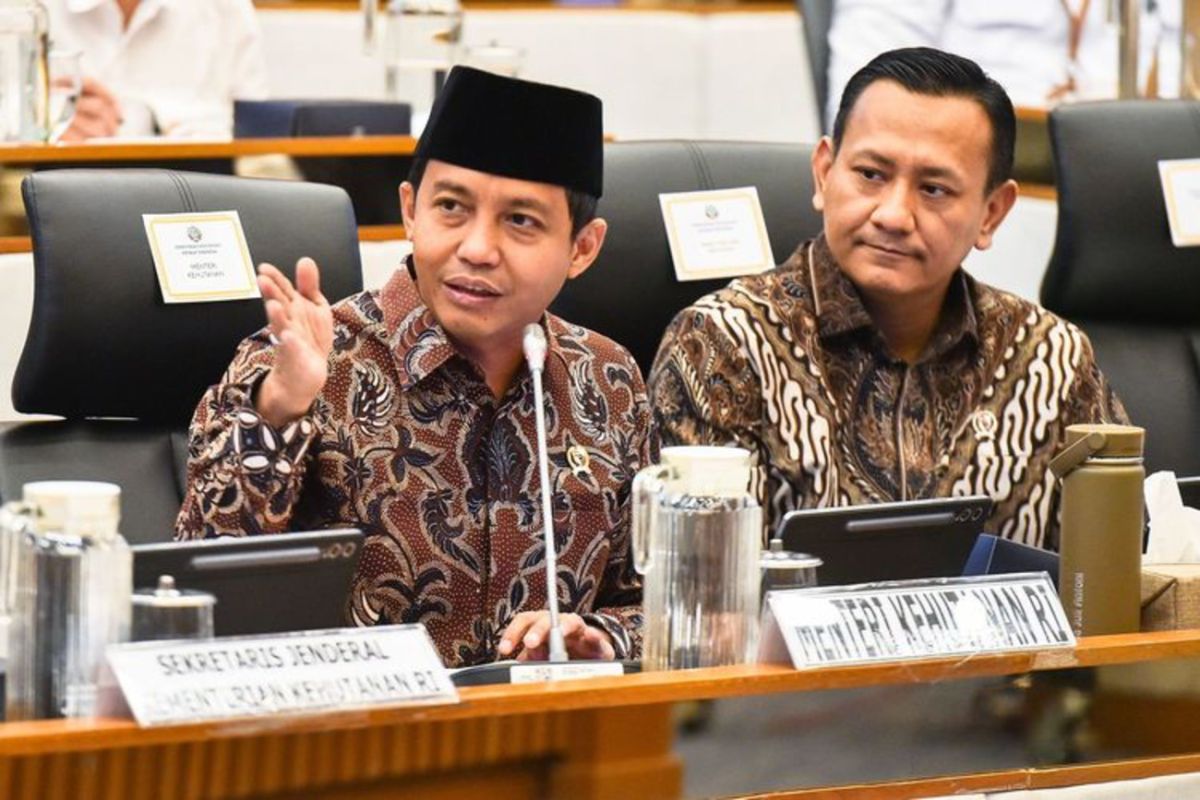
Jakarta (ANTARA) - The Indonesian government is strengthening forest carbon trading regulations through Ministerial Regulation on Forestry (Permenhut) Number 6 of 2026 on Procedures for Carbon Trading via Greenhouse Gas (GHG) Emission Offset Schemes in the Forestry Sector.
Forestry Minister Raja Juli Antoni, in a statement in Jakarta on Thursday, said this regulation represents an important step in promoting the green economy in Indonesia.
“The issuance of this Permenhut is a concrete step by the government to strengthen the governance of carbon trading in the forestry sector in a more credible, transparent, and inclusive manner,” the Minister stated.
He added that Permenhut 6/2026 is a follow-up to Presidential Regulation Number 110 of 2025 to bolster the implementation of carbon economic value (NEK) while supporting Indonesia’s emission reduction targets.
Through this regulation, the government is making fundamental changes in the management of carbon trading in the forestry sector.
One of them is by preparing a clearer roadmap, from emission reduction targets, the area involved, to achievement strategies to align with national commitments in addressing climate change.
In addition, the Permenhut expands who can participate in carbon trading. Not only companies, but also social forestry groups, indigenous communities, community forest owners, and carbon environmental service managers can now participate.
“We want to ensure that the economic benefits of carbon not only contribute to achieving national climate targets but also provide real impacts for society and the sustainability of Indonesia’s forests,” said Raja Antoni.
From a legal perspective, the Minister said this regulation provides clearer certainty for actors.
Every traded carbon unit must go through a standardised process, such as validation and verification by independent institutions, and be recorded in the national system to avoid double counting.
Moreover, the carbon trading business process is now made simpler and more structured. Document submission, assessment processes, to certificate issuance are carried out electronically with specified service times.
“This Permenhut also regulates carbon trading abroad. Every international transaction must go through government approval to remain aligned with national emission target needs,” the Minister said.
In its implementation, business actors are still required to pay attention to environmental and social aspects. Carbon trading activities must involve local communities, protect indigenous rights, and maintain forest conservation and biodiversity.
In addition, conservation areas also have great potential in carbon trading through ecosystem restoration in deforested and degraded areas, covering approximately 1.27 million hectares in Nature Reserves, Nature Conservation Areas, and Hunting Parks, with carbon absorption potential of 4.5–50 tons CO2e per hectare per year.
“This potential opens up opportunities for innovative financing through private sector involvement while creating sustainable economic value,” said Raja Antoni.