
Indonesia Still Requires 272,000 Doctors, Here Are the Health Ministry's Concrete Steps
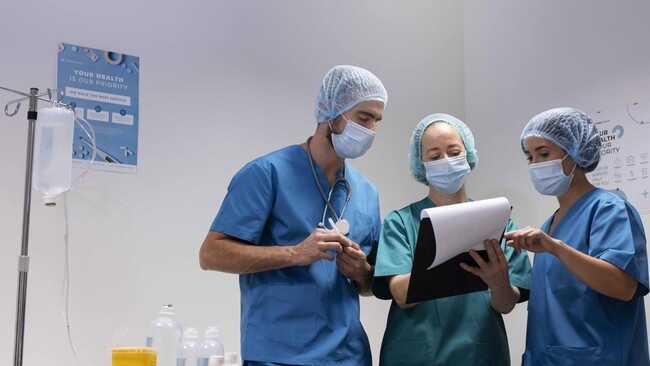
Jakarta – The Ministry of Health acknowledges that Indonesia remains severely short of hundreds of thousands of doctors, ranging from general practitioners and dentists to medical specialists. To address this gap, the government is accelerating a hospital-based specialist education programme conducted at Primary Teaching Hospitals (RSPPU).
Azhar Jaya, Director General of Advanced Healthcare at the Ministry of Health, stated that national doctor requirements remain substantial, particularly in remote, underdeveloped, border, and island regions (DTPK).
“Our country still needs approximately 92,000 general practitioners, around 129,000 dentists, and approximately 51,000 specialists,” Azhar said in his official report to Health Minister Budi Gunadi Sadikin at the Ministry of Health’s Dr. J. Leimena Auditorium, Jakarta, on Wednesday (25 February 2026).
He emphasised that the shortage of medical personnel is a key factor limiting optimal healthcare development, particularly outside Java. At present, the hospital-based programme has admitted 58 participants for specialist training at RSPPU. The breakdown is as follows:
Paediatrics: 10 participants
Ophthalmology: 10 participants
Neurology: 12 participants
Cardiology: 10 participants
Orthopaedics and Traumatology: 10 participants
Radiation Oncology: 6 participants
Azhar ensured that all participants will be placed outside Java upon graduation. Placements cover Sumatra (18 people), Bangka Belitung (3 people), Kalimantan (12 people), Sulawesi (6 people), Maluku (6 people), Papua (6 people), and East Nusa Tenggara (7 people). He affirmed that participants are obligated to return and serve in their assigned regions; failure to do so may result in their medical practice licence being revoked.
“They cannot abandon their commitment. They must return. If they flee, their practice licence will be suspended,” he stated.
Azhar stressed that the hospital-based programme does not replace university-based specialist education but rather complements it. University-based programmes lack service obligations, whilst hospital-based programmes offer scholarships and salaries with the consequence of mandatory service in assigned regions.
“There is no need to pit these against each other. They support one another,” he said.
For 2026, the Ministry targets the opening of 52 RSPPU and 55 new specialist programmes to accelerate the fulfilment of national specialist doctor requirements.
Health Minister Budi Gunadi Sadikin stated that the hospital-based programme is entering its third batch and is expected to accelerate the equalisation of healthcare services across regions. He emphasised that specialist doctor education must be made more affordable so that talented individuals from regional areas, including small communities, can pursue education meeting international standards.
“We stress that specialist doctor education must be more affordable, so we can accept talented individuals from regions meeting international standards,” Sadikin said.
He also requested evaluation of educational standards to ensure graduate quality remains competitive with international education systems. This programme is presented as part of implementing the latest Health Law, which aims to accelerate the distribution of medical personnel and strengthen equitable public healthcare services nationwide.