
Indonesia Still "Battling" Malaria, with Over 700,000 Cases
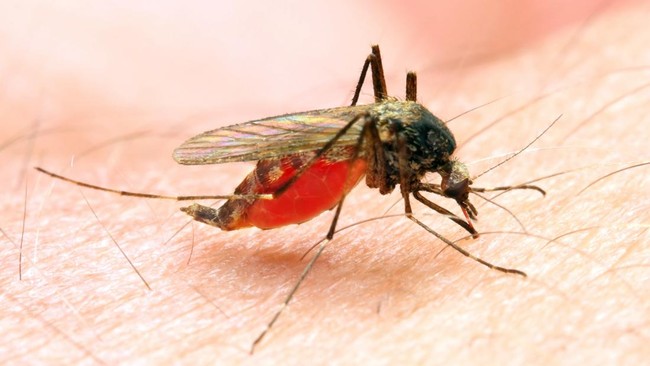
The government has revealed that the number of malaria cases in Indonesia remains high and has even increased over the past year. The Ministry of Health emphasises that controlling malaria in Papua is the key to achieving a malaria-free Indonesia by 2030.
Dr Prima Yosephine, Director of Communicable Diseases at the Ministry of Health, stated that up to 2025, the total number of malaria cases in Indonesia reached more than 700,000. This figure is higher than the previous year, which stood at around 543,000 cases.
“If we look at the trend, 2025 is indeed the year with the highest number of cases, and this surge is influenced by various factors, from population mobility to weather conditions that affect the development of malaria-carrying mosquitoes,” she said during a media briefing to commemorate World Malaria Day 2026 online, on Thursday (30/4/2026).
Nevertheless, Indonesia’s malaria elimination efforts continue to show progress. Up to 2026, she recorded that 412 out of 514 districts/cities, or about 80% of the regions, have been declared malaria-free.
However, the biggest challenge remains concentrated in eastern Indonesia. Prima stressed that more than 95% of national malaria cases originate from Papua, encompassing six provinces.
“If we can reduce cases in Papua, the impact will be very significant on the national case reduction,” she said.
Ministry of Health data also shows that Indonesia still ranks second in the Western Pacific region for the highest malaria cases after Papua New Guinea. Globally, malaria remains a major health problem with an estimated 282 million cases in 80 countries, most of which are in Africa.
Prima explained that malaria is an infectious disease caused by the Plasmodium parasite and transmitted through bites from female Anopheles mosquitoes. Common symptoms include high fever, chills, headaches, and muscle pain.
“High-risk groups include those living or travelling to endemic areas, living near stagnant water, and being active outdoors at night,” she explained.
Therefore, malaria control does not rely solely on health services but also on changes in public behaviour. Some simple steps that can be taken include cleaning the environment of stagnant water, using mosquito nets while sleeping, applying mosquito repellent, and covering house vents with mesh.
In addition, mosquito population control is carried out by releasing larva-eating fish, using larvicides, and planting mosquito-repelling plants such as lemongrass and lavender. On the occasion of World Malaria Day 2026, the government adopts the global theme “Driven to End Malaria: Now We Can, Now We Must” and the national theme “End Malaria: We Must, We Can”.
This theme affirms that malaria elimination is no longer just a target but a necessity that must be achieved together. “The malaria problem cannot be solved by the health sector alone. It requires collaboration between government, private sector, and communities,” said Prima.
The Ministry of Health targets a malaria-free Indonesia by 2030, but given that most cases are still concentrated in Papua, special strategies are now focused on that region, including a more aggressive approach of detect, treat, and control.