
Indonesia Set for Bad News Tomorrow as Inflation Expected to Surge in February
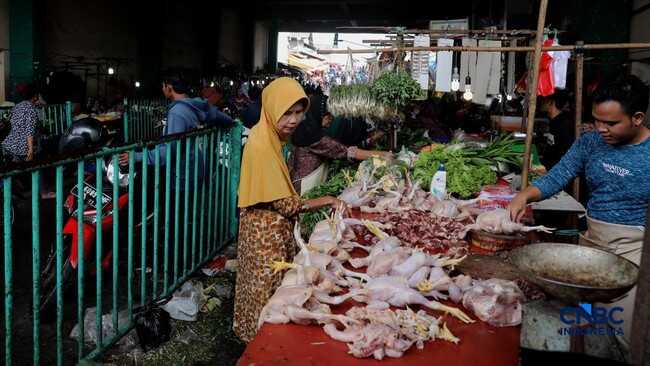
Jakarta – Indonesia’s inflation is expected to spike in February 2026 as food prices rise ahead of the Ramadan period.
The Central Statistics Agency (BPS) will announce February 2026 inflation data on Monday, 2 March 2026.
Market consensus compiled by CNBC Indonesia from 13 institutions estimates the Consumer Price Index (CPI) will rise or record inflation of 0.3 per cent month-on-month in February 2026. Year-on-year, inflation is forecast to reach 4.34 per cent, whilst core inflation is projected to strengthen to 2.49 per cent.
For context, January 2026 recorded deflation of 0.15 per cent month-on-month, but the CPI rose or recorded inflation of 3.55 per cent year-on-year, with core inflation at 2.45 per cent.
Historically, the BPS notes that monthly inflation in February over the past five years has averaged 0.03 per cent, relatively subdued. However, February 2026 inflation is expected to surge due to the coinciding onset of Ramadan.
Indonesia’s Muslim population begins Ramadan on 19 February 2026.
Ramadan represents peak consumption season in Indonesia, so inflation typically spikes sharply. Food commodity prices surge dramatically driven by elevated demand, particularly for vegetables, spices, chicken and eggs.
“Price pressures this month are primarily driven by the impact of Chinese New Year and Ramadan celebrations. February inflation is mainly triggered by rising prices of food commodities such as rice, sugar, cooking oil, beef, chicken, eggs, red chillies, bird’s eye chillies, shallots, and garlic,” said Juniman, economist at Bank Maybank Indonesia.
Andry Asmoro, chief economist at Bank Mandiri, noted that volatile food prices are expected to reverse from previous deflation.
This is driven by rising prices of bird’s eye chillies, shallots, and cooking oil, in line with increased seasonal demand ahead of Eid al-Fitr. “Whilst non-subsidised fuel prices continue to decline on average, airfares rose 5.3 per cent month-on-month. However, the government is implementing ticket discount policies that partially offset airfare increases,” Asmoro explained.
It is worth noting that prospective Indonesian holiday travellers typically purchase train and plane tickets a month before Lebaran, which falls on 20/21 March 2026 this year.
According to data from the National Strategic Food Price Information Centre (PIHPSN), several food prices surged sharply in February 2026.
Chicken meat prices rose 2.5 per cent to an average of Rp 41,687 per kilogramme. Bird’s eye chilli prices soared 31 per cent to Rp 76,352 per kilogramme.
Prices of various vegetables also surged sharply, from water spinach to spinach. However, egg prices fell 0.08 per cent to Rp 32,050 per kilogramme.
In the government-regulated price category, declining fuel prices helped moderate inflation in February 2026.
Several fuel suppliers including PT Pertamina (Persero), Shell Indonesia, BP-AKR and PT Vivo Energy Indonesia jointly lowered non-subsidised fuel prices. These adjustments took effect from 1 February 2026.
For example, non-subsidised fuel prices in Jakarta: Pertamax fuel fell to Rp 11,800 per litre on 1 February 2026. Pertamax Turbo fuel also fell to Rp 12,700 per litre from the previous Rp 13,400 per litre.
Pertamax Green 95 fuel likewise fell to Rp 12,450 per litre from the previous Rp 13,150 per litre. Dexlite fuel also fell to Rp 13,250 per litre from the previous Rp 13,500 per litre.