
Indonesia Secures Oil from Russia: What About the US?
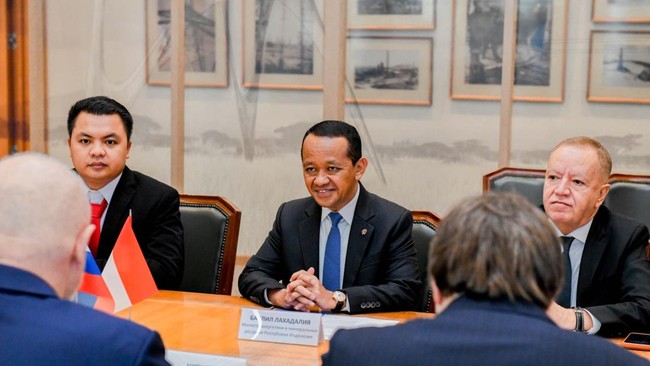
Indonesia’s government has successfully secured a supply of crude oil from Russia. Energy and Mineral Resources Minister Bahlil Lahadalia assured that this import decision from Russia must be undertaken for the sake of the nation’s interests in maintaining energy resilience.
“The next question is surely whether by buying crude from Russia, how does that affect our agreements with other countries, including America? I say that our annual crude needs are around 300 million barrels, so we take from everywhere; we must do what is beneficial for our country,” said Bahlil, after a limited meeting at the State Palace, quoted on Friday (17/4/2026).
Bahlil explained that national fuel consumption currently stands at 1.6 million barrels per day, while oil and gas production or lifting is around 600,000 to 610,000 barrels per day. Thus, Indonesia still requires imports of approximately one million barrels per day.
“In the midst of these global conditions, we must be able to seek oil reserves from various sources. Not just from one country but from almost all countries,” said Bahlil.
Previously, this General Chairman of the Golkar Party held a face-to-face meeting with Russian Energy Minister Sergey Tsivilev on Tuesday (15/4/2026). This meeting was a follow-up to high-level discussions between President Prabowo and Russian President Vladimir Putin at the Kremlin the day before.
From that meeting, the Indonesian government obtained a commitment for crude oil supplies from Russia, although the amount has not yet been disclosed. In addition, according to Bahlil, there is also a commitment from Russia to invest in building infrastructure for energy resilience in Indonesia.
“Alhamdulillah, yesterday following the President’s instructions, I met with the Energy Minister and the special envoy from President Putin, and the news is Alhamdulillah quite encouraging that we will receive crude supplies from Russia and also from the Russian side they are ready to build several important infrastructures to increase our national reserves and energy resilience,” said Bahlil.
According to Bahlil, regarding the import volume from Russia, it is a confidentiality agreed upon by the two countries. “I can’t disclose the volume because of our agreement; we are not allowed to talk about the volume,” he stated.