
Indonesia Rupiah Currency Could Slide Toward Rp20,000 Amid Iran Tensions
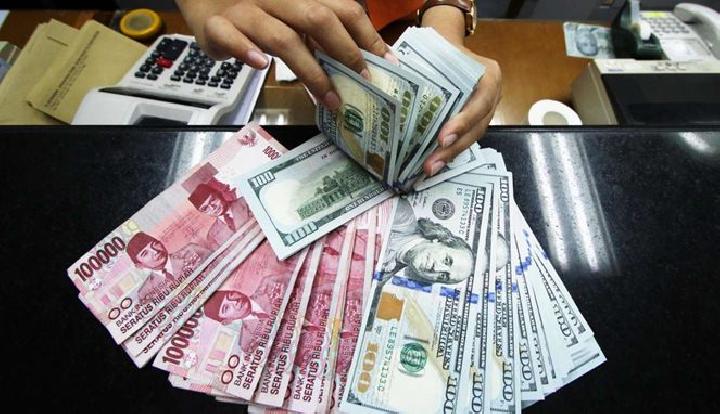
Analyst says large reserves alone may not shield Indonesia if oil shocks and capital outflows intensify
Indonesia’s rupiah is facing renewed pressure as geopolitical tensions in the Middle East add to market anxiety, and one local policy group now warns that a move toward Rp20,000 per US dollar can no longer be dismissed as a remote scenario.
PEPS says rupiah vulnerability is no longer theoretical
Political Economy and Policy Studies, or PEPS, warned that the rupiah is becoming more exposed as global tensions rise, especially because of the conflict involving Iran. PEPS managing director Anthony Budiawan said the possibility of the rupiah weakening to around Rp20,000 per US dollar is now grounded in historical patterns rather than mere speculation.
His warning comes as the rupiah has already been trading near the Rp17,000 level in March, a threshold that has drawn growing attention from markets and policymakers. Reuters-reported market coverage last week said the currency had moved close to that level amid fears over oil prices and fiscal pressure.
Large reserves do not automatically guarantee stability
Anthony argued that Indonesia’s foreign exchange reserves, while still large, should not be read as proof that the currency is fully protected. Bank Indonesia said official reserves stood at US$151.9 billion at the end of February 2026, down from US$154.6 billion at the end of January. The central bank said the decline reflected, among other things, government external debt payments and rupiah stabilization efforts amid high global uncertainty.
Anthony’s point is that part of Indonesia’s reserves picture is intertwined with foreign borrowing and market intervention, which means the headline number does not tell the full story about resilience. That is an analytical judgment from PEPS, but it is broadly consistent with Bank Indonesia’s own acknowledgement that reserve use has been tied to exchange-rate stabilization.
The Iran conflict could hit Indonesia through oil and capital flows
Anthony said the biggest transmission channel from the Middle East conflict would be higher oil prices, which could strain Indonesia’s trade balance and trigger capital outflows from emerging markets into safer assets. That matters because Indonesia remains sensitive to shifts in energy costs and global investor sentiment.
This concern lines up with the Indonesian government’s own recent planning. Officials have already modeled scenarios in which higher oil prices could weaken the rupiah further and pressure the state budget, with some stress cases assuming the rupiah could move to Rp17,500 per US dollar if the conflict drags on.
Historical episodes are shaping the warning
Anthony pointed to several past periods when reserves fell and the rupiah weakened sharply, including 2014–2015, 2018, and the early Covid-19 period in 2020. His broader argument is that Indonesia’s currency stability has repeatedly depended on continued external funding and swift policy responses.
He also highlighted a longer-term contradiction: reserves rose from roughly US$100 billion in 2014 to around US$150 billion in early 2026, yet the rupiah still weakened from about Rp12,000 to around Rp17,000 per US dollar over that period. That does not prove a crisis is imminent, but it supports his argument that reserve growth alone is not enough to guarantee exchange-rate strength.
The Rp20,000 scenario is still a warning, not a forecast
Anthony said that if current pressure continues, especially with added strain from the Iran conflict, the rupiah could weaken by 15 to 20 percent from around Rp17,000, which would place it near Rp20,400 per US dollar. He also warned that in a more extreme case, depreciation could exceed 20 percent within three to six months.
That should be read as a risk scenario rather than an official forecast. Still, the warning lands at a sensitive moment, because Indonesia is already dealing with budget pressure, oil-price shocks, and questions about how far it can defend growth and fiscal stability at the same time.
PEPS’ warning does not mean the rupiah is destined to hit Rp20,000, but it does highlight how exposed Indonesia remains to external shocks even with large reserves on hand. For Indonesians, the key issue is whether policymakers can contain oil, fiscal, and market risks before they reinforce one another. For Singaporeans and regional readers, the bigger takeaway is that a sharply weaker rupiah would not stay a domestic issue. It would quickly affect trade, investment sentiment, and broader economic stability across Southeast Asia.
Sources: EN Tempo (2026)
Keywords: Indonesia rupiah outlook, Anthony Budiawan, PEPS rupiah warning, Bank Indonesia reserves 2026, rupiah 20000 scenario, Iran conflict Indonesia economy