
Indonesia Risks Missing Out on Revenue Despite Rising Commodity Prices, Economist Explains
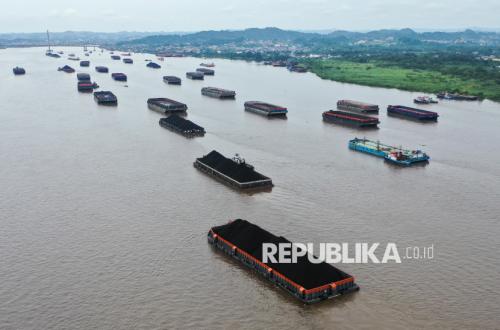
Economist from the Institute for Development of Economics and Finance (Indef), Ariyo DP Irhamna, has warned of the potential for missed state revenues amid soaring commodity prices. According to Ariyo, Indonesia requires the implementation of a windfall tax.
A windfall tax is a levy imposed by the government on specific industries when economic conditions allow those industries to experience profits above the average.
“Every time global oil prices rise significantly, the burden of fuel subsidies swells. As a net oil importer with lifting of around 600,000 barrels per day but consumption of 1.6 million barrels per day, Indonesia faces a recurring dilemma: upstream sector revenues do indeed rise, but without a windfall capture instrument, much of the economic rent slips through the state’s coffers,” said Ariyo in a statement received by Republika on Friday (17/4/2026).
He explained that the US blockade of the Strait of Hormuz since 13 April 2026 had temporarily pushed Brent prices above 100 US dollars per barrel, while the Coal Reference Price (HBA) rose to 103.43 US dollars per tonne in the second period of April 2026. He assessed this pattern as recurring. In 2022, Newcastle Coal surged 486 per cent from 2020 levels. Coal companies’ margins shifted from minus 0.60 per cent in 2020 to 22.43 per cent in 2021.
“At that time, Indonesia did not have a windfall tax instrument,” he stated.
In his view, there is substantial potential being lost. A counterfactual simulation in a policy brief shows that in 2022, when commodity prices peaked, PRRT could have added revenues of around Rp 223 trillion (Rp 192 trillion from coal, Rp 31 trillion from oil and gas), equivalent to 1.14 per cent of GDP. On average from 2017 to 2024, the uncaptured potential amounted to Rp 67 trillion per year.
Ariyo opined that the root problem lies in the royalty regime based on gross income (price times volume), not profit. In 2022, when coal prices reached 345 US dollars per tonne, the state captured only 10 to 15 per cent of the economic rent. Conversely, in 2020, when prices fell to 61 US dollars per tonne, royalties eroded company margins by 30 to 80 per cent of the rent.
“The government does not optimally capture economic rent when prices are high, while during low prices, gross income-based royalties pressure already thin company margins,” he clarified.
Analysis in the policy brief calculated the elasticity of sectoral Non-Tax State Revenue from Natural Resources (PNBP SDA) to changes in commodity prices over the 2013 to 2023 period, as well as aggregate counterfactual simulations using realised PNBP SDA data, oil and gas cost recovery contracts, and reference commodity prices from 2009 to 2023 to estimate potential revenues had PRRT been in place.
“From that analysis, there are four main findings. First, PRRT only levies when prices are high,” he said.
He explained that PRRT is designed to be countercyclical. Revenues rise during booms and are zero during busts. In 2022, when the average Newcastle Coal price was 344.9 US dollars per tonne, the simulation yielded peak revenues. In 2015 (Newcastle average 58.9 US dollars per tonne), 2016 (66.1 US dollars per tonne), and 2020 (60.8 US dollars per tonne), the simulation resulted in zero. Companies are not burdened when margins are thin.
Second, the price-to-revenue transmission works but is uneven. The elasticity of SDA revenues during booms is 1.17, and during busts only 0.35 (ratio of 0.30). The sticky cost recovery mechanism in oil and gas Production Sharing Contracts (PSC) exacerbates this imbalance. Costs already recovered do not drop proportionally when prices fall, thus increasing the contractor’s share during bust phases. PRRT is not intended to fix existing transmission mechanisms but to capture supernormal rents that escape royalty mechanisms.
“Third, the revenue base has shifted to mining and minerals, but the fiscal regime is still from the oil and gas era,” he revealed.
Ariyo stated that the composition of PNBP SDA has changed structurally, but fiscal instruments have not adapted. The oil and gas share fell from 90.5 per cent in 2009 to 48.3 per cent in 2024, while non-oil and gas, dominated by coal, rose from 9.5 per cent to 51.7 per cent. This shift is not the result of strategy but a passive consequence of declining domestic oil production. Fiscal instruments designed for the oil and gas era are now applied to the expansion of mining and minerals without adaptation.
Fourth, the PRRT design does not disrupt investment. Ariyo said the proposed PRRT does not interfere with investment viability. The threshold is set at a 15 per cent return on investment (ROI). Projects with profits below that threshold are not subject to PRRT. Above it, a progressive rate of 20 per cent applies to the rent portion equivalent to 1 to 2 times the ROI threshold, and 40 per cent for portions above two times the threshold.
“The experience of Australia (PRRT since 1987) and Norway (special tax of 71.8 per cent) proves that high rent taxes are compatible with long-term upstream investment, as long as the threshold protects the normal rate of return. Existing contracts are protected by a grandfather clause: PRRT applies only prospectively to new contracts,” said the University of Paramadina lecturer.
From the explanation provided, Ariyo concluded that the existing progressive royalty instruments, namely Government Regulation (PP) Number 18 of 2025 for coal and PP Number 19 of 2025 for minerals, are still based on gross income, not profit.
PRRT, based on economic rent, is theoretically superior because it does not distort production incentives. While the PRRT Bill is being prepared through the legislative route (Article 23A of the Constitution), the government is deemed able to immediately issue a complementary PP that adds capacity utilisation and profit proxy to the existing royalty formula.
Ariyo noted that commodity windfall cycles are predicted to recur. All PRRT revenues would be allocated to a revenue stabilisation fund separate from the state treasury, targeting 3 per cent of GDP in the first five years and with a withdrawal mechanism when SDA revenues fall by more than 20 per cent.