
Indonesia Revises Three Key Regulations to Accelerate Investment and Achieve 8% Growth Target
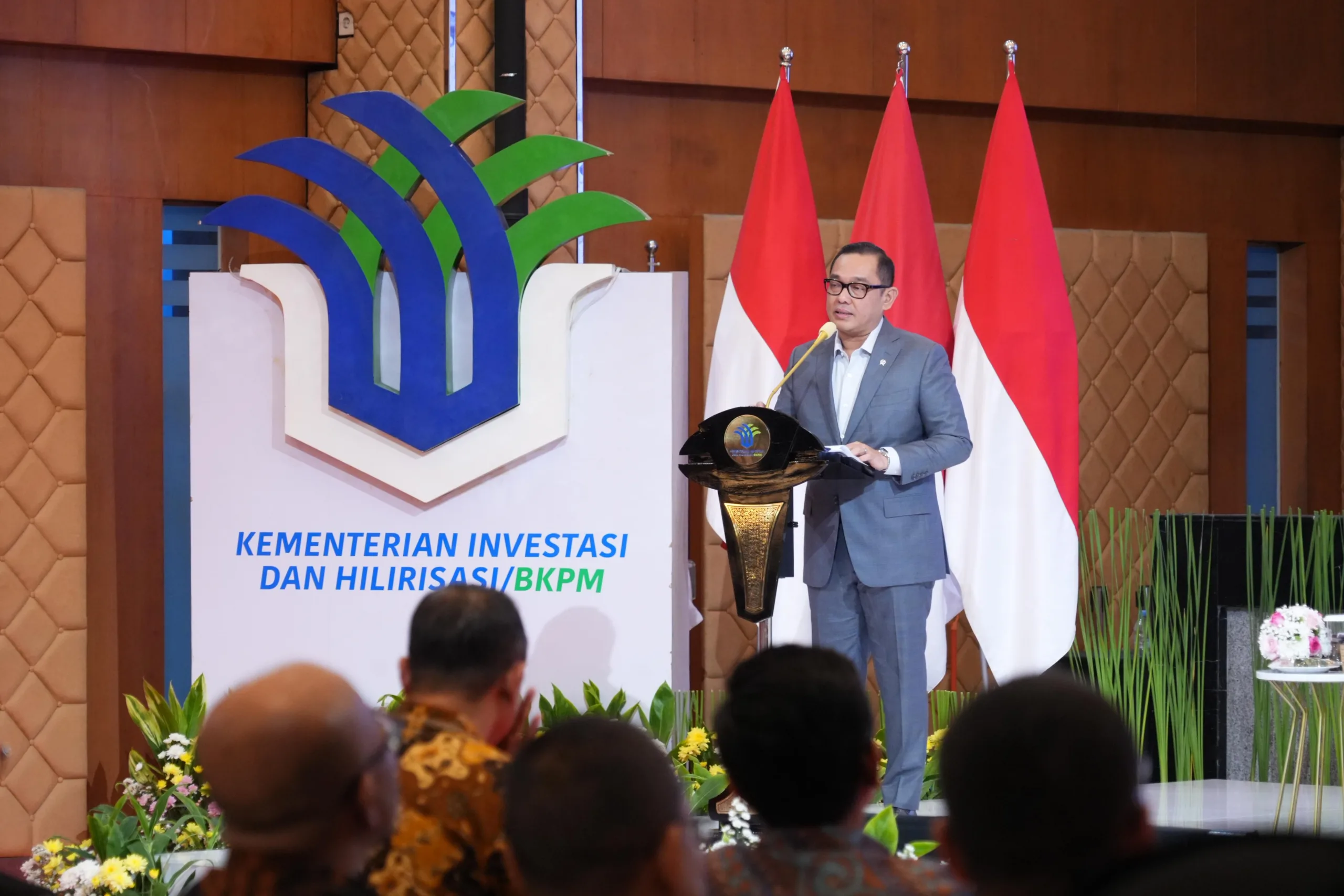
Indonesia’s Ministry of Investment and Downstreaming/Investment Coordinating Board (BKPM) is currently revising three implementing regulations under Government Regulation No. 5 of 2021 on Risk-Based Business Licensing. This policy move is aimed at accelerating investment realisation and driving the national economy toward an ambitious 8% growth target by 2029.
Deputy Minister of Investment and Downstreaming/BKPM, Todotua Pasaribu, explained that the three regulations under revision include: BKPM Regulation No. 3 of 2021, which governs the Electronic Integrated Risk-Based Licensing System; BKPM Regulation No. 4 of 2021, which details guidelines and procedures for risk-based business licensing services and investment facilities; and BKPM Regulation No. 5 of 2021, which outlines the supervision procedures for risk-based licensing.
“This government has set a target of achieving 8% economic growth. While ambitious, it is also achievable with the right implementation,” said Todotua during a public consultation event for the Draft Ministerial Regulation on Thursday, 3 July 2025.
He compared the current targets with the previous administration’s performance, which achieved around IDR 9,900 trillion in realised investments over a ten-year period. To meet the 8% growth goal, the current government aims to reach IDR 13,000 trillion in investment within the next five years.
“If the previous 10 years saw investment realisation of around IDR 9,900 trillion, then to reach 8% growth, we need to secure IDR 13,000 trillion in the next five years,” he stated.
For 2025, the investment target has been increased to IDR 1,900 trillion, up from the 2024 realisation of IDR 1,700 trillion. As of Q1 2025, Indonesia has already secured IDR 465 trillion in investments, with preliminary reports for Q2 indicating relatively stable performance.
“In the first quarter, investment realisation reached around IDR 465 trillion. Early reports for Q2, which I began receiving on Monday, suggest the numbers remain healthy. Hopefully, Q2 continues this positive trend,” he added.
Despite early optimism, Todotua acknowledged that challenges remain, particularly in Q3 and Q4. He emphasised that investment realisation is heavily dependent on licensing efficiency. In 2024 alone, Indonesia lost up to IDR 2,000 trillion in potential investments due to classic issues such as bureaucratic bottlenecks and an unfavourable investment climate.
“In 2024, unreleased investments amounted to roughly IDR 1,500 to 2,000 trillion. These missed opportunities stemmed from licensing complications, overlapping regulations, and an unconducive investment environment,” he said.
To tackle these licensing obstacles, the Ministry, under the leadership of Minister Rosan Roeslani, is committed to pushing comprehensive reforms. “This should serve as a collective reflection. Under Minister Rosan Roeslani’s leadership, the Ministry is eager to carry out these reforms. President Jokowi has also consistently stressed the need for bureaucratic reform,” he noted.
Revising the three key ministerial regulations is expected to streamline and accelerate the business licensing process. “We hope this becomes a breakthrough, making licensing faster, easier, and more predictable,” said Todotua.
He further emphasised the importance of stakeholder feedback, stating that several internal deputy ministers and the Coordinating Ministry for Economic Affairs are facilitating public consultations to gather input from the business community for policy refinement.
Currently, there are around 1,700 different licences issued by approximately 17 ministries and institutions. However, the financial industry has yet to be integrated into the Online Single Submission (OSS) system.
“We met with the Chairman of the Financial Services Authority (OJK) about one or two weeks ago and discussed why it is important to consolidate financial sector licensing into OSS,” he said.
To date, financial sector data — including banking, insurance, and non-bank financial services — has not been incorporated into national investment realisation reports. Furthermore, their licensing processes remain separate from OSS.
“I recently encountered a banking issue related to the Business Identification Number (NIB). This highlights the need for integrating the financial sector into OSS. Fortunately, OJK responded positively, and we hope to follow up promptly,” he explained.
“We expect to finalise an agreement within the next one to two weeks with OJK and the financial industry, so that financial services can finally be incorporated into our OSS system,” Todotua concluded.