
Indonesia ranks second in JP Morgan global energy resilience: Minister
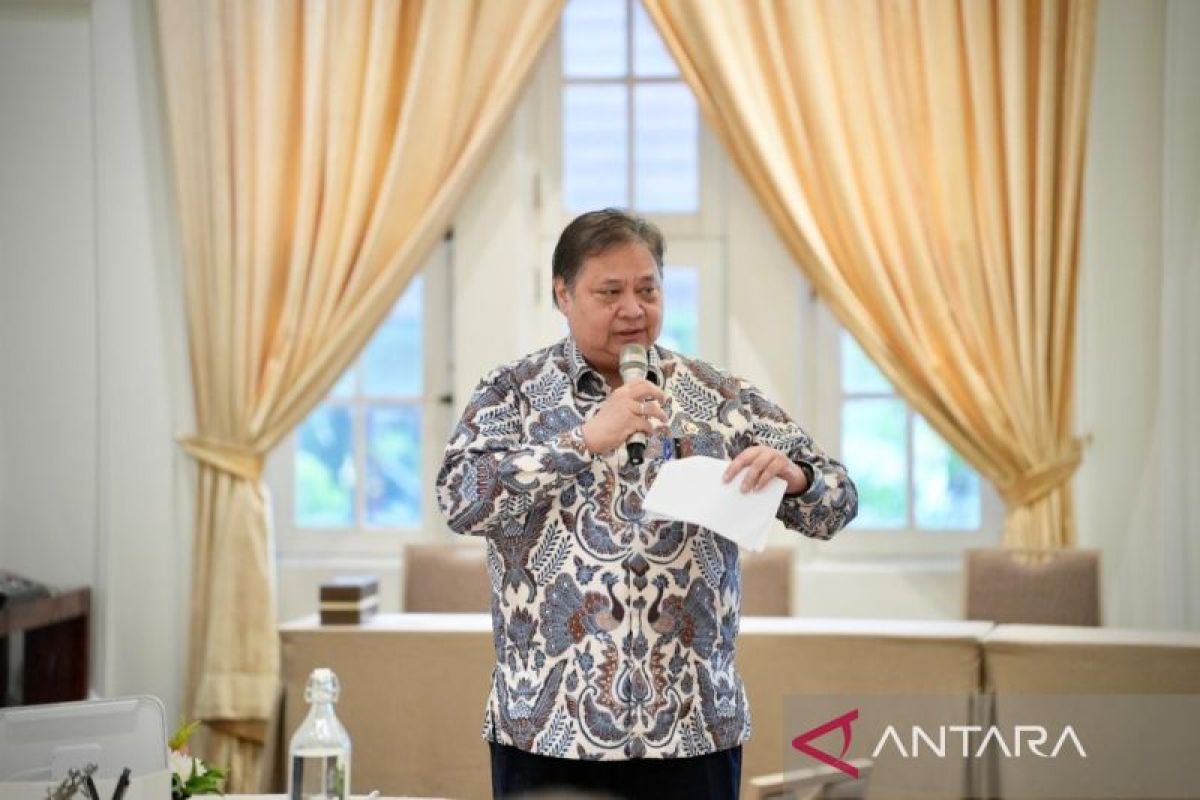
According to Hartarto, the findings affirm the government’s consistent implementation of energy security policies amidst geopolitical dynamics and fluctuating energy commodity prices.
“These results are not merely an appreciation of the current situation, but rather validation of the government’s long-term policy choices in maintaining a balance between utilizing domestic energy sources and accelerating the energy transition,” he said on Friday.
However, Hartarto said the government will remain vigilant despite this achievement. He added that it will continue strengthening policies, including boosting domestic oil and gas production to reduce the oil and gas trade deficit and increase non-tax state revenue.
The government is also encouraging the acceleration of the energy transition through the development of new and renewable energy in accordance with the National Electricity General Plan (RUKN) and the Electricity Supply Business Plan (RUPTL), and expanding the adoption of battery-based electric motor vehicles.
It will also focus on diversifying energy supply sources and logistics channels to anticipate geopolitical risks.
The JP Morgan Asset Management report analyzed 52 countries representing approximately 82 percent of global energy consumption.
This report uses the total insulation factor indicator, a composite measure of domestic energy production, including gas, coal, nuclear energy, and renewable energy, as a percentage of final energy consumption.
Indonesia recorded an insulation factor of 77 percent, slightly below South Africa (79 percent), and above China (76 percent) and the United States (70 percent).
Indonesia’s energy security is supported by the substantial contribution of domestic coal production, which meets approximately 48 percent of national final energy consumption, followed by natural gas at 22 percent and renewable energy at around 7 percent.
Related news: Indonesia in ‘survival mode’ amid global uncertainty: finance minister
The report lists Indonesia alongside China, India, South Africa, Vietnam, and the Philippines as countries that benefit significantly from domestic coal production during periods of energy shocks.
In addition, Indonesia is considered to have low direct exposure to vulnerable global energy distribution channels.
Oil and gas imports through the Strait of Hormuz account for only around 1 percent of total national primary energy consumption.
This figure is significantly lower than South Korea (33 percent), Taiwan and Thailand (27 percent), and Singapore (26 percent).
Related news: Biofuels: Indonesia’s strategic shield against energy volatility
Translator: Bayu Saputra, Resinta Sulistiyandari