
Indonesia Prepares for Godzilla El Niño Onslaught, Fishermen's Fate Predicted as Such
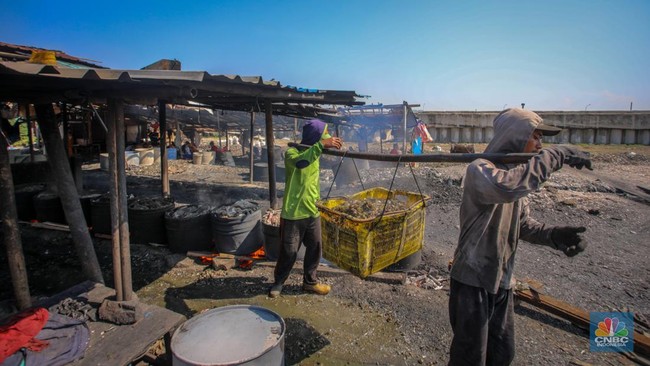
Indonesia is potentially facing Godzilla El Niño in early April 2026, which will bring drought to the land due to a longer and hotter dry season. However, the nickname Godzilla El Niño, describing the phenomenon of warming sea surface temperatures in the equatorial Pacific Ocean, also offers benefits to fishermen. The National Research and Innovation Agency (BRIN) notes that while this phenomenon is often associated with drought on land, for the marine sector, this seasonal transition becomes a momentum for extraordinary increases in sea fertility through the upwelling phenomenon. Senior Expert Researcher in Applied Oceanography and Coastal Management at BRIN’s Climate and Atmosphere Research Centre, Widodo Pranowo, explains why this phenomenon actually makes the sea fertile. First, because the start of the dry season triggers strong Easterly winds. These winds push surface sea water towards the open sea, which is then replaced by cold, nutrient-rich water masses from deeper layers. “This upwelled water mass brings ‘natural fertiliser’ in the form of nitrates and phosphates. When it reaches the sunlit surface, massive photosynthesis occurs by phytoplankton. This is the basis for increasing our marine primary productivity,” he said in a written statement on Sunday (22/3/2026). Based on his research study in the Indo-Maritime Magazine 2014, Widodo also discussed the upwelling phenomenon south of Java, which has unique characteristics and is internationally known as RATU (Semi-permanent Java Coastal Upwelling). In the study, the intensity of RATU is greatly influenced by seasonal dynamics and global climate variability. In that research, the use of Argo Float autonomous diving robot technology, operating up to a depth of 2,000 metres, is key in recording real-time temperature and salinity profile data. From those research results, it is revealed that the presence of the thermocline layer lifted to the surface during the upwelling process becomes the main indicator in mapping fishing areas. This research successfully identified that the region from southern Java to Nusa Tenggara is a crucial habitat for the migration and spawning of economically important fish, including Southern Bluefin Tuna, Skipjack Tuna, and Bigeye Tuna. In addition, the research records that the synergy between Easterly winds and the El Niño phenomenon can strengthen upwelling intensity, which directly impacts the surge in pelagic fish stocks. This phenomenon certainly has implications for the fisheries sector. Phytoplankton is expected to start developing in April-May 2026. Then, it will begin to surge in June 2026, and peak in July-August 2026. This prediction will attract the abundance of small pelagic fish such as lemuru in the Bali Strait. “This marine dynamic is greatly influenced by climate variability. If the 2026 El Niño occurs, the potential for strengthening upwelling will not only be in southern Java but also extend to other Indonesian waters,” Widodo emphasised. That research study also confirms that with the increasing risk of prolonged drought due to El Niño, which threatens food security from land sources, it is possible that it could be replaced by food sources from the sea. Therefore, Widodo emphasises that continuous monitoring of marine and atmospheric dynamics is a strategic step by BRIN in maintaining national food sovereignty from the maritime sector.