
Indonesia prepares arguments and evidence to anticipate USTR investigation
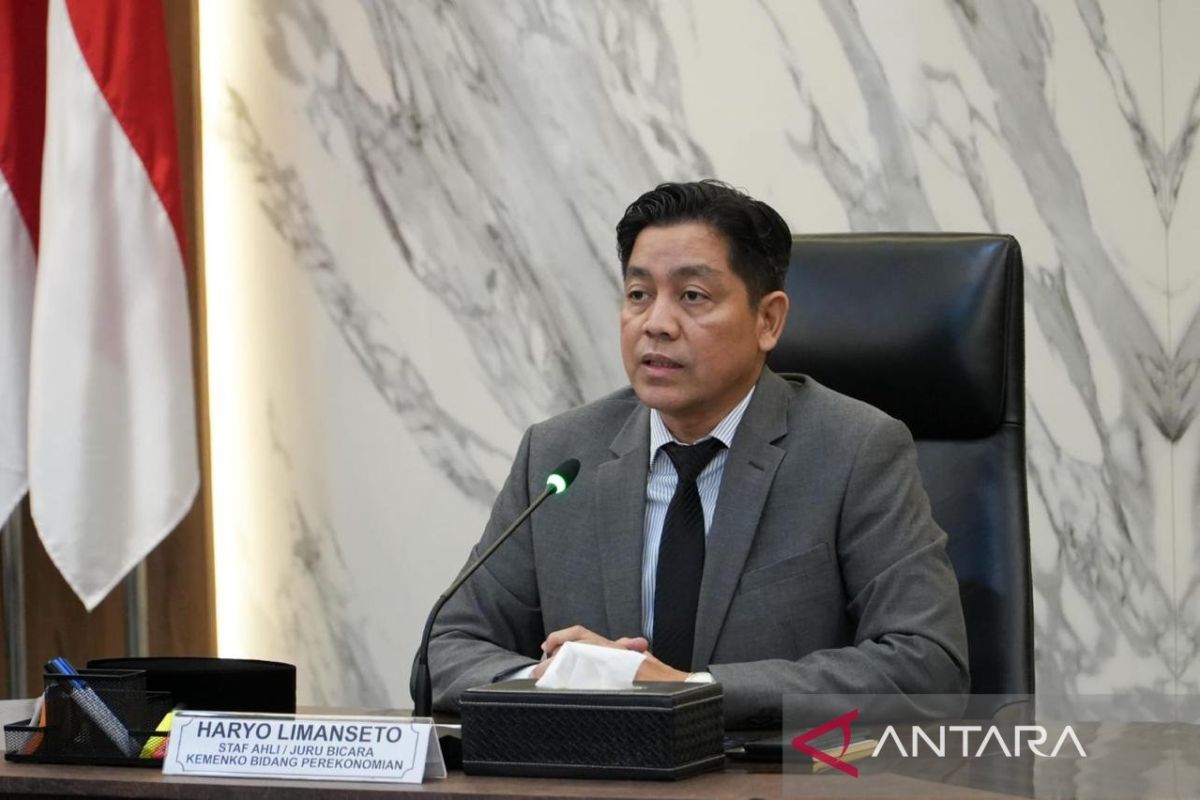
Jakarta (ANTARA) - The Indonesian government is preparing strong arguments and evidence to anticipate an investigation from the United States Trade Representative (USTR), said Spokesperson for the Coordinating Ministry for Economic Affairs Haryo Limanseto in his statement in Jakarta on Wednesday.
As is known, following the US Supreme Court’s decision to annul the International Emergency Economic Powers Act (IEEPA), the USTR has issued several investigations based on Section 301 as a follow-up process in conducting trade cooperation with other countries, including Indonesia.
The investigations target certain foreign economic actions, policies, and practices suspected of creating or maintaining excess capacity as well as structural production in the manufacturing sector.
In addition, the investigation also addresses failures in effectively implementing and enforcing prohibitions on importing goods produced using forced labour.
Facing the planned investigation, the Coordinating Ministry for Economic Affairs, along with related government agencies and associations, has already conducted consolidation to ensure all inputs provided are aligned and strengthen the argument that conditions in Indonesia are not as alleged against some other countries.
“Going forward, there needs to be the formation of a coordination team to follow up on this investigation process and also to conduct consultation sessions with the USTR. We hope the consultation process can proceed faster than scheduled by providing evidence that we have implemented the established regulations,” said Spokesperson Haryo.
That coordination team is a cross-agency team that prepares arguments or evidence based on legal analysis, regulations, and data.
Then, proof that Indonesia’s manufacturing sector production capacity complies with international trade rules, prohibitions on forced labour, and legal actions against possible violation practices.
“Regarding excess production capacity in the manufacturing sector that is exported, it does not violate WTO (World Trade Organization) rules, as long as there is no dumping practice or other unfair trade practices, such as predatory pricing,” he concluded.