
Indonesia Opens Oil, Gas and ICT Investment Opportunities in US as Part of Reciprocal Tariff Negotiations
JAKARTA, investor.id – Indonesia is opening up investment opportunities in the oil and gas sector as well as information and communication technology (ICT). This forms part of the country’s negotiation efforts in response to the 32% reciprocal tariff imposed by the United States on Indonesia.
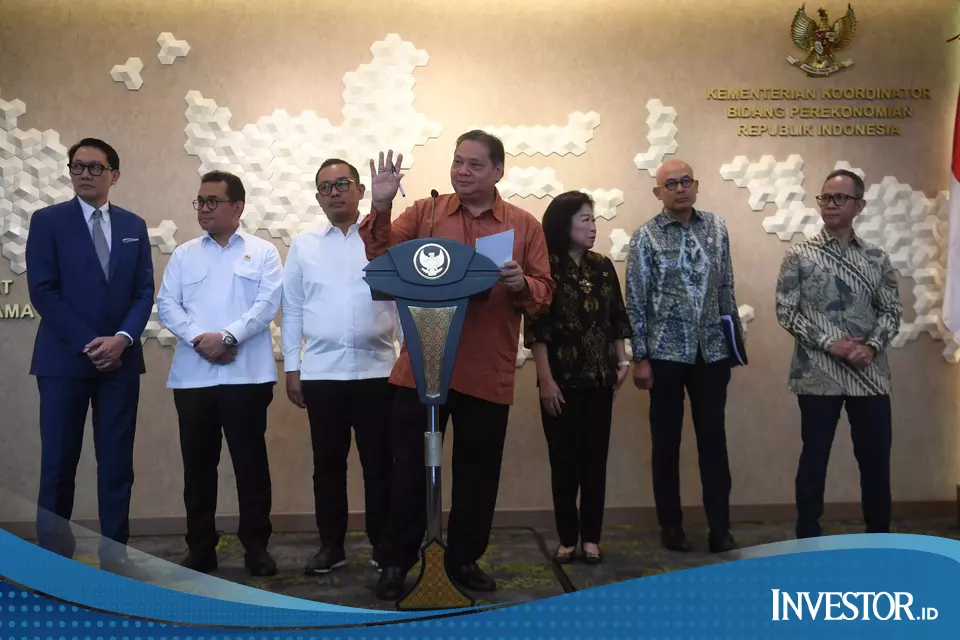
“Strategically, what we see is that we can invest there, which will also be in line with what we can absorb for our own national interests. This is currently being mitigated,” said Deputy Minister of Investment and Downstreaming/Deputy Head of the Investment Coordinating Board (BKPM) Todotua Pasaribu at the Coordinating Ministry for Economic Affairs office on Monday (14/4/2025).
Indonesian investment in the US will be conducted through various schemes, ranging from direct investment to business cooperation between entrepreneurs from both countries. Investment will encompass both financing and human resource development or research and development (R&D).
“Beyond the strategy of gaining margins, we also have a strategy to leverage research and technological knowledge. There is no problem with this strategy,” said Todotua.
He noted that oil and gas investment could be undertaken in the upstream and midstream processing segments. Indonesia had previously tasked Pertamina with managing oil and gas operations abroad.
“Our state-owned enterprises have already had strategies for investing overseas. This is something we could potentially expand going forward,” said Todotua.
For ICT, the approach involves R&D development that could have a positive impact on human resource development. “By investing, we can actually gain strategic R&D benefits going forward,” he added.
At the same occasion, Coordinating Minister for Economic Affairs Airlangga Hartarto said Indonesian businesses would be making investments in the US.
“Technically, in addition to inviting American investment into Indonesia, there will also be Indonesian companies investing in America. So everything will depend on the discussions ahead,” said Airlangga.
Although the US government is currently suspending the implementation of these tariffs for 90 days, negotiations will continue. There are several policies within Indonesia’s negotiation package with the US.
First, deregulation of Non-Tariff Measures (NTMs) through the relaxation of local content requirements (TKDN) in the ICT sector from the US, as well as evaluation of restricted and prohibited goods (lartas) and acceleration of halal certification.
Second, increasing imports and investment from the US.
Third, preparing fiscal and non-fiscal incentives in the form of reduced import duties, import income tax (PPh), and import value-added tax (PPN). These incentives are expected to encourage imports from the US whilst maintaining the competitiveness of exports to the US.
“We have prepared a relatively comprehensive non-paper covering tariff-related matters, non-trade measures, investment, and also what Indonesia is reciprocally requesting in cooperation beyond trade,” said Airlangga.