
Indonesia Open to New Investors to Replace LG Energy Solution in US$9.8 Billion EV Battery Project
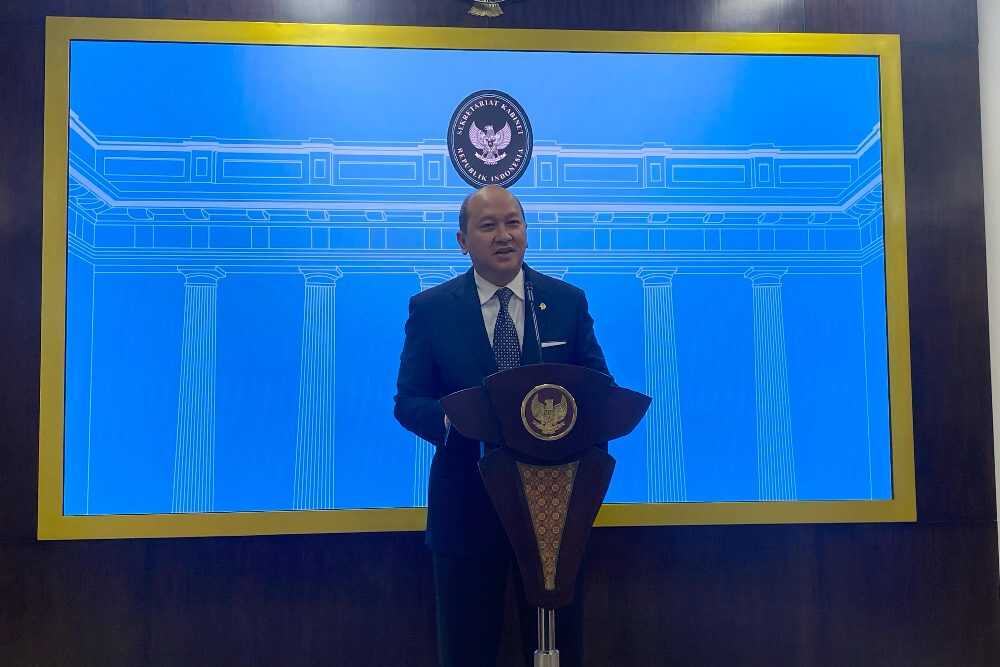
JAKARTA — Investment Minister and Head of the Investment Coordinating Board (BKPM) Rosan Roeslani has emphasised that the Indonesian government is open to new investors replacing LG Energy Solution in the electric vehicle (EV) battery project previously undertaken with the Indonesia Battery Corporation (IBC) consortium.
He acknowledged that Huayou, a Chinese company operating in the battery and minerals sector, is among the potential replacements being explored. However, Rosan stressed that Indonesia remains open to all countries in seeking strategic investment partners for the project.
“We are open to all countries. What matters is that incoming investment can boost employment and create jobs,” Rosan told reporters at the Presidential Office on Wednesday (23/4/2025).
Previously, Energy and Mineral Resources Minister Bahlil Lahadalia revealed that Chinese firm Huayou would replace LG Energy Solution in the integrated upstream-to-downstream nickel-based battery project in Indonesia. He assured that the US$9.8 billion (approximately Rp142 trillion) EV investment project remains on track.
The former chairman of the Indonesian Young Entrepreneurs Association (HIPMI) said the project encompasses the development of an integrated EV battery supply chain, from mining through to battery production.
As part of this investment commitment, on 3 July 2024, seventh President Joko Widodo (Jokowi) inaugurated Indonesia’s first EV battery cell factory located in Karawang, West Java. The factory is a joint venture between Hyundai Motor Group and LG Energy Solution through PT HLI Green Power, and has been operating with an annual production capacity of 10 Gigawatt hours (GWh).
Bahlil affirmed that the overall project has not undergone any fundamental changes. What has occurred is an adjustment of investment partners within the joint venture (JV) structure.
“Conceptually, the construction of this grand package has not changed. Infrastructure and production plans remain in line with the initial roadmap. The only change is in the investor partner, where LG is no longer continuing its involvement in the new JV 1, 2, and 3, and has been replaced by a strategic partner from China, namely Huayou, together with our state-owned enterprises,” Bahlil said in an official statement on Wednesday (23/4/2025).
Bahlil also addressed public concerns regarding the impact of geopolitical tensions and global economic conditions on the project’s continuity. He said the project is unaffected by global dynamics such as war or economic uncertainty, and assured that investment of nearly US$8 billion for the next phase of development remains on course.
“The groundbreaking for the next phase is planned for this year, so there is no halt or cancellation of investment as the public may have feared,” Bahlil explained.
Overall, Bahlil said the government has reaffirmed its commitment to maintaining the continuity of the EV battery downstream processing project. He noted that investor changes are a common occurrence in large-scale projects, and what matters most is that all partners remain committed whilst the government ensures a smooth transition process.
“This project is already underway — parts have been inaugurated and begun production, and we will continue to oversee the remainder until completion as targeted. Nothing has changed from the original objective of making Indonesia a global centre for the electric vehicle industry,” Bahlil concluded.
News of LG’s withdrawal from the Titan Project was first disclosed by MIND ID Director of Portfolio and Business Development Dilo Seno Widagdo in Jakarta on Thursday (17/4/2025). Originally, the LG consortium in Indonesia’s battery project comprised manufacturers predominantly based in South Korea, including LG Energy Solution, LG Chem, LG International, and Posco, with one Chinese partner, Huayou Holding.
The LG consortium, together with the state-owned IBC consortium, was part of the Titan Project with the US$9.8 billion investment. This commitment comprised US$850 million for upstream mining, US$4 billion for an HPAL smelter, US$1.8 billion for a precursor/cathode plant, and US$3.2 billion for a battery cell factory.
Dilo did not specifically explain LG’s reasons for discontinuing its investment plans, stating only that numerous factors led to negotiations with LG failing to reach agreement.
With LG’s departure, Dilo revealed there is an initiative to offer the battery investment to American companies as part of a negotiation package in response to US President Donald Trump’s tariff policies. Indonesia was subjected to a 32 per cent reciprocal import tariff by Trump, as it is one of the contributors to the trade deficit with the United States.
“The Titan Project didn’t materialise. So now, this is one of the things we’re offering as part of our regulatory advocacy — we’re negotiating with America, if they’re willing,” Dilo said.