
Indonesia Once Considered Tolling the Malacca Strait Due to Piracy Threats
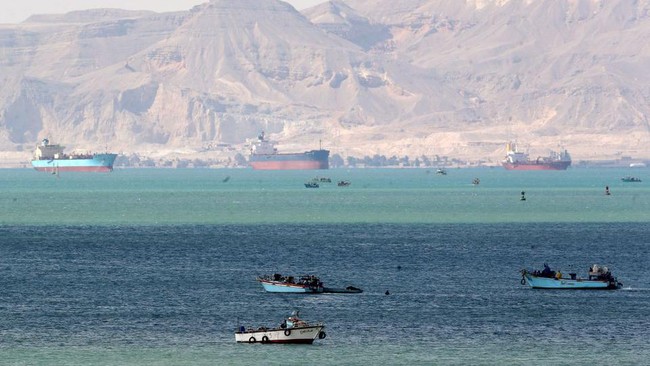
Indonesia has once again drawn global attention following the public emergence of proposals to impose tariffs on ships transiting the Malacca Strait.
Amid growing awareness of Indonesia’s strategic position in global trade routes, there is increasing pressure to monetise this geographic advantage.
However, commitments to international law and pressure from neighbouring countries make such steps far from straightforward.
Indonesia now faces a choice: to become an active player reaping benefits or to remain a guardian of global route stability.
Finance Minister Purbaya Yudhi Sadewa has considered levying taxes on shipping lanes in the Malacca Strait, similar to Iran’s intentions in the Strait of Hormuz.
He stated that such a policy could be implemented, given Indonesia’s long-standing possession of strategic waters, as frequently emphasised by President Prabowo Subianto.
“And as per the president’s directive, Indonesia is not a peripheral nation; we are on the world’s strategic trade and energy routes, but ships passing through the Malacca Strait don’t get charged by us—do we know if that’s right or wrong?” Purbaya said at the PT SMI 2026 Symposium in Jakarta on Wednesday (22/4/2026).
Purbaya believes the concept of tolling the world’s trade route in the Malacca Strait could be feasible through collective cooperation with Malaysia and Singapore, also located in the area.
“Now Iran wants to charge ships passing through the Strait of Hormuz, they say. If we split it three ways—Indonesia, Malaysia, Singapore—that would be substantial, right? Our portion of the route is the largest, the longest,” Purbaya remarked.
Nevertheless, he acknowledged that the tolling concept is not guaranteed to succeed and would not be easy to realise. Despite Indonesia holding the largest share of the Malacca Strait’s waters.
“Singapore is small, Malaysia and us split it in two, say. If it could be like that, but it’s not. So with all our wealth, we must not think defensively; we have to start playing offensively. But still measured,” Purbaya added.
Strategic Straits and the Temptation of Monetisation
Indonesia lies at the heart of the world’s trade routes. Besides the Malacca Strait, there are also the Sunda Strait, Lombok Strait, and Makassar Strait, which serve as important alternative global shipping paths.
The following is a model from The Economist of an aggressive scenario that could be applied to Indonesia’s straits:
The tolling proposal is not entirely new. In the mid-2000s, rampant piracy off Sumatra’s coast prompted Indonesia to propose fees for transiting ships to fund security.
However, the motivation is now shifting from security issues to economic revenue potential.
Several piracy incidents have occurred. A 2004 piracy report from the International Maritime Bureau (IMB) suggested that the tsunami that struck Sumatra likely damaged pirate bases and killed some perpetrators. The strong presence of naval forces also temporarily suppressed pirate activities in the Malacca Strait. Yet, within just four days in March 2005, three new attacks signalled the return of piracy in the region.
On 11 March 2005, a group of pirates attempted to board a cargo ship in the Singapore Strait but failed as the crew activated alarms and sprayed water.
On 12 March 2005, 35 armed pirates attacked an Indonesian tanker and took the captain and chief engineer hostage for ransom.
On 14 March 2005, pirates assaulted a Japanese-flagged tugboat and abducted three crew members.
Many Countries Anxious
This idea immediately sparked concerns, particularly from Singapore, which has one of the world’s busiest ports at the strait’s end. For Singapore, any obstacles or additional costs in the Malacca Strait could disrupt trade flows and reduce its competitiveness.
On 22 April, the foreign ministers of Malaysia and Singapore openly stated that no unilateral actions should be taken in these waters.
Singapore’s Foreign Minister Vivian Balakrishnan emphasised that transit rights in international straits are guaranteed for all parties. He also stated that his country would not participate in any efforts to close, disrupt, or impose levies in the area.
These concerns are exacerbated by global dynamics. Iran’s actions in the Strait of Hormuz demonstrate that sea lanes can become tools of geopolitical pressure, even without massive military power. This makes Indonesia’s proposal increasingly sensitive in the eyes of the world.
Domestic Tensions
Domestically, the government’s views are not entirely uniform. President Prabowo Subianto has stressed that Indonesia is not a peripheral nation but lies on the world’s strategic trade and energy routes.
In line with that, Purbaya Yudhi Sadewa questions why transiting ships are not charged and opens the possibility of a sharing scheme with Malaysia and Singapore. He urges Indonesia to stop being defensive and start playing more offensively, yet in a measured way.
Support also comes from Rear Admiral Irvansyah, Head of the Maritime Security Agency (Bakamla), who views the sea as a future revenue source and likens the Malacca Strait to a “toll road” that should be economically exploited.
However, this approach is tempered by caution from Indonesia’s Foreign Minister Sugiono. He affirmed that Indonesia is bound by the United Nations Convention on the Law of the Sea (UNCLOS), which guarantees peaceful transit rights for foreign ships as part of the agreement recognising Indonesia as an archipelagic state.
Why is the Malacca Strait Important?
The Malacca Strait is one of the most crucial sea routes in the region. It connects the Indian Ocean to the Pacific Ocean via the South China Sea, while also serving as the shortest sea route from the Persian Gulf to major markets in Asia. For that reason, the Malacca Strait is