
Indonesia Not Planning to Halt Fertiliser Exports, Trade Minister Explains Reasons
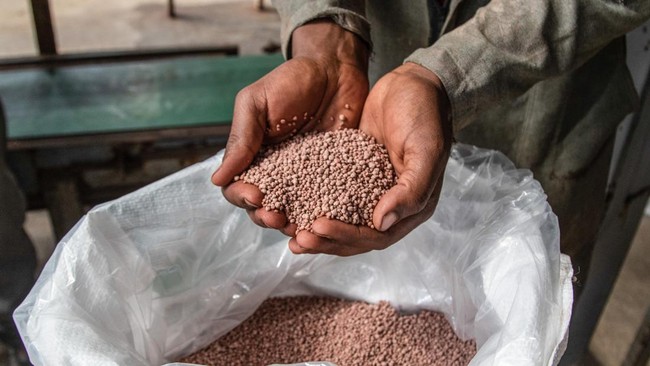
Jakarta, CNBC Indonesia - The government has assured that there are no plans to restrict fertiliser exports amid the escalation of the Middle East conflict. At the same time, signals of pressure on raw material supplies have not yet prompted state-owned enterprises in the fertiliser sector to request assistance from the Ministry of Trade (Kemendag) to aggressively seek new import sources.
Trade Minister Budi Santoso emphasised that, to date, the government is still focusing on anticipatory measures involving diversification of raw material sources, rather than export restrictions. He stated that the government is considering options to redirect fertiliser raw material imports from relatively safe regions, particularly Eurasian countries.
“Yes, for our fertiliser, we actually import a lot from Eastern Europe, right? Like from Kazakhstan, Uzbekistan, Eurasian countries. There’s a lot there; it can be redirected from there,” Budi told reporters at his office in Jakarta on Friday (27/3/2026).
Nevertheless, this step remains anticipatory. This is because, to date, there have been no signals of serious disruptions from industry players, including state-owned fertiliser companies.
Budi revealed that the government has not received any requests or complaints from PT Pupuk Indonesia (Persero) regarding difficulties in obtaining raw materials. This indicates that the supply chain is still relatively stable amid geopolitical turbulence.
“So far, there hasn’t been any from the state-owned side talking to us. That means the state-owned side hasn’t complained to us. I think our friends at the state-owned enterprises don’t have any problems yet. Hopefully, there won’t be any problems,” he said.
This stance also indicates that state-owned fertiliser companies are not yet in a position of urgency to seek new raw material import markets beyond the current schemes.
Previously, Pupuk Indonesia had also assured that the national fertiliser supply remains safe. The red-plate company emphasised that it has sufficient production capacity and raw material reserves to maintain distribution continuity to farmers.
“Pupuk Indonesia is committed to carrying out the government’s mandate to ensure the availability and affordability of fertiliser for farmers. Amid the geopolitical dynamics occurring, we assure that the national fertiliser supply remains safe so that farmers can continue planting without worrying about fertiliser availability,” said Pupuk Indonesia’s Corporate Secretary, Yehezkiel Adiperwira, in his statement on Friday (6/3/2026).
In terms of capacity, Pupuk Indonesia’s production reaches 14.5 million tonnes per year for various types of fertiliser. In fact, for urea fertiliser, domestic production is said to be able to meet all domestic needs.
From the raw material supply side, dependence on conflict zones is also relatively limited. Phosphate is still supplied from North African countries such as Morocco, Tunisia, and Algeria. Meanwhile, potash comes from Canada and Laos, which are outside the conflict zone.
The raw material potentially directly impacted is sulphur from the Middle East region, such as the United Arab Emirates, Qatar, and Kuwait. However, alternative supplies from other countries like Canada remain available, so the risk of disruption can be minimised.
With this condition, the government assesses that the stability of the national fertiliser supply is still maintained, so extreme measures such as export restrictions are not yet necessary amid the current global dynamics.
For information, citing the official Pupuk Indonesia website, the company is one of the largest ammonia and urea producers in Asia, with over 50 years of experience. Additionally, in 2021, Pupuk Indonesia exported 2 million tonnes of urea and 715 thousand tonnes of ammonia. Not only that, Pupuk Indonesia also claims to have exported other types of fertiliser, such as NPK/NPS and/or ZK, to several countries.
BPS records that Indonesia’s fertiliser export volume (HS Code 31) in 2025 reached 2.148 million tonnes, up from 1.704 million tonnes in 2024. In January 2026, the fertiliser export volume reached 21 thousand tonnes.