
Indonesia Needs to Improve Competitiveness in Upstream Oil and Gas
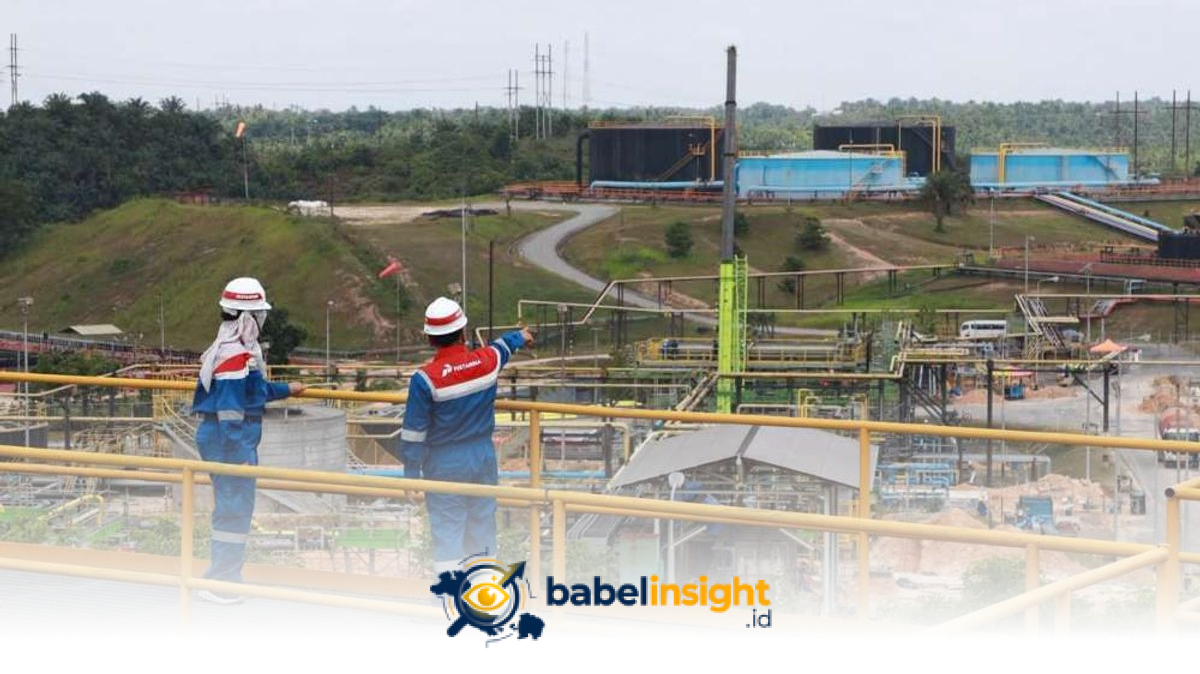
Indonesia is assessed as needing several improvements to enhance the competitiveness of the upstream oil and gas sector, particularly regarding legal certainty and the complexity of the permitting process. CORE Indonesia economist Yusuf Rendy Manilet views the most fundamental issue as lying in the regulatory framework, which is deemed in need of repair. According to him, the current oil and gas law is no longer intact following various Constitutional Court decisions, thus creating uncertainty for long-term oriented investors. This condition causes derivative policies to lose credibility in the eyes of business actors. Yet, the upstream oil and gas sector requires investment certainty with a long horizon and high risk. “The complexity of permitting also remains a barrier. Although the number of permits has been simplified, the process still involves many institutions and takes a long time,” said Yusuf when contacted by Bisnis, quoted Sunday (3/5/2026). On the technical side, the challenges are increasingly severe because most of Indonesia’s oil and gas fields have entered the ageing phase. This impacts increased production costs and pressures project economics. Meanwhile, new exploration areas are generally located in eastern Indonesia with high-risk characteristics and greater investment needs. At the same time, Yusuf said the global oil and gas industry is experiencing a shift in investment direction. Major energy companies are beginning to shift their portfolios to gas and low-carbon energy, making the competition to attract capital increasingly tight. In terms of policy, the government has made several adjustments, including contract schemes and fiscal incentives. However, Yusuf assesses their effectiveness as still limited. According to him, the main challenge is not the size of the incentives, but the consistency and certainty of the underlying rules. Without a revision of the oil and gas law, all existing policies are deemed unconvincing to investors. In addition, the room for providing fiscal incentives is becoming increasingly limited along with the implementation of the global minimum tax. This condition demands changes in strategy to attract investment. “This means Indonesia must strengthen other factors such as regulatory certainty, geological data quality, and speed of decision-making,” he stated. Previously, the Head of the Special Task Force for the Implementation of Upstream Oil and Gas Business Activities (SKK Migas) Djoko Siswanto stated that the national upstream oil and gas sector remains a magnet for international investors. This is reflected, among others, in the expansion steps of Jadestone Energy, which is currently working on the Lemang Working Area in Jambi, with an average production of 6,400 barrels of oil equivalent per day (BOEPD). According to Djoko, this plan is a strong signal of Indonesia’s competitiveness in the eyes of the world. “Indonesia is still good for investing in upstream oil and gas,” said Djoko. Djoko said that Jadestone’s commitment is not merely corporate expansion, but a concrete indicator that Indonesia’s upstream oil and gas investment climate remains competitive and promising.