
Indonesia Needs Strategic Executors, Not Political Ornaments: The Case for Cabinet Reshuffle
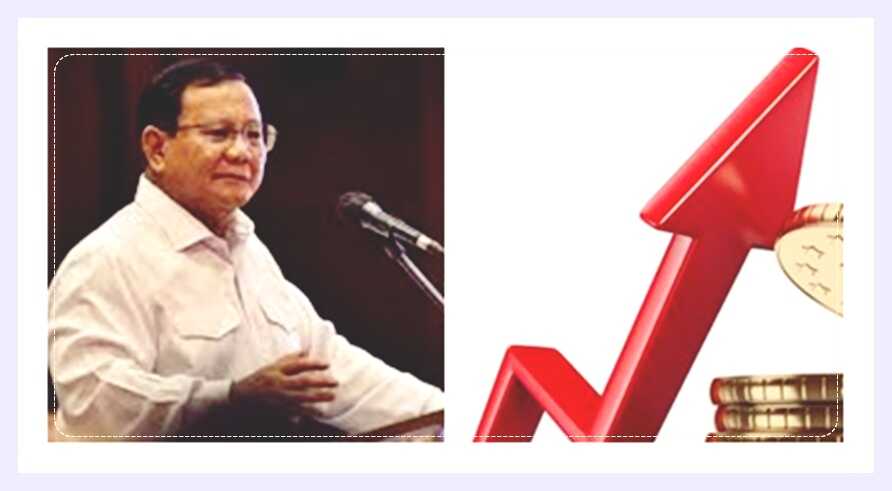
Indonesia is like a sleeping tiger in a field of global opportunity — full of potential, yet motionless. If the cabinet reshuffle is not met with strategic decisions, stagnation could transform into a crisis of confidence. And when that moment arrives, market corrections will speak louder than officials’ speeches.
Markets are beginning to revolt. Uncertainty surrounding the reshuffle has thrown investment sentiment into disarray; foreign capital is flowing out, and businesses are holding back on expansion. At a time when the country needs clarity of direction, what emerges instead is political noise without execution.
At the global level, tariff wars have erupted once again. US President Donald Trump has hit Indonesian goods with a 32 per cent tariff — a strong signal that protectionism has returned as the dominant current. The world is shaking, and Indonesia cannot afford to stand still. We need figures who can respond to this chaos with action, not mere rhetoric.
BKPM data for the first quarter of 2025 shows danger signals: investment realisation fell 6.8 per cent compared with the same period last year. This is not merely a statistical decline — it is a loud alarm that markets are beginning to lose confidence. Amid narratives of stability and acceleration under the new administration, these figures reveal the opposite reality: uncertainty in execution and a vacuum in policy direction. Political euphoria cannot mask stagnation on the ground.
In such circumstances, a reshuffle is no longer a cosmetic exercise or a redistribution of political seats. It must be a structural correction. The state needs figures who are not only adept at articulating a vision but capable of executing it — not ordinary politicians, but technocrats who understand the terrain. Individuals who can read market signals without hesitation, understand the logic of the business world, and command the dynamics of bureaucracy. Without this, the reshuffle will be nothing more than an elite celebration that fails to address the root of the problem.
Amid the unending commotion among elites, one name has begun to settle into serious conversations among policy actors and market players: Harvick Hasnul Qolbi. The former Deputy Minister of Agriculture is not a new face, but that is precisely his strength — he knows the ins and outs of bureaucracy and possesses a distinguished track record.
During his tenure, Harvick was known for aggressively pushing reform in the food sector — one of the most complex and trap-laden sectors in the national investment ecosystem: chaotic supply chains, expensive logistics, and trade arrangements guarded by a handful of cartels. Yet Harvick is not merely a bureaucrat. He was born from the womb of social movements — a young Nahdlatul Ulama activist, educator, and mobiliser of strategic organisations. He possesses political credentials, grassroots social networks, and the ability to read market direction. His approach is neither elitist nor laden with jargon; he speaks of economics from a field perspective, not from behind a desk.
This is precisely the kind of figure needed to break through the wall of stagnation: someone who can engage with business leaders yet also shake up a lethargic bureaucracy; someone who can sit in state meeting rooms yet remain connected to the pulse of the people.
In an increasingly harsh and selective global landscape — driven by the energy crisis, geopolitical fragmentation, and the transition to a green economy — investment is no longer about potential but about clarity of direction and certainty of execution. Grand narratives are no longer sufficient. Markets demand credibility, not merely commitment.
Indonesia, if it wishes to survive in the current of regional competition, must shift its approach: from rhetoric to strategic orchestration. We need figures who not only understand development theory but are also capable of executing under the pressure of real-world complexity — individuals who can engage diplomatically with markets whilst simultaneously restoring order to internal bureaucratic chaos.
Harvick Hasnul Qolbi, with his cross-sectoral track record and honed field instincts, presents himself as one representation of this new requirement — a leader with sensitivity to micro-level policy as well as an understanding of macro-level challenges.
The challenge now is not the availability of such figures, but the courage to choose them. Is President Prabowo radical enough to break the cycle of the status quo and make room for executors who are not only loyal but also adaptive, non-dogmatic, and capable of working beyond political boundaries?
If so, this reshuffle could become a turning point. If not, markets will continue to read hesitant signals as a structural threat. In a situation like this, there is no time for experimentation. The state needs problem solvers. When what is required is someone capable of connecting macro strategy with micro reality, the name Harvick Hasnul Qolbi is well worth considering — not as a political ornament, but as part of the recovery formula.