
Indonesia Must Allocate Tens of Trillions to Strengthen Energy Resilience Against Global Disruptions
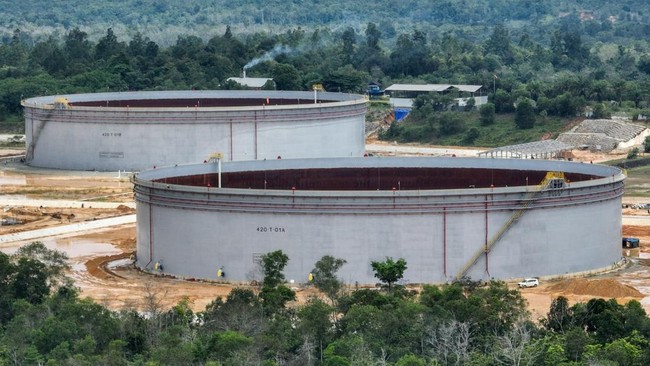
Jakarta — Indonesia’s plan to establish a Strategic Petroleum Reserve (SPR), known locally as Cadangan Penyangga Energi (CPE), requires substantial budgetary allocation. The nation must commit tens of trillions of rupiah to construct strategic energy reserves comparable to those maintained by developed nations.
The initiative aims to expand domestic crude oil storage capacity, which currently sustains the country for only 20-25 days. According to the Direktur Eksekutif ReforMiner Institute Komaidi Notonegoro, most countries globally maintain strategic energy reserves averaging three to six months as a precautionary measure against energy crises or disruptions to global oil distribution networks.
“Advanced nations maintain even larger stockpiles, but this involves multiple considerations. Storage capacity must be substantial, and fiscal allocation for maintaining these reserves must likewise be significant,” Komaidi stated in March 2026.
Establishing such reserves requires considerable investment. To maintain fuel stocks for a single day requires approximately 2.5 to 3 trillion rupiah in budget allocation. Consequently, achieving a 30-day energy reserve would necessitate funding between 60 and 90 trillion rupiah.
Currently, Indonesia’s 20-25 day reserve does not represent state-owned stockpiles but rather operational inventories held by state enterprises—unsold inventory that financially burdens companies forced to maintain capital in extended storage arrangements.
Energy and Mineral Resources Minister Bahlil Lahadalia previously explained that Indonesia’s fuel reserves reach only 20 days due to maximum domestic storage capacity constraints. Public concern intensified following Iran’s closure of the Strait of Hormuz, a critical global oil trade corridor. Pertamina disclosed that 19 per cent of Indonesia’s oil imports originate from the Middle East, transiting the strategic waterway.
Bahlil clarified that the 20-day stockpile represents maximum national storage capacity. “Do not misunderstand—for a long time, our storage capability in Indonesia has not exceeded 21-25 days. Our national minimum standard is 20-21 days, maximum 25 days,” he stated at the Presidential Complex in March 2026.
According to Pertamina reports, Indonesia currently maintains 22-23 days of fuel reserves. Bahlil further explained the inability to extend reserves beyond 25 days stems from insufficient storage infrastructure. “We cannot maintain reserves exceeding 25 days simply because storage capacity does not exist. Please note—it is not that we cannot prepare more than 25 days; rather, we lack the physical capacity,” Bahlil clarified.
President Prabowo Subianto has directed the construction of fuel storage facilities to extend Indonesia’s energy resilience. The initiative targets storage capacity sufficient to sustain fuel supplies for three months, significantly strengthening the nation’s strategic energy position.