
Indonesia Most Aggressive Weapons Buyer in ASEAN, Here Are Its Suppliers
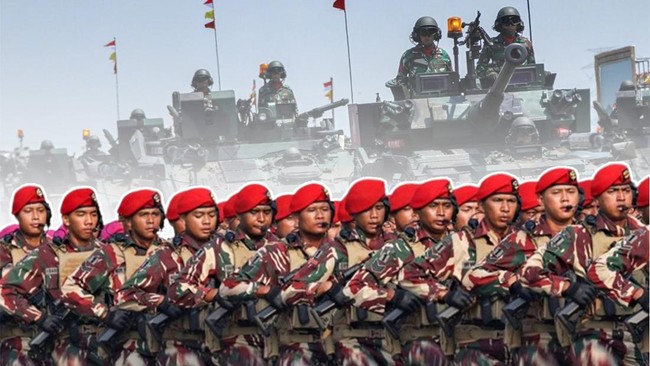
Jakarta — Amid a world still shadowed by war and geopolitical tensions, Indonesia has remained actively strengthening its defence expenditure.
According to the latest report from the Stockholm International Peace Research Institute (SIPRI), Indonesia ranks as the 18th largest weapons importer globally during 2021-2025, with a 1.5% share of total global arms imports. This share declined slightly compared to the 2016-2020 period, which stood at 1.7%, representing a volume reduction of approximately 4.1%.
Indonesia also records as the largest weapons importer in Southeast Asia during 2021-2025. This position places Indonesia ahead of other regional countries including the Philippines, Singapore, and Thailand, which each hold weapons import shares of 1.2%, 1.1%, and 0.5% respectively.
Although the pace of Indonesia’s imports is not as aggressive as some other nations whose defence spending has surged more sharply amid global and regional conflict dynamics.
Three countries emerge as Indonesia’s primary weapons suppliers between 2021-2025: Italy, the United States, and France.
Italy as Primary Weapons Supplier to Indonesia
SIPRI notes that during 2021-2025, Italy became Indonesia’s largest source of weapons imports, accounting for 40% of Indonesia’s total weapons imports. This composition demonstrates that Indonesia’s defence equipment procurement over recent years has been heavily concentrated among these three Western nations.
From Italy, Indonesia’s procurement focus appears strongest in the naval warship sector. In 2024, Fincantieri signed a contract to supply two multipurpose combat ships (PPA) for Indonesia. These include KRI Brawijaya, which Indonesia has officially received, and KRI Prabu Siliwangi, currently in transit from Italy to Indonesian waters.
The United States as Key Weapons Supplier to Indonesia
The United States also serves as one of Indonesia’s principal weapons suppliers. SIPRI notes that Indonesia’s weapons imports from the US reached approximately 16% of total Indonesian weapons imports during 2021-2025.
One of Indonesia’s major procurements from the US during this period is the C-130J tactical transport aircraft manufactured by Lockheed Martin. Based on multiple sources, Indonesia has purchased five C-130J units, with the first delivered in 2023. This procurement aims to strengthen the Indonesian Air Force’s military airlift capabilities.
Beyond transport aircraft, Indonesia’s defence cooperation with the US has also extended to procuring the multipurpose Black Hawk helicopter. In 2023, Sikorsky and PT Dirgantara Indonesia signed a strategic cooperation agreement to facilitate the procurement of up to 24 S-70M Black Hawk helicopters for Indonesia.
Fighter Jets and Submarines Form the Backbone of French Imports
France ranks as Indonesia’s third largest weapons supplier, accounting for 14% of total Indonesian weapons imports during 2021-2025.
One of Indonesia’s largest defence equipment procurements from France is the Rafale fighter jet. Dassault Aviation announced that Indonesia’s contract to purchase 42 Rafale units was signed in February 2022.
The entire contract phases subsequently became fully effective in January 2024. Consequently, during 2021-2025, the Rafale represents one of Indonesia’s largest defence purchases from France.
The first three Rafale units arrived in Indonesia at the end of January 2026 and are now stationed at Roesmin Nurjadin Air Base in Pekanbaru.
Additionally, Indonesia has contracted two Scorpene Evolved submarines from Naval Group in collaboration with PT PAL. This contract was announced in April 2024 and became effective in July 2025. These submarines will subsequently be built in Indonesia through a technology transfer scheme.
Amid the intensifying dynamics of global geopolitical conditions, Indonesia’s position as the largest weapons importer in Southeast Asia demonstrates that defence equipment modernisation remains an exceptionally important focus.
Although Indonesia’s global share of weapons imports has slightly declined, this does not necessarily indicate weakening defence spending. Rather, this development could signal that the domestic defence industry is increasingly capable of meeting more national defence equipment requirements.
This means that Indonesia’s future defence strengthening will depend not solely upon imports, but will increasingly be supported by domestic production capabilities.