
Indonesia Market Stable, but Volatility Persists After MSCI Changes
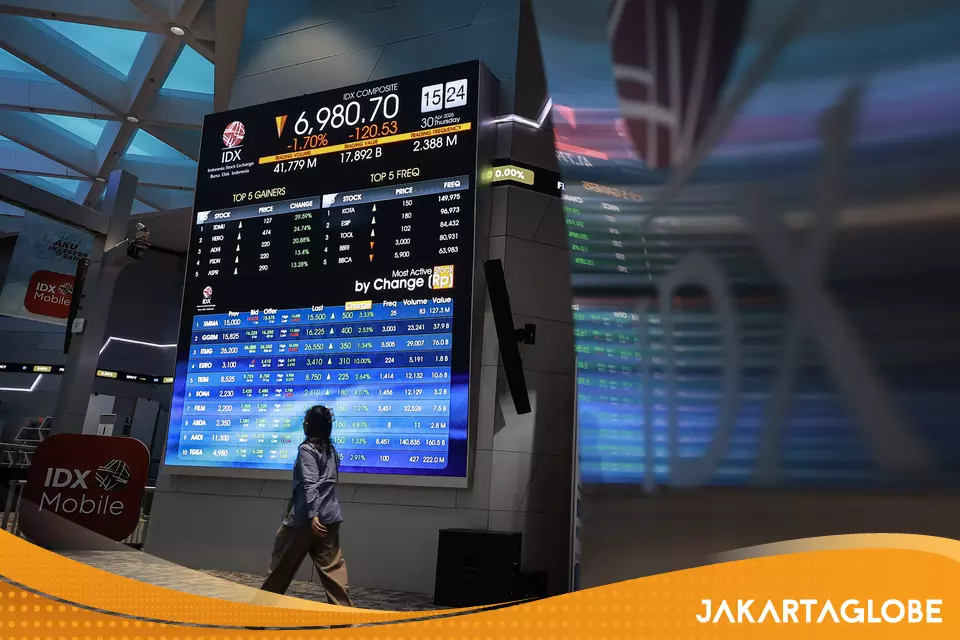
Indonesia Market Stable, but Volatility Persists After MSCI Changes
Jakarta. Financial regulators say the country’s financial system remains strong despite recent market turbulence triggered by MSCI’s May 2026 index changes, while analysts warn that volatility may persist as global funds continue adjusting their positions.
The Financial Services Authority (OJK) says Indonesia’s capital markets remain resilient even after dozens of stocks were removed from MSCI’s Global Standard and Small Cap indexes. It says the changes are part of a routine global review based on market capitalization, liquidity, free float, and price performance, rather than a reflection of weakening fundamentals.
OJK Chairwoman Friderica Widyasari Dewi says similar index adjustments are also occurring across major Asian markets, including Japan, Taiwan, Malaysia, South Korea, and China, reflecting broader regional portfolio reallocation.
“Fundamentally, Indonesia’s financial services sector remains resilient and stable,” she says, adding that short-term volatility does not change the regulator’s commitment to building a credible and investable market.
Acting President Director of the Indonesia Stock Exchange (IDX), Jeffrey Hendrik, said the bourse is focusing on reforms, transparency, and stronger market integrity rather than simply improving its global index ranking.
However, market participants remain cautious.
Kiwoom Sekuritas says investors are overly focused on the headline impact of “18 stocks exiting” MSCI indexes, while most of the pressure has actually built up over several months.
“Because of that, foreign outflow estimates now appear more realistic compared to earlier panic scenarios that reached more than Rp 50 trillion ($2.85 billion),” the brokerage said.
Joeliardi Sunendar Investment Research estimates outflows of around Rp 28–31 trillion, CGS International projects about Rp 31.5 trillion, while Citi’s worst-case scenario puts outflows at approximately Rp 34.7 trillion.
Panin Sekuritas’ Elandry Pratama warns of a possible “capitulation phase” if sentiment worsens, amid rupiah weakness, high oil prices, and ongoing capital outflows.
He added that investors are now demanding a higher risk premium on Indonesia due to both global and domestic concerns, including fiscal discipline and policy consistency.
“Such conditions extend capital outflows and increase volatility beyond normal corrections,” he said.
As of Wednesday, the Jakarta Composite Index (JCI) closed at 6,723.32, down 27% from its all-time intraday high of 9,174.47 set in January 2026.
Tags: Keywords: