
Indonesia Loses Rp1,500 Trillion in Potential Investment Due to Complex Licensing
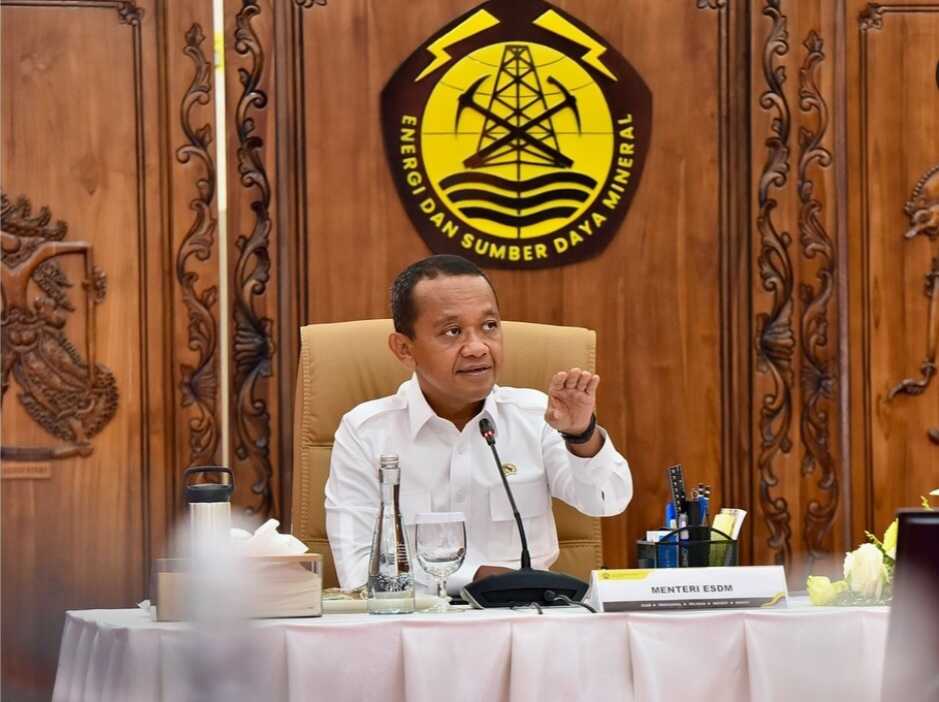
JAKARTA - Indonesia is said to have lost potential investment of up to Rp1,500 trillion throughout 2024. The statement was made directly by Minister of Energy and Mineral Resources (ESDM) Bahlil Lahadalia, who highlighted the problem of licensing that remains complex and overlapping as the primary cause.
“Because of inefficient licensing and systems that are not yet integrated, many investors ultimately chose to leave. The total potential investment lost reached Rp1,500 trillion,” said Bahlil in his official statement on Tuesday, 27 June 2025.
Bahlil explained that approximately 40 major investment projects failed to materialise. The most affected sectors include new and renewable energy, smelters and downstream mining, electric vehicle battery raw material industries, as well as large industrial estates and manufacturing.
“Investors from Japan, South Korea and Europe had expressed interest, but ultimately withdrew because the bureaucratic process was deemed too convoluted,” Bahlil revealed.
According to his ministry, the Online Single Submission (OSS) system that the government has relied upon has not yet been fully integrated between central and regional levels. This means investors still have to process multiple permits, including location permits, environmental permits (Amdal), sectoral business permits, and recommendations from technical ministries.
This situation is considered to have slowed project realisation and created legal uncertainty for investors. However, at the time of writing, the Ministry of Investment had not yet provided further comment regarding the downstream impact of these cancelled trillion-rupiah investment plans on industrial project development in Indonesia.
Meanwhile, Director of Digital Economy at the Centre of Economic and Law Studies (CELIOS) Nailul Huda also highlighted the causes behind the cancellation of these trillion-rupiah investments. According to him, there is a crucial problem behind the relatively low investment interest in Indonesia. One such issue is the decline in government efficiency and business efficiency.
Government efficiency dropped from rank 23 to 34, with the steepest decline in the institutional framework sub-category, which fell 26 places. “This means something is wrong with policies related to competitiveness,” said Nailul on Friday, 4 July 2025.
Nailul added that several issues such as thuggery, uncertainty over joining BRICS or the OECD, and policies placing military personnel in economic sectors have also affected investment interest in Indonesia. “Most recently, the Director General of Customs and Excise is also from the military. This is what causes business inefficiency,” Nailul stressed.
Beyond policy issues, Nailul also highlighted Indonesia’s Incremental Capital to Output Ratio (ICOR), which is very high and unfavourable for business operators in Indonesia. If this situation continues, he suggested that Indonesia’s ranking could fall behind Malaysia’s.
“Investors and business operators will not enter Indonesia if these policy issues remain unresolved. Investors will choose Malaysia as an investment destination that offers business certainty and a more efficient economy,” Nailul concluded.
Nailul added that providing business and enterprise certainty by offering protection against thuggery and corrupt behaviour by state institutions could gradually restore investor confidence. “Review the appointment of military personnel, both active and retired, in economic sectors. It would be better to hand these roles to non-military professionals,” Nailul stressed.