
Indonesia Launches ASEAN-Korea Cooperation for Methane Mitigation to Cut Emissions by 21 Million Tonnes
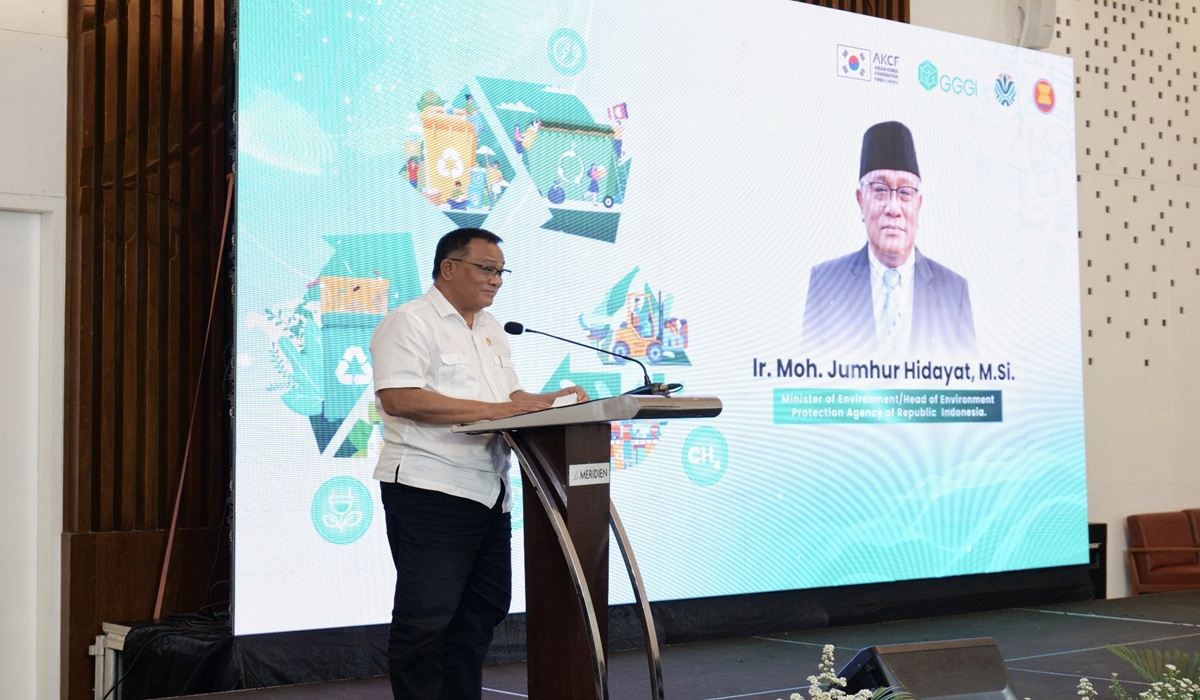
Indonesia’s Ministry of Environment and Forestry (KLH) / Environmental Control Agency (BPLH) officially strengthened climate crisis mitigation measures through the launch of the ASEAN-Korea Cooperation for Methane Mitigation (AKCMM). The strategic step was carried out through close collaboration with the Government of the Republic of Korea and the Global Green Growth Institute (GGGI).
Indonesia is the third ASEAN country to implement the programme, after Malaysia and the Philippines. The main focus of the initiative is to reduce methane emissions arising from the management of organic waste across different regions of Indonesia.
Minister of Environment / Head of BPLH, Moh Jumhur Hidayat, stressed that the handling of organic waste is no longer just a city cleanliness issue but a crucial pillar in national climate action. Data shows that organic waste dominates the composition of waste at Final Processing Facilities (TPA) in Indonesia, reaching up to 63%.
‘Waste management is a crucial pillar in our climate action. Through the AKCMM project, Indonesia is committed to linking practical on-the-ground solutions with ambitious methane emission reduction targets,’ said Minister Jumhur at the project launch in Jakarta.
Details regarding the project and the potential emissions targeted by the programme: The Ambassador of the Republic of Korea to ASEAN, LEE Chul, stated that methane mitigation is the most effective intervention to provide short-term climate impact. The project is part of the Partnership for ASEAN-ROK Methane Action (PARMA).
In agreement, the ASEAN Deputy Secretary-General, His Excellency San Lwin, emphasised that AKCMM will enhance the technical capacity of ASEAN member states in aligning long-term climate strategies towards low-carbon development.
One of the biggest challenges in environmental issues is synchronising central regulations with regional implementation. Rowan Fraser, Country Representative for GGGI Indonesia, explained that AKCMM is designed to break this deadlock.
‘We focus on creating a data-measured system that is attractive to green investment. By improving emission measurement and financing schemes, we create economic efficiency in the management of waste in big cities,’ Rowan said.
Implementation of the project will be coordinated through the National Working Forum (FKN). In addition to supporting the RPJMN 2025–2029 targets, the programme is expected to strengthen Indonesia’s position in green diplomacy in Southeast Asia, and open up broader sustainable investment opportunities.