
Indonesia Issues New Regulation on Food Security, Here Are the Details
The Indonesian government has issued a new regulation on food security. The regulation is Government Regulation Number 1 of 2026 on Food Security. This regulation amends Government Regulation Number 86 of 2019.
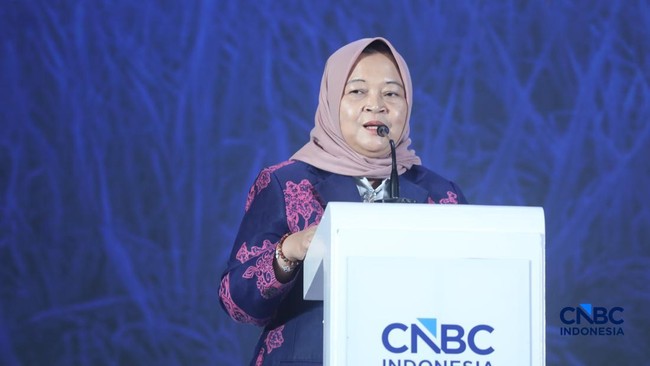
Deputy for Coordination of Food Affordability and Security at the Coordinating Ministry for Food, Nani Hendiarti, stated that the PP, established on 5 January 2026, aims to strengthen food quality standards, reorganise the supervision of processed/fresh foods, and appoint the Coordinating Ministry for Food to coordinate in cases of food security emergencies. She revealed that one aspect regulated in this regulation is how to prevent unsafe food ingredients from being consumed by the public.
“So, this is the public that we must protect,” said Nani at the Food Summit 2026 at Menara Bank Mega, Jakarta, on Monday (27/4/2026).
The second important aspect is how to strengthen integrated national food security supervision. The regulation involves many parties in food security, such as the Food and Drug Supervisory Agency (BPOM), the Ministry of Health, and the Ministry of Marine Affairs and Fisheries (KKP).
“What is very important about PP 1? The second point on integrated food security is that many entities are involved in Indonesia, divided into six groups under the PP mandate. Processed foods under BPOM—PP 86 has clarified that industrial processed foods are under BPOM, household industry processed foods under local government, ready-to-eat foods under the Ministry of Health.
“Fresh foods from animals and fish under KKP, plants under Bapanas (National Food Agency). This must be synergistic and integrated to avoid overlaps. PP 1 can be implemented in tandem and coordinated starting from the Coordinating Ministry for Food. This is one of the tasks given to the Coordinating Minister because the impact is not only on health but also on the economy,” she added.
Furthermore, Government Regulation Number 1 of 2026 is implemented in the Free Nutritious Meals (MBG) programme. According to her, MBG needs to improve the quality of food security, governance, and nutrition.
“Why is it more important? More specifically, in the Presidential Regulation that regulates MBG governance, it is divided into two: BGN implementation and a larger part involving support from other ministries/institutions—18 ministries/institutions involved in the MBG implementation process,” she said.
With the existence of PP Number 1 of 2026, all food security governance will be commanded by the Coordinating Minister for Food.
“So, ladies and gentlemen, we see why food security is important. You can see here. Food security as meant by this regulation is because we see the President’s programme assigned to the Coordinating Minister to lead the coordination team, including the Free Nutritious Meals programme, which greatly requires this,” said Nani.